


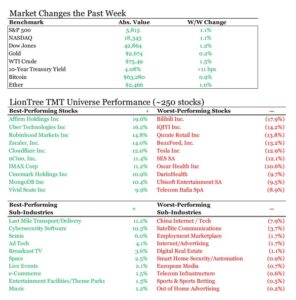
Since 2000, the month of October ahead of a presidential election has historically been a weak month, but this year we are, at least thus far, in a better spot. After a slight rally last week, the S&P 500 and Nasdaq rallied just over +1% this week (the 5th straight week of gains). At the same time though, Treasury yields continue their upward climb (the 10-year yield is up ~35bp over the past eight trading days).
Regarding sector updates, see below for our take on the most important themes and developments across the space this week
- Tesla’s “We, Robot” Event Was Long On Vision But Short On Details
- Another Year, Another “Record” Amazon Prime Big Deal Days + Other Big Retailer Initiatives
- Teens Ramp Up Spending But Shift Away From Many Top Brands
- Short Sellers Generally Stick With Current Bets, But SiriusXM & AST SpaceMobile Shares Saw The Biggest Deltas In Short Activity
- Social Media Platforms Look To Attract Advertisers With New Features
- Regulators Seek Structural Changes To Big Tech Platforms
- Tencent/Ubisoft: Is Dealmaking Percolating Again In Video Games?
- Grab Bag: Disney Parks Price Changes/Netflix Maintaining Compensation Model/TikTok Layoffs
Have a nice and restful weekend ahead of the Q3 earnings cycle which starts next week
Best,
Leslie

Tesla’s “We, Robot” Event Was Long On Vision But Short On Details
After a nearly two-month delay, Tesla hosted its “We, Robot” event on Thursday to showcase its new autonomous vehicle advancements. During the event, CEO Elon Musk introduced the Cybercab, an autonomous vehicle designed for ridesharing, and as well as a concept Robovan that is aimed at transporting groups of passengers. He also shared that Tesla’s Full Self-Driving technology will be made available to the Model 3 and Model Y next year (before the launch of the Cybercab, which is supposed to begin production in before 2027) and discussed how the Co plans to revolutionize transportation through a network of autonomous vehicles, seemingly a mix of an Uber and Airbnb for AVs, along with shared computing powers. The event also featured another glimpse of the Optimus humanoid robot.
Despite the initial excitement surrounding the event, many investors were left underwhelmed by its conclusion. Concerns centered around the lack of concrete timelines and the feasibility of the products and software presented, especially when compared to competitors like Waymo and Aurora Innovation, which have already deployed similar technologies on public roads. Skepticism also stemmed from Tesla’s history of ambitious promises that have often faced delays, such as the postponed launch of the Cybertruck and previous overestimations of the company’s autonomous driving capabilities.
See below for what we thought was most interesting from the event.
-> Following the event, Tesla’s stock fell -8.9% but on the flipside, Uber share rallied +11% as concerns before the event about increase competitive eased
Cybercab Unveiling Was The Main Focus Of The Event
- Design specs: Two-seater with no steering wheel or pedals
- Designed to be a “comfortable lounge where you can do whatever you want, and when you get out you’ll be at your destination”
- Planning for the vehicle to be capable of driving itself autonomously at launch
- Expected to cost <$30,000, which would make it Tesla’s cheapest offering
- Price is significantly lower than the current starting price of the Model 3 sedan, which exceeds $42,000
- But it should be noted that Tesla has a history of changing its forecasts: For example, the Cybertruck was initially projected to cost under $50,000 but now starts at around $80,000
- Pricing strategy is intended to make autonomous transportation accessible to a broader audience: “I think the cost of autonomous transport will be so low that you can think of it like the individualized mass transit”
- Claims that the cost to run Cybercab will be less than that of a bus: The avg cost to run a bus is ~$1/passenger mile, while the Cybercab will probably be ~20c/mile in operating cost and 30-40c/mile “including taxes and everything else,” according to Musk
- Price is significantly lower than the current starting price of the Model 3 sedan, which exceeds $42,000
- Will introduce new battery-charging technology using inductive wireless charging: Unlike today’s EVs, which have charging plugs, the Cybercab will have no plug and instead will drive over a charging pad to recharge
- Production is expected to begin in 2026, with availability anticipated before 2027, but CEO Elon Musk did note that “I tend to be optimistic with time frames”
- Plan is to produce the vehicle “in very high volume”
Launch Of RoboTaxis Is Part Of A Larger Plan To Revolutionize Transport (Though No Mention Of The Previously Talked About Tesla Network)
- Robotaxi could be used as a shared resource part of the time and as a computing provider when not on the move
- When a car is needed, a user can hail a Cybercab through an app and once called, the car can be used for everything from quick trips to a store to longer journeys; Once done using the vehicle, it will be equipped with self-cleaning kits to clean itself
- A mix between an Uber and Airbnb model, in that instead of sitting idle in garages or parking lots for most of the day, people could rent out their AVs so they are in constant use, making transportation more efficient and cutting costs for everyday travel
- The computers in the vehicles will also be “overspecced” in what Musk termed as an AWS style of computing that can be distributed across the network of cars, so people can sell compute time on the AI processor in their Tesla cars when the car is not in use
- When a car is needed, a user can hail a Cybercab through an app and once called, the car can be used for everything from quick trips to a store to longer journeys; Once done using the vehicle, it will be equipped with self-cleaning kits to clean itself
- Evolving the role of a cab drivers? Musk said he envisions the autonomous Cybercab to be used by cab drivers in a way where they would “manage a fleet of cars,” managing ten to twenty Cybercabs and “taking care of them like a shepherd tends their flock”
-> While shares of Tesla fell -8.9% Friday, Uber’s stock popped +10.8% on the view that Tesla’s future robotaxi network is far from being competitive to Uber’s core business.
Software Update Will Enable Model 3 and Model Y To Become RoboTaxis Before The Launch Of The Cybercab
- “Unsupervised Full Self-Driving” is expected to be up and running in Texas and California in 2025 in the Co’s Model 3 and Model Y vehicles
- Is currently available in a “supervised” version for Tesla’s EVs and still requires a human driver at the wheel who is ready to steer or brake at any time
- This is the 8th year in a row that Musk has said non-supervised FSD would be working by next year
- “Before 2027…we’ll make this vehicle [the Cybercab] in very high volume. But well before that you will experience a robotic taxi via the Model 3 and Model Y program”

RoboVan Reveal Was A Surprise (But Is Still In Just A Prototype)
- Design specs: No steering wheel or pedals
- Will be electric and autonomous
- No specific details shared on production timeline or pricing
- Can be adapted for multiple uses, including as a school bus, RV, or personal use
- Can transport up to 20 people at a time or be used to move cargo
- Claimed that the Robovan could potentially bring the cost per mile (per passenger) does to ~5-10c/mile
- Will reshape cities by “turning parking lots into park

Optimus Robots “Will Be The Biggest Product Ever Of Any Kind” (But Details Were Sparse)
- Expected to cost $20,000-$30,000
- Will eventually be an autonomous robotics assistant that can help with everyday tasks, including teaching or babysitting, mowing lawns, walking dogs, buying groceries, serving drinks, or “just be your friend”
- “So, if you extrapolate this, you’re really going to have something spectacular…you can have your own personal R2-D2, C-3PO”
- However specific details about its capabilities, applications, or release date were not discussed
Investors And Analysts Were Underwhelmed – “We’ve Been Down This Road Before… Many Times”
- Analyst Reactions (link/link)
- Piper Sandler analysts said in a note that “most trading-oriented firms will be underwhelmed by the robo-taxi unveiling”
- On competition – Wells Fargo analyst Colin Langan said “the Cybercab demos were conducted on a movie set in a well-controlled environment and were very similar to a slow and short amusement park ride. Waymo is now hosting 100k rides per week in major cities, so we expect more from TSLA’s demo”
- On lack of details –
- Bernstein analyst Toni Sacconaghi said, “We found Tesla’s Robotaxi event to be underwhelming and stunningly absent on detail,” Sacconaghi said “Musk has painted a consistent vision and promise of autonomy for nearly a decade, and we (and investors) had hoped last night’s event would provide a detailed roadmap for getting there. But details were scant to non-existent”
- Barclays’ US autos and mobility team wrote in a note that “as expected, like prior Tesla product unveils, the event was light on the details, and instead emphasized the vision underpinning Tesla’s growth endeavors in AI/AV…Yet there were no updates indicating near-term opportunities. Tesla didn’t show its low-cost model planned for 1H′25 production…We also didn’t get any near-term updates on FSD progress, or data reflecting improvement in the system”
- Morgan Stanley analysts said in a note that the event “overall disappointed expectations on a number of areas: a lack of data regarding rate-of-change on FSD/tech, ride-share economics and go-to-market strategy”
- Though few and far between, there was some optimism – Wedbush analyst Dan Ives said in a note, “we strongly disagree with the notion that last night was a disappointment as we would argue the opposite seeing Cybercab with our own eyes…this vehicle is now a reality and not just talk”
- While Tesla didn’t share details on revenue oppty, some analysts made some initial estimates (link)
- Deutsche Bank estimated robotaxis could bring Tesla an additional $4bn in sales and another $1bn in pretax earnings by 2030
- RBC pegged the total global rev oppty for robotaxis at $1.7tn by 2040
Another Year, Another “Record” Amazon Prime Big Deal Days + Other Big Retailer Initiatives
Amazon hosted its “Prime Big Deals Day Event” this week, marking the third straight year that the company has run its shopping holiday in October. This iteration was Amazon’s “biggest October shopping event ever”, as more Prime Members participated than last year and sellers realized higher sales than in any of the company’s previous October shopping events. However, specific numbers and KPIs on the event were noticeably absent. In prior years, the company reported on the average price per item, average order size, and average spend per household, but it didn’t provide that level of granularity this time around. Instead, Amazon’s press release focused more on AI-powered “innovative shopping features” that assisted shoppers with tailored product recommendations, answering questions about various items, and providing gifts ideas, among other use cases. With a “record number” of customers signing up for Amazon Prime worldwide in the three weeks leading up to Prime Big Deal Days, it is likely that these tools will keep them coming back for other shopping events that the company has planned for this holiday season.
Separate from the big picture e-commerce trends related to this big shopping event of the season, we also wanted to highlight the trend of these big retailers continuing to expand new initiatives outside their core business. Along those lines, there were some key updates out this week on Amazon’s pharmacy business and Walmart’s pets business. See below for more details on these headlines as well as key takeaways Amazon’s big event:
- Prime Big Deal Days was its “biggest October shopping event ever” (link)
- Saw “higher” sales and “more” items sold vs any previous October shopping event
- “More” Prime members shopped vs last year
- Globally, Prime members saved $1bn+ (the same as what was disclosed for the Co’s event last year)
- Independent sellers also saw “record” sales during the event vs the event in 2023
- AI enabled shopping features helped drive the success
- Rufus, a generative AI-powered conversational shopping assistant, helped millions of customers in the U.S. answer questions on a variety of shopping needs and products in the Amazon store
- Rufus can now help make tailored deal recommendations, making it easier to discover great gift ideas at a discount
- Amazon Lens, the visual shopping tool that identifies objects and finds similar items on Amazon, makes it easier for customers to quickly navigate Amazon’s wide selection
- AI Shopping Guides help reduce the time spent researching new product categories
- Offers tailored content to help customers learn about different product types, understand key features and terminology, and identify top brands and customer favorites
- Inspire, the in-app mobile experience helps customer discover ideas and products in a personalized feed
- Rufus, a generative AI-powered conversational shopping assistant, helped millions of customers in the U.S. answer questions on a variety of shopping needs and products in the Amazon store
- The event drove Prime membership: Amazon saw a record number of customers worldwide sign up for Prime in the 3 weeks leading up to Prime Big Deal Days vs last year’s event
- Have 300mn+ items available w/ free Prime shipping in the US, including tens of millions of the most popular items available w/ Same-Day or One-Day Delivery
- Amazon is on track to deliver at its fastest speeds ever for Prime members globally in 2024
- Going forward into the holiday selling season, customers can find more products & deals in the Co’s Holiday Shop
- Top 100+ Gifts
- Hosting must-haves
- The Toys We Love list
- Shop by theme and price point w/ most-loved gifts under $10
- Stocking stuffers under $10
- Other sales events to drive spend this holiday season
- The 4th annual Holiday Beauty Haul from October 21-November 3
- Customers can save 10% on select toys if they spend $25 until October 31
- There will be deal events ahead of Black Friday and Cyber Monday
- Including a deal event during Amazon’s b-cast of the NFL Black Friday Football game on November 29
Separately, There Were Some Other Interesting Developments In The Retail Space This Week As It Relates To Expanding Capabilities in New Business Areas…
- Amazon Pharmacy plans to expand same-day delivery of medications to nearly half the US in 2025 (link): At a press event in Nashville, Amazon annc’d that it will bring same-day prescription delivery to 20 addt’l US cities next yr
- How it works: By embedding pharmacies in same-day delivery facilities clustered around major metro areas, Amazon same-day deliver a prescription to a customer’s home by 10 pm if they order by 4 pm
- Amazon has been testing other approaches as well: The Co has been experimenting w/ drones to deliver prescriptions in College Station, TX
- Boston, Dallas Minneapolis, Philadelphia, and San Diego are among cities that will be added in 2025: The svs originally launched in Indianapolis, Miami, Phoenix, Seattle, and Austin, w/ New York and LA having been added in March
- How it works: By embedding pharmacies in same-day delivery facilities clustered around major metro areas, Amazon same-day deliver a prescription to a customer’s home by 10 pm if they order by 4 pm
- Walmart annc’d key expansions to its core pet offerings (link): These included widening access to affordable in-person and virtual veterinary care, pet prescription delivery, grooming svs, as well as pet food and supplies
- The Co plans to open five Walmart Pet Svs centers over the next month…: These will be located in Glendale, AZ, Chandler, AZ, and Mesa, AZ as well as Cumming, GA and Alpharetta, GA
- … And there are “ambitions to introduce the model to more communities in the future”
- Walmart will launch a highly-anticipated Walmart+ benefit w/ Pawp on Oct 18: This new online pet care svs will give Walmart+ members free, 24/7 access to Pawp’s team of veterinary professionals w/ unlimited $0 visits via text or video
- The Co also recently expanded its Pet Pharmacy svs: Now offers the ability to deliver prescriptions straight to customers’ doorsteps
- The Co plans to open five Walmart Pet Svs centers over the next month…: These will be located in Glendale, AZ, Chandler, AZ, and Mesa, AZ as well as Cumming, GA and Alpharetta, GA
Teens Ramp Up Spending But Shift Away From Many Top Brands
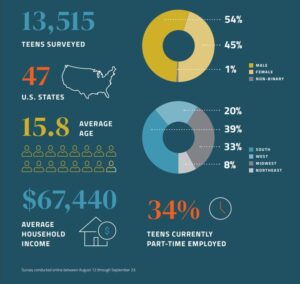
With the latest US retail sales and jobs reports both coming in stronger than the market anticipated, concerns about a looming recession have been easing lately, and Piper Sandler’s semi-annual Taking Stock with Teens survey of 13,500+ teens, which was published this week, showed that spending has been picking up amongst younger cohorts as well. The report found that self-reported teen spending was up +6% y/y to $2,361 in fall 2024, rebounding after a -6% y/y drop in spring 2024. This was supported by sequential improvements in average household income levels, though these were still down -5% from the prior year period. Interestingly, it appears that parents are funding most of the increases in teen spending, given that fewer teens are seeking part-time jobs than beforehand.
Zooming in on more granular insights, one notable callout is that many top brands have been losing share in their respective industries. In the apparel space, Nike, American Eagle, and Lululemon all saw their mindshare amongst teens take a step down sequentially, and in footwear, Nike has also been losing ground to Adidas and New Balance. Similarly, many top companies in the cosmetic space saw their mindshare slip from the last report, though the overall core beauty wallet remained on an upward trajectory, reaching the highest levels since spring 2018. In contrast, on the digital consumption side of things, the survey suggested that the big are getting bigger. Netflix and TikTok both gained popularity amongst teens since the spring, and Roblox also experienced a spike in usage.
These were just a handful of the main points from Piper Sandler’s report. See below for more takeaways that we thought were interesting, and CLICK HERE to see the press release.
- Total levels of teen spending rebounded: Teen self-reported spending of $2,361 was up +6% y/y in fall 2024 (a turnaround from -6% y/y in spring 2024)
- Avg household income took a step up seq: Avg household income was $67,440 in spring 2024 (vs 66,280 in spring 2024 and $70,725 in fall 2023)
- But fewer teens are seeking part-time employment: 34% of teens currently have part-time employment (vs 38% in spring 2024 and 37% in fall 2023)
- Nike cont’d to lose mindshare but is still the top footwear brand: In footwear, Nike lost -4% of mindshare y/y to 57% (vs 59% in spring 2024), w/ a sharp -10% y/y drop among females to 48%
- Nike has been losing share to rivals particularly within upper-income cohorts: Nike saw a -11% y/y decline amongst upper-income teens, while New Balance moved up to #3 (from #4 in fall 2023) and doubled its mindshare to 8% and Adidas grew its mindshare to 14% (vs 3% in fall 2023)
- Lululemon remained at the #3 spot in apparel for all teens: Nike was at #1 by far w/ a 33% share (vs 34% in spring 2024), American Eagle was #2 w/ a 5% share (vs 6% in spring 2024), and Lululemon was #3 at 5% (vs 5% in spring 2024)
- For upper income teens, Lululemon shed -4% of mindshare y/y
- The core beauty wallet remained on an upward trajectory, reaching the highest level since spring 2018: The core beauty wallet incr’d +6% y/y to $342 (vs $339 in spring 2024 – the previous highest level since spring 2018)
- All categories except for skincare grew y/y: Skincare was down -4% y/y, while fragrance was the fastest-growing beauty category at +25% y/y (vs +23% y/y in spring 2024)
- l.f. maintained its position as the top cosmetics brand but lost share seq: e.l.f. gained +6% of share y/y to 35% of female teens (but was down from 38% in spring 2024)
- Ulta is no longer teens’ favorite beauty shopping destination: Ulta now sits at the #2 spot after its share fell -5% y/y to 27% (vs 31% in spring 2024); #1 ranked Sephora’s share was down -1% y/y to 36%, while Target’s share incr’d +4% y/y to 13%
- 22% of teens expect to upgrade to the newest iPhone series this fall/winter: However, this is slightly down from 23% in fall 2023 and 24% in fall 2022
- 87% of teens own an iPhone (vs 85% in spring 2024)
- Nearly 30% of teens plan to upgrade their Apple hardware in the next 6 months b/c of Apple Intelligence
- Daily video consumption trends –
- Netflix’s share of consumption inched upwards seq: Teens spend 30% of daily video consumption on Netflix (vs 29% in spring 2024 and 28.7% in fall 2023)
- YouTube/YouTube TV’s share was flat seq: Teens’ daily video consumption on YouTube/YouTube TV remained at 27% (flat w/ spring 2024 but still down from 29.1% in fall 2023)
- TikTok has been regaining popularity and extending its lead as the top social media app for teens: 39% of teens cited TikTok as their favorite social media app (vs 35% in spring 2024 and 38% in fall 2023)
- Instagram also picked up share in the #2 spot: 32% of teens picked Instagram as their favorite social media app (vs 30% in spring 2024 and 23% in fall 2023)
- Roblox saw a spike in usage: Roblox active usage surged to 46% (vs 34% in spring 2024 and 31% in fall 2023); 17% of teens have never played Roblox (vs 22% in spring 2024 and 24% in fall 2023)
- Top e-commerce sites lost share seq: Amazon was #1 by far w/ a 52% share (vs 55% in spring 2024), SHEIN was #2 w/ an 8% share (vs 12% in spring 2024), and Nike maintained the #3 spot w/ 6%, which was flat seq
- Dietary insights –
- Most teens prefer energy drinks over coffee and soda: 39% of teens prefer coffee compared to 31% and 30% for coffee and soda, respectively
- Monster, Red Bull, Celsius and Alani Nu were the top 4 energy drink brands, respectively: Celsius’ share dropped -2% seq to 15%
- Willingness to try plant-based meat stabilized: This comes after seq declines since spring 2021
- Most teens prefer energy drinks over coffee and soda: 39% of teens prefer coffee compared to 31% and 30% for coffee and soda, respectively
Short Sellers Generally Stick With Current Bets, But SiriusXM & AST SpaceMobile Shares Saw The Biggest Deltas In Short Activity
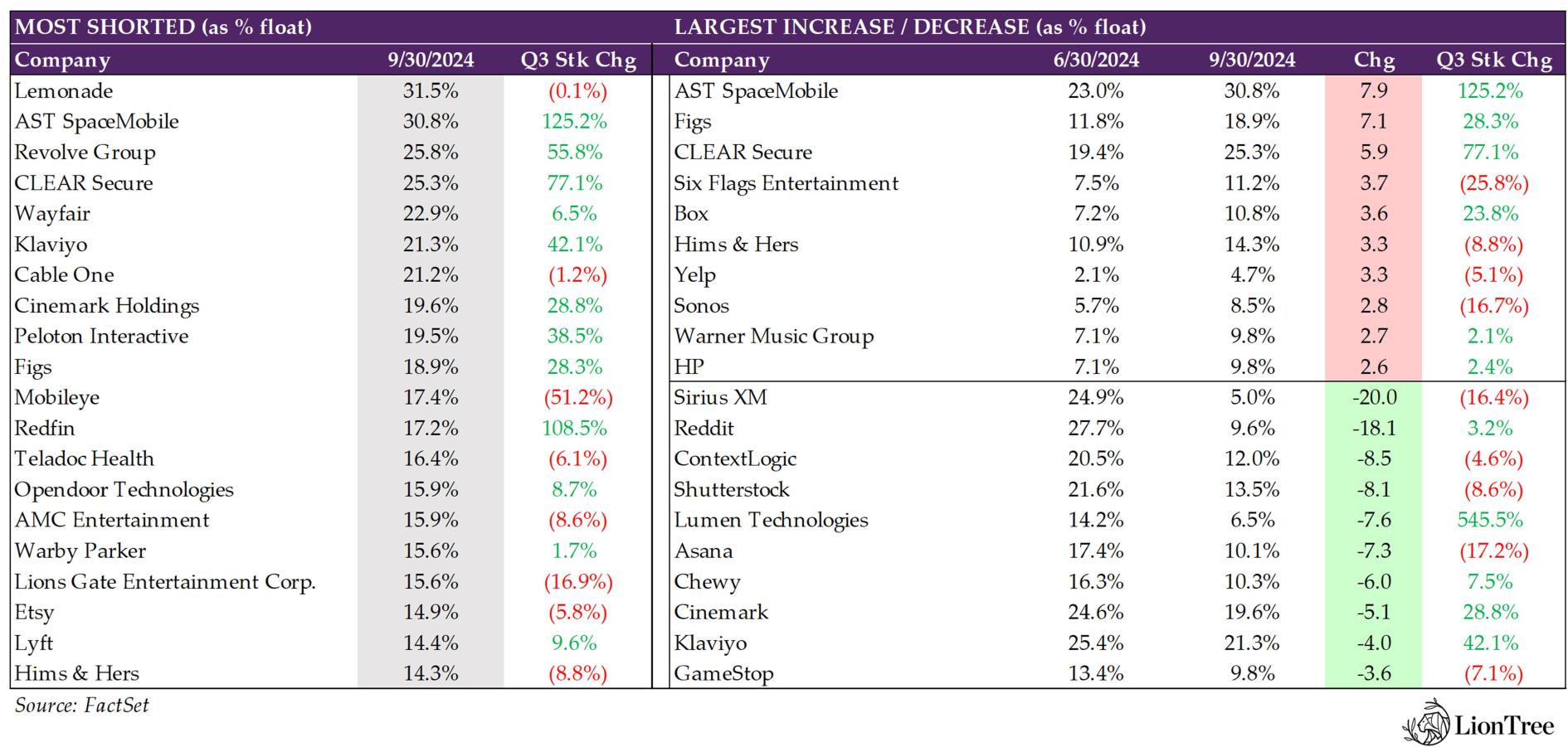
It was another strong quarter for the S&P 500 in Q3, with the index rallying +5.5%, which was on top of the +3.9% it posted in Q2. While up markets are generally good news, they aren’t always the best for short sellers. Where have short sellers been focused? To analyze this, we took a look at short interest levels across the ~180 stocks in our LionTree Universe of tech, media, telco, and consumer stocks with $1bn+ market caps for the period ending September 30.
The top slot for most shorted (as a % of float) remained the same, with Lemonade maintaining its position for the fourth quarter in a row. Also 11 of the top 20 most shorted stocks last qtr remained on the list in Q3, so short sellers were sticking with their bets. In terms of the biggest changes in Q3, SiriusXM saw the most short-covering, while AST SpaceMobile led the list for the largest increase in short interest.
See below for the drilldown.
-> It was a tougher quarter for short sellers in Q3, as only 9 of the top 20 most shorted stocks underperformed the S&P 500’s +5.5% during the period
Most Shorted Stocks (As % Of Float)
- The Top 3 Most Shorted – #1 is Lemonade, #2 is AST SpaceMobile, #3 is Revolve -> Lemonade was the most shorted stock for the fourth qtr in a row, while AST SpaceMobile ascended from the #7 position last qtr; Revolve was not included in the analysis last qtr because it did not meet the market cap minimum of $1bn, but if it was, it would have taken the #3 position last qtr
- Reddit and SiriusXM both fell out of the Top 3
- Reddit: #2 in Q2 -> #46 in Q3
- SiriusXM: #3 in Q2 -> #84 In Q3
- Reddit and SiriusXM both fell out of the Top 3
- Stocks that dropped out of the Top 20 most shorted: Asana, Bowlero, Chewy, Gogo, On Holding, Penn National Gaming, Reddit, Shutterstock, SiriusXM
- Stocks that joined the Top 20 most shorted: AMC Entertainment, Etsy, Figs, Hims & Hers, Klaviyo, Lyft, Redfin, Revolve Group, Warby Parker
Largest DECREASE in Short Interest (As % Of Float)
- The largest decrease in short interest was for SiriusXM: The company posted a -20.0ppt decrease in Q3 to 5.0%; It went from being the #3 most shorted stock in Q2 to dropping out of the Top 20 in Q3
- 4 of the Top 10 decreases in short interest are companies in the Consumer Internet sector: Reddit, ContextLogic, Shutterstock, and Chewy -> Chewy was the only company of the group to outperform the S&P 500 (up +5.5%)
Largest INCREASE in Short Interest (As % Of Float)
- The largest increase in short interest was for AST SpaceMobile: The company was not only the second most shorted stock at the end of Q3, but it also saw the largest increase in short interest from the end of Q2 (+7.9 percentage point increase to 30.8%) -> The stock traded up a whopping +125.2% in Q3, easily outperforming the S&P 500’s +5.5%
- Other stocks with notable increases in short interest = Figs, CLEAR Secure, and Six Flags Entertainment -> Figs and CLEAR outperformed the S&P 500, while Six Flags underperformed
Social Media Platforms Look To Attract Advertisers With New Features
When it comes to the digital advertising space, the prevailing theme as of late has been how the big have been getting bigger, and Meta took steps to continue that trend this week by announcing new gen AI-powered tools for advertisers that will be widely available in early 2025. Along with a Video Expansion feature that enables advertisers to adjust aspect ratios to deliver a more immersive video experience, the company introduced an Image Animation tool that allows advertisers to create video-based ads from static images, which will be particularly impactful for brands with limited video resources. With 1mn+ advertisers already using Meta’s gen AI-powered tools on a monthly basis, this number seems likely to rise with these new tools on the way. On a related note, following the vision laid out by CEO Evan Spiegel in his last letter to employees in September (link), the company has started to test Sponsored Snaps and Promoted Placements, partnering with Disney, McDonald’s, and Taco Bell as part of the initial launch. However, it is still unclear when these will be rolled out to the wider user base.
See below for more details.
- Meta unveiled new gen AI tools to help advertisers create videos (link): The annc’ment was made at the Advertising Week 2024 event in New York; The new tools will be integrated into Ads manager as part of the Advantage+ creative suite, which will launch in early 2025
- A new Video Expansion feature allows advertisers to expand their video creative assets: The tool generates unseen pixels to adjust aspect ratios, providing a more immersive video experience
- Advertisers were specifically requesting this capability, per Meta: And particularly small bizs, per Meta; This follows the success of a similar “image expansion feature” in Meta’s image-based gen AI-powered ad creation tools
- Advertisers can create dynamic videos from static images w/ the Image Animation tool: This can help brands w/ limited video resources create high-performing video-based ads for Instagram Reels
- Early feedback for Image Animation has been positive: Advertisers have touted the tool’s ability to extend the lifespan of their ad creative
- Meta also rolled out a “diversity of ad formats” for a new, full-screen video tab: Including standalone video, carousel, in-stream, and overlay ads; Other new tools help better incorporate creator mkting assets
- There are compelling reasons for advertisers to look more into video ads: The avg user on Meta spends 60%+ of their time on Facebook and Instagram watching videos, including Reels, longer videos, and livestreams
- The Co’s existing gen AI-powered ad creative tools have already proven to be effective: Ad campaigns designed exclusively w/ these tools achieve a +11% higher click-through rate than those created using traditional methods; They also see a +7.6% greater conversion rate vs standard campaigns
- 1mn+ advertisers have used at least one of Meta’s gen AI tools on a monthly basis: 15mn ads have been created in the last month
- A new Video Expansion feature allows advertisers to expand their video creative assets: The tool generates unseen pixels to adjust aspect ratios, providing a more immersive video experience
-> Meta also started an international launch of Meta AI this week, rolling out the AI assistant in Brazil, Bolivia, Guatemala, Paraguay, the Philippines, and the UK; It is also slated to debut in Algeria, Egypt, Indonesia, Iraq, Jordan, Libya, Malaysia, Morocco, Saudi Arabia, Sudan, Thailand, Tunisia, United Arab Emirates, Vietnam and Yemen over the coming weeks; The expansion also comes w/ support for more languages, w/ Tagalog being added this week and Arabic, Indonesian, Thai, as well as Vietnamese coming soon (link)
- Snap plans to introduce new sponsored ad placements to Snapchat (link): These are a “natural extension of the way people already engage w/ bizs on Snapchat and help advertisers expand their reach w/ the Snapchat community”; Testing is currently underway
- Sponsored Snaps deliver a full-screen vertical video Snap directly to users: While Snapchat’s Chat tab had been kept free of ads, users will now start to see “Sponsored Snaps” from advertisers alongside messages from friends for the first time
- Disney is Snapchat’s launch partner for Sponsored Snaps
- Users won’t be notified about Sponsored Snaps: They will also be able to differentiate them from regular messages; If a Sponsored Snap isn’t opened, it will eventually be removed from their inbox
- BUT they can engage w/ a Sponsored Snap to learn more: Snapchat users can reply to an add or click on a link to learn more
- Promoted Places highlight sponsored places of interest on the Snap Map: These will help bizs “drive and measure incremental visitation to their locations”
- McDonalds and Taco Bell are launch partners for Promoted Places
- Designating places as “Top Picks” drives an avg visitation lift of +17.6% for frequent Snapchat users: This is compared to places that don’t have annotations
- Sponsored Snaps deliver a full-screen vertical video Snap directly to users: While Snapchat’s Chat tab had been kept free of ads, users will now start to see “Sponsored Snaps” from advertisers alongside messages from friends for the first time
Regulators Seek Structural Changes To Big Tech Platforms
On the regulatory side of things, Google was front-and-center this week, as it was reported that the US Justice Department is contemplating breaking up the company as part of a broader set of “behavior and structural remedies”. This comes after Judge Amit Mehta ruled in early August that the company violated antitrust laws in both online search and search text ad markets, though Google can still appeal this decision once remedies are finalized. That said, this may not occur until August 2025. Separately, TikTok also remained in regulators’ crosshairs this week. The company is already contesting a law that could ban its app in the US as soon as next year as well as a separate DoJ lawsuit targeting its data collection practices, and attorneys general from 14 states added to that regulatory pressure, filing separate lawsuits against TikTok this week. The states claim that TikTok has prioritized profits over child safety and take issue with several aspects of its platform. If the litigation against the company is successful, TikTok could be on the hook for financial penalties, including a requirement that it repay any profits received from ads directed to New York teens or pre-teens.
See below for more.
- The DoJ is considering splitting up Google (link): The US Justice Dept is contemplating asking a federal judge to force Google to sell of parts of its biz to mitigate the Co’s dominance in search
- The DoJ “is considering behavioral and structural remedies”: The agency’s 32-page framework of potential options includes preventing “Google from using products such as Chrome, Play, and Android to advantage Google Search and Google search-related products and features”, among other remedies
- Google could also be ordered to provide access to the underlying data used to build its search results and AI products: The DoJ also may seek a requirement for Google to allow websites more ability to opt out of its AI products
- The Co also be restricted from investing in search competitors or potential rivals
- Next steps: The DoJ plans to provide a fuller proposal on remedies next month and then will begin gather addt’l documents and evidence from Google for a two-week remedies hearing in April
- A ruling on the remedies will be made by Aug 2025: According to Judge Amit Mehta
- Google still plans on appealing Mehta’s earlier decision: In early Aug, Mehta ruled Google broke antitrust laws in both online search and search text ad mkts; However, Google must wait until the judge finalizes a remedy before submitting an appeal
- The DoJ “is considering behavioral and structural remedies”: The agency’s 32-page framework of potential options includes preventing “Google from using products such as Chrome, Play, and Android to advantage Google Search and Google search-related products and features”, among other remedies
-> Google shares ended the week down -2.3% and are down -14.6% since July 11; YTD, Google stock is still trading up +16.9%
- TikTok was sued by 14 states due to alleged harms to children’s mental health (link): The bipartisan group of 14 attorneys general accused TikTok of having “addicted” young people and harmed their mental health; The lawsuit seeks financial penalties against TikTok
- The lawsuits take issue w/ several elements of TikTok: Such as the platform’s endlessly scrolling feed of content, the trend of TikTok “challenge” videos that sometimes prompt users to engage in risky behavior, and late-night push notifications that can potentially disrupt a child’s sleep
- “TikTok uses an addictive, content-recommendation system”: This is “designed to keep minors on the platform as long as possible and as often as possible, despite the dangers of compulsive use”
- The Co’s “underlying biz model focuses on maximizing young users’ time on the platform”: This is so TikTok “can boost rev from selling targeted ads”
- “TikTok considers users under the age of 13 to be a critical demo”: However, the Co says it only allows age 13+ users on the platform
- Other complaints: Involve the Co’s beauty filters, TikTok “challenges”
- The coalition is being co-led by NY and CA’s attorneys general: That said, the lawsuits were each filed separately by members of the coalition
- TikTok “strongly disagree[s] w/ these claims”: The Co believes many of them to be “inaccurate and misleading” and has implemented “robust safeguards” to ensure the safety of its platform, per a spokesperson
- The lawsuits take issue w/ several elements of TikTok: Such as the platform’s endlessly scrolling feed of content, the trend of TikTok “challenge” videos that sometimes prompt users to engage in risky behavior, and late-night push notifications that can potentially disrupt a child’s sleep
Tencent/Ubisoft: Is Dealmaking Percolating Again In Video Games?
This week, headlines emerged that Tencent is in talks with Ubisoft’s founding Guillemot family regarding a potential transaction to stabilize the former’s stock and bolster its value. The two parties’ relationship extends back to 2022, when Tencent bought a large stake in the Guillemot brothers’ holding company and acquired nearly a 10% stake in Ubisoft. The prior deal was seen as a way of keeping rival suitors at bay and allowing the Guillemot brothers to maintain operational autonomy, and it will be interesting to see if a new deal will be structured along similar lines. However, there’s no certainty that a deal will get done at this point – See below for more details.
- Tencent is reportedly discussing a potential buyout of Ubisoft w/ the founding Guillemot family (link): The parties are considering options and are reportedly working w/ advisers to explore ways to stabilize Ubisoft and bolster its value, per sources; Ubisoft has lost more than half its mkt value this yr
- One possibility would be partnering to take the Co private: Some minority shareholders, including AJ Investments, have been pushing for either a take-private or a sale of Ubisoft to a strategic investor
- BUT discussions are still at an early stage: And there’s no certainty that they will lead to a transaction, per sources
- Ubisoft’s response: Ubisoft “regularly reviews all its strategic options in the interest of its stakeholders and will inform the market if and when appropriate… mgmt is currently focused on executing its strategy, centered on two core verticals – Open World Adventures and GaaS-native experiences
- Tencent and Ubisoft’s relationship extends back to 2022: That yr, the Guillemot family partnered w/ Tencent, which bought 49.9% of the Guillemot bros holding Co and a direct stake in Ubisoft; As of April 2024, Tencent owned 9.2% of Ubisoft’s net voting rights (vs the Guillemot family’s 20.5%)
- One possibility would be partnering to take the Co private: Some minority shareholders, including AJ Investments, have been pushing for either a take-private or a sale of Ubisoft to a strategic investor
-> Separately, Ubisoft was sued this week for allegedly sharing player data from its store and Ubisoft+ subscription svs w/ Meta; In the suit, plaintiffs Trevor Lakes and Alex Rajjoub claim that they learned of the data sharing when they individually bought or downloaded games from Ubisoft’s website; During these instances, they were also logged into their respective Facebook accounts, which revealed key personal details (link)
-> Lastly, to flag in interactive entertainment this week, Roblox is being accused by Hindenburg Research of inflating user metrics to investors; The short-selling firm released a report that alleges that Roblox has been exaggerating daily user and engagement figures to investors since it went public in 2021; Roblox rejected the claims in the report as “simply misleading” and “firmly believe[s] that Roblox is a safe and secure platform and in the financial metrics [it] report[s]”; It also pointed out that the authors of the report “have an agenda” (link); Roblox shares fell -2.1% in reaction to the report and recovered slightly to end the week down -0.9%; YTD, Roblox stock is trading down -9.0%
Grab Bag: Disney Parks Price Changes/Netflix Maintaining Compensation Model/TikTok Layoffs
- Disney introduced pricing changes at its US theme packs (link/link)
- Walt Disney World launched a new, discounted package: The three-night, two-day package offers a $200 savings discount and is good from Feb 26 through June 30
- BUT some customers have had difficulties accessing the promo: Some complained that they no longer had the option to choose it on Disney’s website
- The park is also offering -25% off room deals for early next yr: As well as special benefits for local residents
- Room-only deals are also getting cheaper: Includes -20% off from Jan 1 to Feb 20, and -25% off from Feb 23 to April 30 for people that want to stay in the area but not necessarily visit Disney’s theme parks
- Ticket prices for other Walt Disney World attractions/parks are going up in 2025 (link):
- Changes in 1-day ticket prices:
- Magic Kingdom: $124 to $189
- EPCOT: $119 to $169
- Hollywood Studios: $119 to $179
- Animal Kingdom: $119 to $15912
- Multi-day ticket prices will also see an increase: Specific rates will depend on the number of days and the parks included
- Changes in 1-day ticket prices:
- Disneyland hiked prices by ~+6% on its busiest days: Tickets on holidays and weekends to both Disneyland and California Adventure rose from $194 to $206, effective immediately
- “Magic Key” annual passes now cost +$100 more: Guests will now need to pay $599 (vs $499 previously) for unlimited access to the parks on select days
- Prices for other Magic Key prices were raised as well:
- The “Inspire” pass: $1,649 to $1,749
- The “Believe” pass: $1,249 to $1,349
- The “Enchant” pass: $849 to $974
- The Lightning Lane Multi-Pass now costs $32 (vs $30 previously)
- Younger kids will have the oppty to visit for $50/ticket: Offer runs between Jan 7 and March
- Prices for hopper passes were unchanged at $65
- Prices for other Magic Key prices were raised as well:
- “Magic Key” annual passes now cost +$100 more: Guests will now need to pay $599 (vs $499 previously) for unlimited access to the parks on select days
- Walt Disney World launched a new, discounted package: The three-night, two-day package offers a $200 savings discount and is good from Feb 26 through June 30
- Netflix has no plans to change its compensation model, per chief content officer Bela Bajaria (link): Following previous press speculation, at the Bloomberg Screentime conference, Bajaria said, “Our model works great for talent. It works great for filmmakers. It’s worked well for us. We like the model… it’s worked for a long time, so we are not changing our comp model”
- There have, however, been a “few bespoke deals”: Bajaria stressed that the small number of one-off deals where talent “was interested in the oppty” is not indicative of any larger change – “It’s a very tiny thing that has blown up to the story of, ‘We’re changing our biz’”
- Netflix has made some adjustments to its comp model over the past yr: The Co started to provide success-based bonuses in the wake of last yr’s SAG-AFTRA strikes and also changed its exec pay structure last yr to include smaller salaries and more stock-based comp
- TikTok laid off hundreds of employees, mainly in content moderation (link): The cuts were largely focused in Malaysia, w/ sources indicating that the Co slashed 700+ jobs in the country, though TikTok later clarified that less than 500 employees in Malaysia were affected
- More cuts are likely on the way: Sources noted that the Co is planning more retrenchments next month to consolidate more of its regional operations
- These come as part of the Co’s plans to improve its moderation operations…: TikTok expects to invest $2bn globally in trust and safety in 2024 and will continue to improve efficiency, w/ 80% of guidelines-violating content now removed by automated tech, per a spokesperson
- … Though Malaysia has also been taking a tougher stance on tech Cos lately: The Malaysian gov’t recently requested that social media operators apply for an operating license by Jan as part of a push to combat cybercrime and harmful content
- The layoffs represent a small fraction of ByteDance’s workforce: The Co has 110,000+ employees in 200+ cities globally, per its website
Stock Market Check
This Week's Other Curated News
Advertising/Ad Agencies/Ad Tech
- A collaborative effort in the digital advertising industry has significantly reduced losses from Invalid Traffic (IVT), saving advertisers approximately $10.8 billion in U.S. display and video ads in 2023. According to the 2024 US Ad Fraud Savings Report by TAG and industry associations, IVT losses were reduced by 92% due to the implementation of anti-fraud standards. Without these measures, estimated losses would have reached $11.78 billion. Over 90% of U.S. ad spend flowed through compliant channels. (PR Newswire)
- Adelaide, an attention measurement provider, annc’d that attention-based segments are available for pre-bid targeting in The Trade Desk. Buyers can target low-, medium-, and high-attention inventory via the DSP’s self-serve platform. Until recently, attention was a post-campaign measurement. But momentum has been building towards using attention as a pre-campaign targeting parameter. (AdExchanger)
- Comscore annc’d a renewal and expansion of its six-yr-old partnership w/ Vizio’s Inscape for the unit to provide smart TV data for the vendor’s audience measurement system. The renewal means that Comscore will continue to leverage Inscape’s data in its measurement offering across all 210 local mkts. The relationship between the two Cos has grown over time to also include proprietary ad tech. (StreamTV Insider)
- Genius Sports launched Fanhub, an omnichannel mkting platform geared specifically for brands to target sports fans. Fanhub will allow advertisers to make programmatic and social media placements, including in CTV, display, audio, and digital out-of-home (DOOH). Billed as the first of its kind in for sports, the platform will access the same general mkt ad inventory that other programmatic cos such as The Trade Desk use to make their buys. (Sportico.com)
- Google’s dominance in the nearly $300 billion search advertising market is weakening, according to The Wall Street Journal. Rivals are encroaching on its territory, with TikTok allowing brands to target ads based on user search queries, directly challenging Google’s core business. Additionally, AI startup Perplexity, backed by Jeff Bezos, plans to introduce ads with its AI-generated answers. This shift, alongside competition from Amazon, is intensifying pressure on Google in the ad space. (TipRanks Financial)
- Instacart and Roku are providing valuable insights that consumer-packaged goods (CPG) advertisers need to connect w/ relevant audiences in an expanded partnership. W/ new interactive ad formats, enhanced targeting capabilities, and closed-loop measurement, brands can now get more from their advertising efforts, whilst consumers are closer to personalized shopping experiences while watching TV in the comfort of their homes. (ADVANCED-TELEVISION)
- OpenAI’s SearchGPT, which the Co said was a temporary prototype when it launched in July, will be integrated into ChatGPT “by the end of the yr”. “We think there’s an oppty here to drive significant incremental traffic from new audiences. And then we’ll have to see if that is valuable enough to partners to remain opted-in,” said Varun Shetty, OpenAI’s head of media partnerships. (Search Engine Land)
- PayPal is set to announce the official launch of PayPal Ads. This new advertising biz looks to help marketers tap into data on the billions of transactions that take place across PayPal’s payments platforms. Brands and agencies in the US will be able to run ads across properties, including PayPal, Venmo, and Honey. Next yr, PayPal also intends to let these advertisers purchase ads across the 30mn+ merchants that use its payment systems. (Business Insider)
- Tesco’s retail media division has unveiled a host of new options for advertisers including video advertising and store wraps. The co said that the new video option would allow brand advertisers to launch short-form videos on Tesco’s website and app users. Meanwhile, its expanded options for in-store advertising include the ability to do store wrap advertising at up to 50 locations. (Retail Gazette)
Artificial Intelligence/Machine Learning
- Clearview AI, a controversial facial recognition Co that’s built a massive photographic dossier of the world’s people for use by law enforcement, has been used in 1,000+ police investigations without authorities annc’ing use of the software. An investigation by The Washington Post has revealed how hundreds of US citizens have been arrested after being connected to the crime through use of the facial recognition software. (Daily Mail)
- OpenAI is reportedly “pursuing” plans to abandon its nonprofit roots and restructure as a for-profit entity, a move that comes as the Co contends w/ turmoil in its leadership ranks. The Co’s board is planning to restructure as a public benefit corporation, an unusual structure that would have its leaders weigh both societal impact and profit when making decisions. Rival firms like Elon Musk’s xAI and Amazon-backed Anthropic use the structure. (New York Post)
- SAP is expanding capabilities within its copilot Joule, adding multiple collaborative AI agents. The agents can analyze and resolve disputes, such as incorrect and missing invoices or duplicate payments, and streamline financial processes, like automating bill payments and ledger updates. “Collaborative multi-agent systems deploy specialized AI agents to tackle specific tasks and enable them to collaborate on intricate business workflows, adapting their strategies to meet shared objectives,” SAP said. (CIO Dive)
- US technology consulting Cos Accenture, Deloitte, Quantiphi and SoftServe are adopting NVIDIA Agent Blueprints and NVIDIA NeMo and microsvs to help clients in healthcare, manufacturing, telecommunications, financial svs and retail create custom generative AI agents and copilots. NVIDIA NeMo microsvs support end-to-end model customization workflows and the development of AI agents to help enterprises bring custom generative AI applications to market faster, reducing development costs. (THEFASTMODE)
- Walmart has begun testing its own large language model (LLM), which it may use for other applications. Wallaby, a suite of retail-focused LLMs, is trained on decades of Walmart data and understands how Walmart employees and customers talk. It is also trained to respond in a more natural tone to better align w/ Walmart’s core values of customer svs. Over the next year, we’ll start to leverage Wallaby, Desirée Gosby, VP of emerging Technology at Walmart Global Tech said. (VentureBeat)
- Zoom has annc’d that it will translate a video clip that users record of themselves into a digital clone, complete with a head, upper arms, and shoulders. Users will be able to type a script of what they want the digital double to say, and Zoom will generate audio that syncs with the avatar’s lip movements. Smita Hashim, Zoom’s chief product officer, said that the custom avatars were designed to help people chat “asynchronously” with colleagues in a “faster, more productive” way. (TechCrunch)
Broadcast/Cable Networks
- Comcast is in a carriage dispute with the newly launched Chicago Sports Network (CHSN), the successor to NBC Sports Chicago, ahead of the Chicago Blackhawks’ first regular-season game. CHSN, home to the White Sox, Bulls, and Blackhawks, launched on October 1 but isn’t yet available on Comcast. Central to the issue is Comcast’s desire to move sports networks to a premium tier, while CHSN seeks basic tier inclusion. (Awful Announcing)
- SES annc’d the extension of its long-standing partnership w/ Sky. Sky agreed to a multi-yr contract renewal for satellite capacity and back-up svs from SES’s prime video neighborhood of 28.2/28.5 degrees East. SES will continue providing the satellite capacity to deliver channels into Sky Q boxes in the UK and Republic of Ireland. This new agreement also extends SES’s back-up svs contract with Sky until the end of 2027. (Broadband TV News)
Cable/Pay-TV/Wireless
- AT&T is raising prices for its Fiber and Internet svs, adding $5 to monthly bills starting Nov 10. However, customers who enroll in AutoPay and paperless billing can save between $5 and $10 per month, effectively offsetting the price increase. This follows AT&T dropping its auto pay discount on credit cards from $10 a month to $5 a month last year, as it tries to push people over to debit cards and bank account payments. (Cord Cutters News)
- FCC gave permission for T-Mobile and Starlink to offer direct-to-cellular svs to T-Mobile US customers in parts of North Carolina as part of the ongoing response to Hurricane Helene. The storm devastated communications across multiple Southeastern states, w/ recovery going particularly slowly in the rural, mountainous areas of the Carolinas and Georgia where roads and bridges have been washed out or destroyed. (RCR Wireless News)
- MasOrange’s 5G network currently reaches 86% of Spain’s population. The Co has accel’d the expansion of its 5G network this year, w/ 3,530 municipalities now able to access the service in Spain. The Co’s plans include continuing these deployments and covering almost 3,700 municipalities w/ 5G infrastructure by the end of this yr, up from nearly 2,600 at the end of 2023. (RCR Wireless News)
- Polish operator Play has launched a promotion offering B2B customers a free 5G subscription for one year under its XL for Business tariff. New clients can enjoy unlimited data, calls, and 300 minutes for EU international calls at no cost for 12 months. After the promotional period, the monthly fee will be PLN 105 for one SIM and PLN 40 for additional cards. Additionally, customers transferring their numbers can purchase select 5G smartphones at a discount of PLN 1,000. (THEFASTMODE)
- Vodafone has signed a 10 yr, billion-dollar deal with Google to enhance its use of generative AI technologies across Europe and Africa. The partnership will provide AI-powered Pixel devices, integrate Google Cloud’s GenAI tech into Vodafone TV, and offer Google One AI Premium subscriptions by 2025. This collaboration aims to improve customer experiences and workforce productivity while expanding Vodafone’s AI capabilities. (Fierce Network)
Capital Market Updates
- Despite a recent stock market rally, US venture capital investors remain cautious, with Q3 2024 deals totaling $37.5 billion, a 32% drop from the prior quarter. Tougher terms and a lack of liquidity have delayed funding, except for AI companies like OpenAI. Lower interest rates and a stronger IPO market could revive activity, but private firms like Stripe and SpaceX are opting for secondary share sales for liquidity. (PYMNTS.com)
- Initial public offerings (IPOs) are slowly coming back in Europe after a summer lull. Polish convenience store group Zabka’s IPO is set to raise 6.45 bn zlotys ($1.64bn) this month, while Spanish energy and water utility Cox Energy plans to raise 300 mn euros ($328mn). German academic publisher Springer Nature debuted in Frankfurt after an IPO that was set to raise up to 602mn euros. (Yahoo Finance)
Cloud/DataCenters/IT Infrastructure
- Blue Owl Capital entered into a definitive agreement to acquire digital infrastructure fund manager IPI Partners from an affiliate of ICONIQ Capital and an affiliate of Iron Point Partners for ~$1.0bn. The purchase price will be comprised of ~80% Blue Owl equity and ~20% cash. The acquisition is expected to close in Q4:24 or Q1:25, subject to certain closing conditions including third party consents. (PRNEWSWIRE)
Crypto/Blockchain/web3/NFTs
- US investors are very much keen on investing in exchange-traded funds that hold cryptocurrencies, a new survey commissioned by financial svs giant Charles Schwab showed. Some 45% of respondents said they plan to invest in crypto via ETFs over the next yr, up from 38% a yr earlier, surpassing demand for bonds and alternative assets. Only US equities fared better, w/ 55% of participants planning to invest. (COINDESK)
Cybersecurity/Security
- 237K+ Comcast customers had their personal data stolen by hackers in Feb. The breach, which occurred on Feb 14 and was discovered on July 17, didn’t take place on Xfinity or Comcast’s systems but at Financial Business and Consumer Solutions (FBCS), a debt-collection agency Comcast previously used. Comcast customers were notified about the breach on Aug16, per a filing w/ Maine’s attorney general. (Fierce Network)
- Cyber-crime syndicates raked in as much as $37bn last yr and are intensifying operations across Southeast Asia despite mounting law enforcement efforts, the United Nations said. “The transnational organized crime threat landscape in Southeast Asia is evolving faster than in any previous point in history,” per the United Nations Office on Drugs and Crime. Nations including Myanmar, Cambodia and Laos have become a hotbed for crime syndicates. (https://www.bangkokpost.com)
- The director of the National Security Agency said a Chinese hack of three major telecommunications firms is under investigation, but it remains “premature” to discuss the case. If China penetrated the wiretapping system, it would be a serious security breach. In a statement, a spokesperson from China’s embassy in Washington said the US intelligence community and cybersecurity cos are spreading “disinformation” to get govt funding and contracts. (NBC News)
eCommerce/Social Commerce/Retail
-
- Aldi is recruiting for a range of permanent store positions, including store assistants, managerial positions and cleaners. Starting pay for store assistants sits at £12.40 an hour nationally and £13.65 for those w/in the M25. Aldi joins Sainsbury’s and Morrisons in launching its recruitment drive for the festive season, w/ the supermarkets hiring an additional 20,000 and 3,000 team members respectively to support w/ the rush of shoppers over Christmas. (Retail Gazette)
- Amazon annc’d a raft of new AI features and tech to speed up deliveries and reduce costs across its biz. The Co plans to deploy a fleet of 1,000 electric delivery vans w/ an AI-powered “vision-assisted package retrieval” (VAPR) tech. VAPR works by beaming down lights from cameras and LED projectors in the van’s ceiling, with a green circle highlighting where the right parcels are and red crosses to signal the ones to ignore. (Amazon)
- Amazon annc’d AI-generated shopping guides for hundreds of different product categories. The Co’s execs say its engineers are also exploring more ambitious AI svs, including autonomous AI shopping agents that recommend goods to a customer or even add items to their cart. AI agents will likely be chatbots that proactively recommend products based on what they know of your habits and interests, as well as a grasp of broader trends. (WIRED)
- Amazon closed three of its Amazon Go locations in NYC on Sept 27, a spokesperson confirmed. The Co said the leases for these locations were coming up for renewal and that Amazon decided the costs were too high. While Amazon Go is not growing as Amazon once hoped, the Co is not giving up on its automated c-store banner just yet, as Amazon Go opened a new store in Bellevue, Washington, on July 31. (Retail Dive)
- Grocery price inflation incr’d slightly to 2.0% during the four weeks to Sep 29, up from 1.7% last month, per Kantar. Take-home sales at the grocers grew by 2.0% over the same period. The findings, which come ahead of the Chancellor’s autumn budget, showed that spending on promoted items cont’d to rise, climbing by 7.4% in Sept, as households sought to manage their finances. In comparison, full price sales nudged up by 0.3%. (Retail Times)
- Ikea has slashed prices and committed itself to making more price cuts in the future in an effort to win back cash-strapped customers. Ingka Group, which owns most IKEA stores globally, reported 39.6 bn euros, or $43.3 bn, in sales for its fiscal yr 2024 which ended Aug. 31. IKEA started cutting prices after seeing a drop in store visits and sold quantities. (New York Post)
- In-store shopping sentiment is up 21%, per a Ryder System annual e-commerce study. 61% of survey participants report shopping in-store specifically b/c they enjoy the experience. While consumers have a robust appetite for online shopping they are embracing in-person shopping. The fact consumers want a blend of physical and digital convenience underscores the important of retailers having an omnichannel strategy. (retailcustomerexperience.com)
- Kayou, a Chinese maker of trading cards and stationery w/ animation themes, has pushed back its plan for an initial public offering in Hong Kong because it hasn’t received approval to list from China’s securities regulator, according to people familiar w/ the matter. Kayou’s Hong Kong listing application lapsed at the end of Jul., the exchange’s website shows. (Yahoo Finance)
- Orvis is laying off 112 employees (~8% of its workforce), closing some stores, and dropping its iconic catalog. The Co is also narrowing its assortment, which will reduce top-line sales but focus the brand, per the statement. The changes will roll out over the next 18 months. Layoffs affected will receive two months of full pay and benefits, addt’l severance pay, and assistance with health insurance and job transition svs. (Retail Dive)
- Richemont agreed to offload its troubled online fashion biz Yoox Net-A-Porter to Mytheresa in exchange for shares in the Co. The deal will see no cash change hands. Instead, Richemont will take a 33% stake in Mytheresa, which also sells luxury goods online, in exchange for transferring YNAP, along w/ its existing cash balances and access to a six-yr debt facility. Richemont said it will have to take another write-down of €1.3bn ($1.4bn) on YNAP. (Bloomberg)
- Shein’s UK sales soared to £1.55bn ($2bn) last yr ahead of the Co’s potential IPO in London. Shein is awaiting regulatory approval in China and the UK to proceed w/ an IPO. The Co saw its British rev rise 38% y/y in 2023, according to a filing last week at UK registry Companies House. Pretax profit in Britain doubled in 2023 to £24.4mn. The IPO could value Shein at ~£50bn, Bloomberg reported earlier this yr. (Fortune Europe)
- Temu is facing another class action lawsuit accusing it of sending marketing texts to people on the National Do Not Call Registry. In July, another lawsuit was filed against Temu alleging the same claim. However, the plaintiff voluntarily dismissed the complaint. In the newly filed case, attorneys for the plaintiffs are requesting a jury trial. This class action case marks the latest in a string of recent legal battles for Temu. (Fashion Dive)
- The European Commission said it had sent a request for information to shopping website Temu under the Digital Services Act, asking Temu for information on steps it was taking to stop illegal products being sold on its platform. Temu is a discount-focused shopping platform owned by the Chinese co PDD Holdings. In May, the European Commission had already stated that Temu would have to comply w/ stricter EU online content rules after its user numbers exceeded a key criterion. (The Guardian)
- The National Retail Federation won’t release a report on shrink this yr after conducting annual research on the topic for more than three decades. The decision came out of NRF’s ongoing practice of reevaluating “the methods and tools we use for capturing key trends that impact bizs and consumers to ensure that we are providing the most accurate and actionable information possible”. (Retail Dive)
- Total UK retail sales rose 2% in Sept, compared to growth of 2.7% in the same month last yr. This is above the 12-month avg growth of 1.1%. Food sales increased 3.1% y/y over the three months to Sept, against a growth of 7.4% in Aug 2023 and belwo the 12-month avg of 4.4%. However, non-food sales slipped 0.3% in the three months, partially offset by a 3.4% increase in online non-food sales. (Retail Gazette)
- Urban Outfitters is promoting new price drops in Q4 ahead of the height of the holiday season. A green banner at the top of a page of the retailer’s website reads: “We heard you. We were a lot. We’re lowering prices on over a hundred of your favorite styles.” The offering is centered on men’s and women’s apparel, including graphic T-shirts, pants, dresses, sweaters, sweatshirts, and jackets. (Retail Dive)
- Zalando has upgraded its outlook for the yr as strong consumer demand sent its Q3 sales and profitability soaring. The online retailer’s adjusted EBIT skyrocketed from £19 to £78m (€93m), w/ strong demand driving its number of active customers to over 50m. Sales rose 5% to £2.01bn (€2.4bn) and gross merchandise volume increased 7.8% to £2.93bn (€3.5bn). (Retail Gazette)
Film/Studio/Content/IP/Talent
- Imax has named Jonathan Fischer, who has held senior-level executive posts at Netflix, Illumination and New Regency, as its Chief Content Officer. In his new role, Fischer will oversee Imax’s content strategy across Hollywood and international films, as well as Imax’s documentaries and live events. Fischer’s arrival comes about 18 months after the departure of Megan Colligan, a former studio exec who steered content initiatives for Imax and rose to the post of president during a nearly 5-yr run. (Deadline)
- Legendary Entertainment is in advanced talks to buy out Dalian Wanda Group Co’s stake in the movie studio, people familiar w/ the matter said, as the Chinese conglomerate looks to unwind one of its most high-profile overseas acquisitions. Legendary is looking to fund the potential transaction w/ its own financial resources, the people said, asking not to be identified as the information is private. Wanda acquired the film studio for about $3.5 bn in 2016. (Bloomberg)
- OpenAI annc’d a partnership w/ Hearst, the media conglomerate behind outlets like the Houston Chronicle, the San Francisco Chronicle, Esquire, Cosmopolitan, Elle and others. Under the partnership, OpenAI’s products, will be able to display content from more than 20 magazine brands and more than 40 newspapers, the co’s annc’d. As part of the agreement, Hearst content in ChatGPT will include appropriate citations and link users to the original Hearst sources, the media co said in the annc’mnt. (CNBC)
- The Nautilus live action series unveiled a first trailer. Nautilus tells the origin story of Captain Nemo: an Indian Prince robbed of his birthright and family, joining him as he steals a formidable prototype submarine and escapes into the Indian Ocean w/ a crew to enact revenge against the East India Mercantile Co. The series was initially w/ Disney+ before switching to AMC, Prime Video in the UK and Ireland and Stan in Australia. (Deadline)
- Warner Bros‘ Joker: Folie a Deux opening weekend was even lower at $37.8mn vs the $40mn that the studio reported. Overseas was better w/ a $81.1mn take; however, just like domestic, prospects aren’t bright. The studio gave filmmaker Todd Phillips the resources to make the movie he wanted, but at a much higher greenlight price of $190mn+ than the original 2019 movie’s $70mn. (Deadline)
FinTech/InsurTech/Payments
- In Q3 2024, Square launched a new Orders Platform, transforming its commerce infrastructure with enhanced payments and ordering capabilities for US sellers. This innovative platform allows sellers of all sizes to complete sales in various ways, improving operational efficiency and customer satisfaction. Saumil Mehta, Square’s Head of Product, highlighted that this advancement will boost product innovation and provide sellers with greater checkout flexibility, including options for ordering ahead and managing subscriptions. (BUSINESSWIRE)
Handheld Devices & Accessories/Connected Home
- ByteDance launched its first earbuds, which enable users to talk directly w/ the Co’s generative AI chatbot without waking up their smartphone. The open-ear wearables, Ola Friend, are currently available only in China. Priced at 1,199 yuan ($170), the device is set to ship from Oct 17 and is available for order on Alibaba Group Holding’s Tmall mktplace, JD.com, and ByteDance’s own Douyin, the Chinese sibling of TikTok. (South China Morning Post)
HealthTech/Wellness
- Truemed, the payment solution for merchants at the forefront of treating and preventing chronic disease, annc’d a partnership w/ Peloton. The partnership will make it easier for qualified US-based Peloton customers to use pre-tax Health Savings Account/Flexible Spending Account dollars to purchase applicable Peloton products, saving customers up to 40% off their purchase. (BUSINESSWIRE)
Last Mile Transportation/Delivery
- Uber held its second Go-Get Zero event to highlight some of the Co’s sustainability efforts. It says that there are now enough EV drivers using the service to make an EV-only option available (the current Uber Green includes hybrids). The all-electric Uber Green option, which will cost about the same as an UberX, will initially be available in 40 cities. The Co plans to expand this over time. (Engadget)
Macro Updates
- America’s federal budget deficit rose to $1.8tn in the 2024 fiscal yr, reaching the highest level in three yrs, per new Congressional Budget Office estimates. The increase from last yr’s $1.7tn deficit came as tax rev failed to keep pace w/ the rising costs of govt programs and the mounting interest on the national debt. The next president will also face a big fight over whether to extend Trump’s 2017 tax cuts, many of which are expiring next yr. (NYTIMES)
- Stock investors have been riding a wave of optimism as the S&P surged to its best performance in the first nine months of a yr since 1997. According to InsiderSentiment.com, only 15.7% of US cos w/ insider transactions in Jul. reported net buying of shares by officers or directors. Prominent tech executives such as Amazon’s Jeff Bezos and Meta’s Mark Zuckerberg have sold billions of dollars worth of shares in their respective cos this yr. (TRADEALGO)
- The pace of price increases over the past yr was higher than forecast in Sept while jobless claims posted an unexpected jump following Hurricane Helene and the Boeing strike, the Labor Department reported. The annual inflation rate was 0.1 ppt lower than Aug. and is the lowest since Feb. 2021. A separate report showed weekly jobless claims hitting a 14-month high, indicating potential softness in the labor market despite the big jump in nonfarm payrolls in Sept. (CNBC)
Online Marketplaces/Learning (Real Estate/Education/Jobs)
- More than 100,000 tech workers have been laid off in 2024, and many are turning to freelance work. LinkedIn’s freelancer marketplace, launched in 2021, has 10 million users, a 48% increase from last year. Service requests have risen 65%, but LinkedIn has only attracted 1% of its 1 billion users. Competitors like Fiverr and Upwork face declining demand, but LinkedIn sees potential, driven by premium subscriptions. (TechCrunch)
Online Travel
- Delta Air Lines expects to grow earnings in Q4, thanks to resilient travel demand and strong bookings for yr-end holidays. The Atlanta-based carrier forecast Q4 adjusted earnings of $1.60 to $1.85 per share, compared w/ Wall Street estimates of $1.71, according to LSEG, and above the adjusted $1.28 per share it reported a yr earlier. Revenue will likely rise between 2% and 4% from a a yr earlier, compared w/ estimates of a 4.1% increase. (CNBC)
Satellite/Space
- Amazon’s satellite internet constellation, Project Kuiper, could soon be more than just a Starlink competitor. A recent filing with the UK’s telecommunications regulator, Ofcom, reveals that Amazon is exploring the possibility of using Kuiper to power a “direct-to-device” (D2D) cellular satellite svs for mobile phones. This will allow cellphones to always have some kind of signal as long as they can see the sky. (Cord Cutters News)
Social/Digital Media
- Edge One Capital has called for a complete overhaul of BuzzFeed’s board and governance, criticizing management’s accountability. The letter highlights inconsistencies in the board’s expertise and the dysfunction in corporate governance, asserting it fails to protect shareholder rights. Edge One emphasizes the need for new directors with relevant experience to address declining revenues and unlock potential value. (PRNEWSWIRE)
- Newsmax joined the channel lineup of YouTube TV. This move significantly expands Newsmax’s reach, adding nearly 6mn potential viewers to its audience. Starting at noon ET Oct 9, YouTube TV subscribers will find Newsmax in the platform’s Base Plan, nestled amongst the other news channels in the alphabetical listing. This partnership places Newsmax in the top tier of cable network reach. (Cord Cutters News)
- TikTok reportedly laid off hundreds of employees, primarily in content moderation, to enhance efficiency and as part of a focus on AI for improved content mgmt. The layoffs include a significant number of employees in Malaysia. Employees were reportedly informed about losing their jobs through email. Despite the job cuts, TikTok plans to invest $2bn this yr in efforts to improve trust and safety on the platform. (LatestLY)
- X is making a big change to how creators can earn money from the platform. Since last yr, X has shared ad rev w/ creators based on how many verified users see ads in replies to their posts. But the Co recently annc’d that creators are instead going to be paid based on “engagement w/ your content from Premium users”. The Co says that “up to” 25% of Premium subscriptions will go “directly to creators.” (The Verge)
- YouTube annc’d that it is increasing the maximum length for Shorts, its short-form video platform, from 60 seconds to 3 minutes. This change, effective Oct 15, comes in response to creator feedback and aims to provide more flexibility for storytelling and content creation. The platform emphasizes that this update will not affect existing Shorts. Videos uploaded before Oct 15 will remain as they are, even if they are in a vertical format. (Cord Cutters News)
Software
- In slides for its Zoomtopia presentation, Zoom offered an updated long-term non-GAAP long-term model, pointing to long-term gross profit of about 80% of rev and operating profit of about 33%-36% of rev. The previous long-term profile called for gross profit of about 80% of rev and operating profit of about 28%-32% of rev, according to the presentation. (TipRanks Financial)
- KKR-owned BMC annc’d the decision to create two stand-alone, independent cos, BMC and BMC Helix. “BMC is an industry leader and key strategic partner to our customers in their AI-driven, multi-cloud journey,” said Ayman Sayed, CEO and president of BMC. “As a result, our financial strength underpinned by our continued growth has allowed us to reach critical mass in size”. The transition is expected to begin in early 2025, when BMC and BMC Helix will officially begin operating as two independent organizations. (TipRanks Financial)
- Thomson Reuters has entered into a definitive agreement to sell its FindLaw biz to Internet Brands. Internet Brands is a fully integrated online media and software svs co that is operates digital platforms in high-value vertical categories, including Health and Legal. This transaction will allow both Thomson Reuters and Internet Brands to concentrate on their strategic priorities. (TipRanks Financial)
Sports/Sports Betting
- An American consortium led by PE exec Steven H. Rosen is reportedly in talks to buy Sheffield United, who currently sit second in the Championship table following a 2-0 victory over Luton Town. That’s according to Bloomberg, who have revealed that Rosen is leading the takeover talks on behalf of a group of investors, who plan to bolster the Blades’ chances of an immediate Premier League return by investing during the Jan transfer window. (FootballLeagueWorld)
- Diamond Sports Group will likely find itself almost out of the MLB biz altogether next season, w/ a Diamond attorney declaring in court that the bankrupt Co could drop 11 more MLB teams from its Bally Sports channels. Barring a shift in negotiations, only the Atlanta Braves would remain tied to Bally Sports. The teams will have to find a way to replace the robust RSN licensing fees generated in the Bally Sports ecosystem. (StreamTV Insider)
- ESPN+ unveiled new details about its upcoming price hike. The cost of a monthly ESPN+ subscription will rise from $11 per month to $12. Disney offers an annual subscription of ESPN+ as well, and this too is increasing in cost, rising from $110 per year to $120. That breaks out to $10 per month, a savings of $2 over the monthly option. These price changes go into effect as of Oct 17. (The Streamable)
- MLB player free agency won’t begin until after the World Series, but in a newly crowded free-agent mkt for teams’ local media rights, the league has already doubled its roster of clubs beginning in 2025. MLB said it will produce and distribute games starting next season for the Brewers, Guardians, and Twins. The three clubs each had prior contracts w/ the bankrupt Diamond Sports Group expire w/ the end of the 2024 regular season. (Front Office Sports)
- Penn Entertainment, the operator of ESPN Bet, expects a smaller-than-anticipated loss from its online gambling division for the Q3, w/ the co forecasting a loss of $90mn to $100mn, down from its earlier projection of up to $135 mn. The revision in loss before interest, taxes, depreciation and amortization comes as a result of a more profitable mix of bets and lower promotional expenses, the co said in a regulatory filing. (YOGONET)
- Riyadh Season has entered into a multi-yr partnership with DAZN, which will see the sports entertainment platform become the official exclusive worldwide and co-exclusive MENA broadcaster of all of its sports and entertainment events. DAZN will be a host broadcaster for all events, with a commitment to enhancing the proposition with “significant investment in production and innovation”, helping to further develop the Season’s reputation for staging events and experiences. (ADVANCED-TELEVISION)
- Shohei Ohtani made a significant impact in his playoff debut for the Dodgers, contributing to their Game 1 victory. MLB anticipates increased viewership following a 25% rise during the wild-card round, with Ohtani’s first playoff home run garnering over a million views within 24 hours on YouTube. MLB deputy commissioner Noah Garden highlights Ohtani’s historic season as a boon for the game. With several big-market teams in contention, MLB aims for a postseason featuring top stars like Ohtani and Aaron Judge. (Front Office Sports)
- Soccer in the US is having a historic season w/ plenty of new records being set in both Major League Soccer and the National Women’s Soccer League. Major League Soccer surpassed 11mn in 2024 attendance, reaching that figure for the first time in league history, and doing so w/ 16 matches and nearly two weeks left in the regular season. The figure beat last yr’s league record of 10.9mn. (Front Office Sports)
- The first few MLB Division Series games scored enough watch-time (3.32%) to claim third place on Inscape’s most-watched shows and networks ranking, but it couldn’t surpass football. That being said, both the NFL and college football saw week-over-week decreases in viewership share, while NFL RedZone rose up from #8 to #6 w/ 0.68% of minutes watched. (TVREV)
- The House v. NCAA settlement just got one step closer to final approval. Northern District of California Judge Claudia Wilken granted preliminary approval to the proposed settlement in the House v. NCAA case. Starting two weeks from now, the administrators of the settlement will have to start notifying class members of the terms of the deal through multiple means, including written postcards and by setting up a website. (Front Office Sports)
- The Minnesota Twins are officially up for sale, marking the end of the Pohlad family’s 40-year ownership. The Pohlads, who purchased the team for $44mn in 1984, have enlisted an investment bank to assist with the sale. Forbes valued the franchise at $1.46bn, and recent sales of other teams may influence this price. The decision to sell coincides with changes in the Twins’ local media strategy, moving away from Diamond Sports Group. (Front Office Sports)
- The NBA’s second apron took effect last season, but several GMs already want it gone. According to NBA.com’s 23rd annual GM survey, roster construction as it pertains to the “restrictive” apron rules was voted as the #1 rule the NBA needs to change. The vote comes just a week after the Timberwolves, who have the NBA’s second-highest payroll, traded four-time All-Star Karl-Anthony Towns to the Knicks. (Front Office Sports)
- The NFL represents 44% of the total sports broadcast rights spending in the U.S., significantly driving customer sign-ups for Virtual Multichannel Video Programming Distributors (vMPVDs), which see a 77% increase in sign-ups during the season. As more NFL games move to streaming exclusives, vMPVDs face challenges, needing to adapt by aggregating streaming services. (ADVANCED-TELEVISION)
- The WNBA is expanding its regular season and playoffs starting in 2025. The Finals will shift to a best-of-seven format, and the First Round will adopt a 1-1-1 structure. Each team will play 44 regular season games, up from 40. The expansion coincides with the Golden State Valkyries joining the league. With growing fan demand, the WNBA is securing media rights deals with major partners, including ESPN, Amazon, and NBC. (Awful Announcing)
- The WNBA is experiencing a surge in viewership, highlighted by impressive ratings for recent semifinals. Game 3s on Friday saw the Lynx-Sun average 885,000 viewers, followed by the Liberty-Aces at 994,000, surpassing last season’s semifinal average of 427,000. Game 4s on Sunday maintained strong numbers, with Liberty-Aces attracting 979,000 viewers despite NFL competition. Overall, the semifinals have outperformed last year’s finals ratings. (Awful Announcing)
Tech Hardware
- AMD plans to mass-produce its new AI chip, the MI325X, in Q4 2024, aiming to challenge Nvidia’s dominance. The MI350 series is expected in H2 2025 with improved performance. At an event in San Francisco, AMD also unveiled several networking chips and a CPU with 200 cores, priced at $14,813. In July, AMD raised its AI chip forecast to $4.5 billion for the year from its previous target of $4 billion. (Yahoo Finance)
- Apple is shifting away from its traditional annual update cycle for its operating systems and major products, such as iPhones, iPads, and Macs. As the product range has expanded, the practicality of yearly updates has diminished, especially for items like the Apple Watch Ultra and iPhone SE. Apple has already started deviating from its fall launch schedule, introducing new iPads earlier this year and Macs in January. The company is now moving toward a more flexible approach, releasing products when they are ready rather than adhering to a strict timeline. (MacDailyNews)
- Intel’s 128-core Granite Rapids Xeons are two weeks old and AMD has already fired back w/ a family of fifth-gen Epycs that boast double-digit IPC gains w/ up to 192 cores or clock speeds as high as 5 GHz. In other words, the cores themselves are functionally identical, which appears to be why AMD stuck w/ the Turin naming convention for both parts this time around. AMD is positioning this balance as an AI win in that it’s capable of keeping up w/ all the pre and post-processing, data prep, and other processes. (THEREGISTER)
- Nvidia and Foxconn are building Taiwan’s largest supercomputer using Nvidia Blackwell chips. The project, Hon Hai Kaohsiung Super Computing Center, revealed at Hon Hai Tech Day, will be built around Nvidia’s Blackwell GPU architecture and feature the GB200 NVL72 platform, which includes a total of 64 racks and 4,608 Tensor Core GPUs. With an expected performance of over 90 exaflops of AI performance, the machine would easily be considered the fastest in Taiwan. (VentureBeat)
- Samsung estimated its Q3 operating profit jumped nearly four-fold but missed analysts’ forecasts. This prompted a rare apology from the Co for lagging rivals in the booming AI chip mkt. Samsung estimated an operating profit of 9.1tn won ($6.78bn) for the three months ended Sept 30, versus a 10.3tn won LSEG SmartEstimate. That would compare with 2.43tn won in the same period a yr earlier and 10.44tn won in the preceding qtr. (Duke FM | Playing the Legends of Country | Green Bay, WI)
- Taiwan’s Foxconn, the world’s largest contract electronics maker, beat expectations to post its highest-ever rev for the Q3 on strong demand for artificial intelligence servers. Revenue for Apple’s biggest iPhone assembler jumped 20.2% yr on yr to 1.85 trillion Taiwanese dollars ($57.3 bn). (CNBC)
Video Games/Interactive Entertainment
- Fourteen yrs after it debuted on PS3 and Xbox 360, and endless rumors later, Red Dead Redemption is finally coming to PC. It will hit the Rockstar Store, Steam and the Epic Games Store on Oct. 29 w/ the Undead Nightmare standalone expansion included. Developer Double Eleven helped Rockstar w/ the port, which has many of the bells and whistles you’d come to expect from a PC version of a classic. (Engadget)
- Google is appealing the court’s decision to side w/ Epic Games and order to change Android and Google Play. the Co argues that these changes would put consumers’ privacy and security at risk, make it harder for developers to promote their apps, and reduce competition on devices. Google’s appeal aims to show that Apple and Google compete direct for consumers and app devs, among other points. (Google)
- Microsoft is planning to update its Xbox mobile app on Android to allow US users to purchase and then play Xbox games on their mobile devices next month. Following a US court ruling earlier that forces Google to stop requiring Google Play Billing for apps in the Play Store on Nov. 1st, Microsoft is ready to take advantage of the changes. “The court’s ruling to open up Google’s mobile store in the US will allow more choice and flexibility,” says Xbox president Sarah Bond in a post on X. “Our mission is to allow more players to play on more devices so we are thrilled to share that starting in November, players will be able to play and purchase Xbox games directly from the Xbox App on Android.” (The Verge)
- Saudi Arabia’s sovereign wealth fund disclosed that it’s sold down its stake in Nintendo, days after a senior exec said it was weighing deploying more capital into the Co. The country’s Public Investment Fund sold ~17.3mn shares of Nintendo between Aug 21 and Oct 1, lowering its stake in the Co to 7.54% from 8.58%. (Yahoo Finance)
Video Streaming
- 25% of surveyed US consumers have used someone else’s password to access streaming content or have watched pirated TV shows or movies in the last 12 months, Deloitte finds. 35% of borrowers don’t want to pay for a streaming video svs, compared w/ a smaller share of pirated content watchers (18%) who say the same. 50%+ of password borrowers would cancel the subscription to their favorite SVOD svs if the monthly cost incr’d by $5. (Deloitte Insights)
- Amazon and Apple are teaming up more closely in the streaming arena. Later this month, Apple TV+ will be available via Prime Video in the US as an add-on subscription for $9.99 per month, Amazon said. Apple TV+ joins Prime Video’s collection of 100+ add-on subscription options in the US, which include WBD’s Max, Paramount+, Sony’s Crunchyroll, and Amazon-owned MGM+. (Variety)
- Amazon is set to purchase “select assets” from the Times International-owned MX Player. This includes the MX Player app, which will merge w/ its ad-supported OTT platform in the Indian mkt, Amazon miniTV, to create Amazon MX Player. The merged platform has 250mn+ unique users in India, according to Amazon. Users can access the svs through mobile apps, Amazon’s shopping app, Prime Video, Fire TV, and CTVs. (Broadband TV News)
- Amazon’s Big Deal Days Sale commenced recently, and Roku jumped in full force. The deals were for a limited period of time and included the lowest price ever on the 2024 Roku Ultra. The 2024 Roku Ultra was just $79, down from $99; the Roku Stick 4K was just $34, down from $49.99; the Roku Express 4K was just $27, down from $39.99; and the Roku Express HD was just $17.99, down from $29.99. (Cord Cutters News)
- DirecTV is entering the free, ad-supported streaming market with its platform, MyFree DirecTV, launching on November 15. The service will feature unscripted shows from A+E Networks, including Pawn Stars and American Pickers, along with curated FAST channels and an extensive on-demand library. MyFree DirecTV will be available as a mobile app and on select streaming devices. Kent Rees, former Dish executive, will lead the initiative as general manager. (The Hollywood Reporter)
- Kroger annc’d that streaming has come to its Boost by Kroger Plus membership. The Co partnered w/ Disney to bring its grocery members Disney+ Basic (With Ads), Hulu (With Ads), or ESPN+ for no addt’l charge. $99 Annual Members, existing members, and new enrollees in the Boost by Kroger Plus program can select a complimentary subscription to Disney+ Basic (With Ads), Hulu (With Ads), or ESPN+ for the duration of their membership. (Cord Cutters News)
- PIF of Saudi Arabia is reportedly considering acquiring a minority stake in DAZN. According to insiders, PIF is contemplating a $1bn investment for ~10% of DAZN’s shares. Negotiations between PIF and DAZN have been ongoing since late last yr but have not progressed significantly. DAZN has engaged w/ at least three investment funds recently for strategic partnerships, aiming for a total valuation of $10-12bn. (GURUFOCUS)
- SkyShowtime unveiled its new Premium plan, which will be offered alongside its existing Standard w/ Ads and Standard (previously named Standard Plus) plans. SkyShowtime Premium will be available in all of SkyShowtime’s 20+ mkts simultaneously on Oct 29. The Premium plan is ad-free and features all of SkyShowtime’s Hollywood movies, new and exclusive series, and local original programming, complete w/ an enhanced svs. (ADVANCED-TELEVISION)
- Starz and BritBox have launched a bundle for new customers to access both digital platforms from a single subscription through Starz. com in a first for the platform. The launch of the bundle coincides w/ the debut of new and returning series from both streamers including Sweetpea, Three Women and the next installment of Outlander for Starz, and BritBox series Passenger, Joan w/ Sophie Turner, and Season 2 of Sherwood. The offering is priced at $14.99 a month, reflecting a 25% savings for both apps. (Deadline)
