


TMT earnings season kicked off this week with Publicis (see Theme #2) the lone company in our LT TMT Universe reporting but the pace will ramp next week with heavy weights Netflix, AT&T, and T-Mobile all on the docket. The markets meanwhile were constructive with Nasdaq closing +2% higher this week and the S&P rallying +1.7% given enthusiasm about US-China de-escalation early in the week though any conclusion still remains unclear. Investors also seemed to put aside the continuing gov’t shutdown.
In this edition we focused on the below key themes and developments:
- AI Infrastructure Investment & Partnerships Keep Accelerating!
- AI Is Propelling The Ad Agency Model Vs Displacing It…At Least For Now
- Big Video Game Franchises Are Getting Bigger But Is More Competition Coming?
- Apple’s AI Future Starts to Take Shape, But There Is Still Room To Grow
- Protecting Youth Online Is Becoming A Higher Priority Across States & Platforms
- AVs Are Shifting To A Higher Gear In Europe
- Grab Bag: Altice France Rejects Bid / Apple Officially Teams Up With F1 / Amazon Plans For The Holiday Season
Enjoy the read.
Best,
Leslie

AI Infrastructure Investment & Partnerships Keep Accelerating!
It seems that every week there is a new wave of important updates regarding all the efforts being made to meet the continually escalating demand for AI infrastructure, as Cos race the clock to not only deploy and mobilize capital investments, but also form strategic partnerships to build the compute backbone needed for both current and future AI workloads.
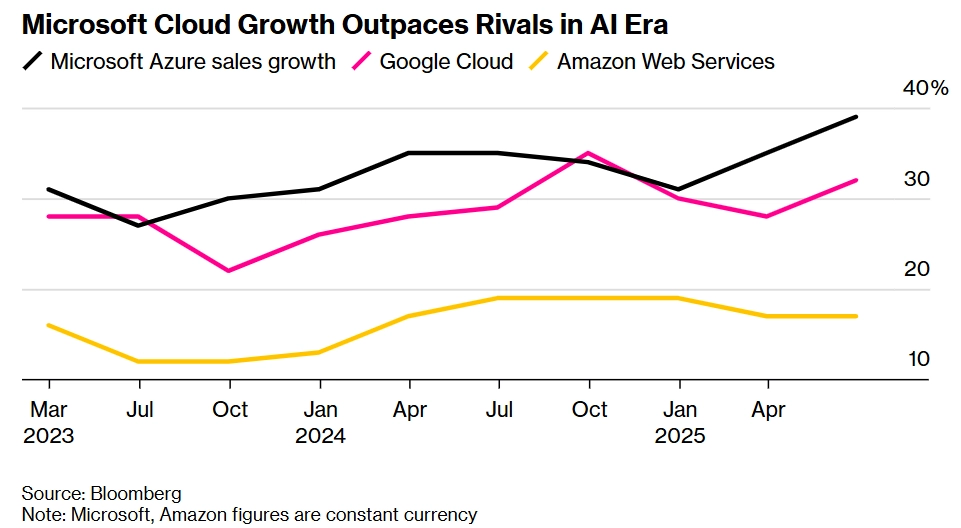
This week’s data center updates underscore the scale of the race. Meta is finalizing nearly $30bn in financing for its Hyperion AI campus in Louisiana, expected to be the largest private capital deal on record, while simultaneously investing $1.5bn in a 1‑gigawatt Texas facility. Google is committing $15bn to launch its first AI hub in India, which is its largest outside the U.S., and starting with an initial 1‑gigawatt of capacity. And this additional capacity can’t come online soon enough. Microsoft in particular expects its data center supply crunch to persist into 2026, beyond prior expectations for the end of 2025.
In parallel, strategic partnerships around AI infrastructure continue to be formed. This week, Arm and Meta announced a collaboration to enhance compute efficiency across Meta’s platforms. OpenAI and Broadcom plan to deploy 10 gigawatts of custom accelerators, and Oracle is integrating AMD’s next-generation AI chips into its cloud stack. On the agentic commerce side, Walmart announced that it will soon begin embedding shopping into ChatGPT.
As has been the case recently, the pace of announcements are fast and furious…see below for more on these most impactful updates.
Big Tech Continues To Try To Get Ahead Of Ever-Increasing AI Compute Demand
- Meta is expected to finalize a deal for $30bn in funding for data center development in the largest private capital deal on record
- The deal is to fund its upcoming Hyperion AI data center in Louisiana, which is expected to be completed in 2029
- Financing structure: To finance the build-out, Morgan Stanley has reportedly arranged $27bn+ of debt and about $2.5bn of equity into a special purpose vehicle
- Ownership split: Ownership of the data center will be split between Meta and alternative asset manager Blue Owl Capital
- Meta is expected to retain 20% ownership but continue to serve as the developer, operator, and main tenant
-> Separately, but related, Meta said it will invest $1.5bn in a Texas data center, Meta’s 3rd facility in Texas and its 29th facility globally; The data center is expected to come online in 2028, and can scale to a 1-gigawatt site (enough energy to power a city the size of San Francisco for a day), making it one of the largest planned data center campuses in the US
- Google to invest $15bn to build its first AI hub in India – the investment will roll out over the next 5 yrs (2026-2030) and is Google’s largest investment in the region to date
- The investment is expected to generate at least $15bn over the next 5 yrs in American GDP b/c of new economic activity from incr’d cloud and AI adoption, as well as the American talent and resources involved in developing and operating the AI hub
- The data center campus will have an initial capacity of 1 gigawatt, but will be scaled to “multiple gigawatts”
- Microsoft expects its data center crunch to persist into 2026, per internal forecasts
- This is a longer timeframe than MSFT has previously outlined: In July, CFO Amy Hood said current constraints could continue through the end of 2025
- During its last six earnings calls, Microsoft has said it was unable to meet all of its customers’ cloud demand
- Many of Microsoft’s US data center regions are experiencing shortages of physical space or servers, according to people familiar with the company’s internal forecasts
- New subscriptions for Azure cloud services are reportedly restricted through H1:26 in some crucial server-farm hubs, including Northern Virginia and Texas
- The majority of Azure svs and regions in the US “have available capacity so that existing customers with deployed workloads can continue to grow”
- BUT in some cases of unplanned demand spikes, MSFT will introduce “capacity preservation methods” to balance customer demand across its data center fleet, per a Co spokesperson
- This is a longer timeframe than MSFT has previously outlined: In July, CFO Amy Hood said current constraints could continue through the end of 2025
Strategic Partnerships Continue to Drive AI Infrastructure Momentum
- Arm & Meta annc’d a multi-yr strategic partnership to “scale AI efficiency across every layer of compute”
- This “will enable AI across multiple types of compute, workload, and experiences”: “From milliwatt-scale devices powering on-device intelligence to megawatt-scale systems training the world’s most advanced AI models”
- Meta’s ranking and recommendation systems will move to Arm’s Neoverse platform, which was recently optimized for AI systems in the cloud, among other implementations
- Builds on the ongoing hardware and software co-design efforts between the two Cos
- Arm and Meta will NOT exchange ownership stakes or significant physical infrastructure, setting this partnership apart from a # of recent AI infrastructure deals
- OpenAI & Broadcom annc’d a collaboration to deploy 10 gigawatts of OpenAI-designed AI accelerators
- OpenAI will design the accelerators and systems, which will be developed and deployed in partnership with Broadcom starting in H2:26 to complete by end of 2029
- “By designing its own chips and systems, OpenAI can embed what it’s learned from developing frontier models and products directly into the hardware, unlocking new levels of capability and intelligence”
- Meant to add 10 gigawatts’ worth of AI data center capacity, which is a level equivalent to the peak energy demand of NYC or 5x the electricity produced by the Hoover Dam
- Financial details of the agreement were not disclosed and it is not immediately clear how OpenAI would fund the deal
- As a reminder, OpenAI doesn’t expect to be cash-flow positive until around the end of this decade
- OpenAI’s agreement with Broadcom follows deals it has with NVIDIA and AMD
- OpenAI will design the accelerators and systems, which will be developed and deployed in partnership with Broadcom starting in H2:26 to complete by end of 2029
- Oracle will offer cloud services using AMD’s upcoming AI chips
- Oracle Cloud Infrastructure (OCI) will be a launch partner for the first publicly available AI supercluster powered by AMD Instinct™ MI450 Series GPUs
- They are AMD’s first AI chips that can be assembled into a larger rack-sized system that enables 72 of the chips to work as one, which is needed to create and deploy the most advanced AI algorithms.
- The Cos will first deploy 50,000 MI450 processors in Q3:26 and further expand in 2027 and beyond
- Oracle Cloud Infrastructure (OCI) will be a launch partner for the first publicly available AI supercluster powered by AMD Instinct™ MI450 Series GPUs
-> Broadcom’s stock jumped +9.9% on the news, its best performance since April
Also On The Partnerships Front, But On The Retail Side…Walmart Is Partnering W/ OpenAI To Offering Shopping On ChatGPT
- Walmart and OpenAI team up for AI-powered shopping in ChatGPT
- What does the partnership entail? Enables Walmart customers and Sam’s Club members to shop directly within ChatGPT, using the AI chatbot’s Instant Checkout feature
- Example use case: Shoppers can prompt ChatGPT (like, “plan a weeknight taco dinner” or “reorder my staples”), get curated picks and checkout in one step
- Will turn shopping from a reactive experience to a proactive one: “AI will learn and predict customers’ needs…this partnership moves beyond traditional eCommerce search bars toward personalized, contextual, and multi-media interactions”
- Timing is still TBA: Walmart says a ChatGPT + Instant Checkout experience is “coming soon”
- Follows other recent retail partnerships: W/ Etsy and Shopify
- What does the partnership entail? Enables Walmart customers and Sam’s Club members to shop directly within ChatGPT, using the AI chatbot’s Instant Checkout feature
-> How much share of Walmart traffic comes from ChatGPT? Per data from SimilarWeb this week, ~15% of total referral traffic for Walmart in Sept was from ChatGPT (up from 9.5% in Aug); However, referrals are only a minor source of traffic and ChatGPT referrals accounted for <1% of total web traffic for Walmart, the research firm said
Sources (2025): Bloomberg 10/16; Meta Press Release 10/15; Google Press Release 10/14; CNBC 10/14; Bloomberg 10/9; Arm Press Release 10/15; TechCrunch 10/15; OpenAI Press Release 10/13; Bloomberg 10/13; Oracle Press Release 10/14; CNBC 10/14; Yahoo Finance 10/14; Axios 10/14; Reuters 10/14
AI Is Propelling The Ad Agency Model Vs Displacing It…At Least For Now
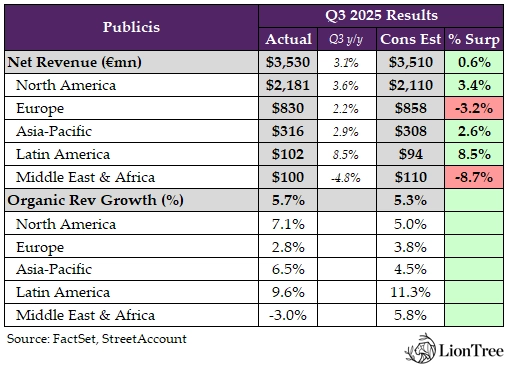
Investors continue to worry about advertising agencies being displaced by AI, and this has weighed on sector trading multiples, but, at least up until now, it has not played out in this fashion. Publicis, once again, delivered better than expected organic and financial results in Q3 with organic growth of +5.7% y/y, not only beating consensus but also topping the +5.4% y/y rate achieved in H1, with key regions like North America seeing accelerated growth. The Co also further raised its full year 2025 organic growth guidance and the tone regarding 2026 momentum was very bullish as well.
Key drivers to the performance and improved outlook include “no slowdown in client demand” and “sustained demand for AI capabilities.” New business client spend did not slowdown in Q3 (which Publicis was bracing for) and the Co benefitted from an acceleration in demand for their AI-led products and services. AI is 1) making them “more indispensable” as a “key transformation partner” to their clients given that the marketing landscape is more fragmented & complex than ever; 2) helping them increase their addressable mkt; 3) helping them deliver cheaper, better, faster content that they can uniquely make “intelligent” to drive results for clients; and 4) driving further operating leverage.
While concerns around AI disruption is likely to persist, Publicis’ current results underscore how incumbents can also harness these technologies to deepen client relationships, expand capabilities, and evolve their role in a rapidly transforming marketing ecosystem. We’ll have more color on the evolution from OMC/IPG’s and WPP’s results later this earnings season.
See below for what we view as the need to knows regarding Publicis’ Q3 results.
-> Despite the beat, Publicis shares actually traded down -1.7% on the day BUT closed the week up +3.2%; It has still been a tough road for ad agencies YTD with Publicis down -16%, Omnicom down -10% and WPP down -57%
Publicis Delivers Strong Q3 Organic Rev Outperformance…
- Q3 organic revenue growth of +5.7% y/y nicely topped consensus +5.3% y/y, with N. Amer (accelerating to +7.1%) and AsiaPac (+6.5%) showing much better performance: Q3’s rate was ahead of the +5.2% 5-year Q3 CAGR
- Europe was weaker than expected
- Vertical performance –
- Connected Media (~60% of rev): Up high SD (like Q2), driven by Publicis Media’s scale, powered by Epsilon’s proprietary data
- Intelligent Creativity (~25% of rev): Up mid SD (vs Q2 high SD) vs market trends that are “negative”, supported by “significant” new business wins and scope expansions in production and creative
- Technology (~15% of rev): Stayed in “positive territory” (vs “returned to growth in Q2) despite the IT consulting market “remaining soft”
- Regional organic growth performance –
- US (~59% of net revs): Rose +7.1% vs 5.3% in Q2…Connected Media accelerated to high SD and Intelligent Creativity was up mid SD; Pub Sapient posted low SD organic growth with a cont;d “wait and see” from clients
- Europe:Rose +2.8% growth vs +4.6% in Q2…the UK (9% of grp net rev was up +10.7% and Germany rose +5.3%, but France was impacted by tough Paris Olympic comps and was down -8.6% y/y
- Asia Pac: Rose +6.5% growth vs +5.7% in Q2 and China remained strong at +6.1% growth
…And FY 2025 Organic Growth Guidance Was Raised, Again… PLUS The Co Is Bullish On 2026
- Expect this positive trend to “carry though into Q4”…and raised the FY:25 organic growth guidance range from “close to +5%” to +5-5.5% (raised last qtr as well)
- The lower end is “rock solid”
- The upper end implies underlying accel vs H1, including a strong Q4 despite tough comps
- Mgmt is “confident in outperforming again in 2026 for the 7th consecutive yr, thanks to record new business”: The “material” wins in Q3 are ”one of the reasons, if not the main reason. why we’re now feeling confident and with more clarity when it comes to 2026”
Remain Committed To Margin Improvement Despite Investments
- Q3 operating margin reached slightly above 18%, including investments in M&A and talent, vs +17.4% in Q2
- The Co reit’d a full yr 2025 improvement in its industry leading margins to “slightly above 18%”
- “We are confident that this agentic solution will help us generate margin improvement beyond 2025, while allowing us to invest, including in training and upskilling of our talent to be AI fluent”
A Slowdown In New Business Wins Did Not Materialize in Q3
- The Co did not see the client slowdown which they had been bracing for: In Q2, the Co included some potential contingencies into their raised outlook, but “none of them materialized” in Q3….”in fact, we did not see any slowdown. Marketing budgets remained firm with no material cuts taking place”
- “Looking ahead, as we don’t anticipate a slowdown in our client marketing investments”
- AI is helping them win new business w/out a pitch process –
- “What is really remarkable about the wins we’re having at the moment is that we are starting to win new business without a pitch process”
- “We have been able to convince very big brands with material accounts to move to Publicis without a pitch for a very single reason, which is AI allows us to differentiate even more and leverage our capabilities in a unique way”
- The tailwind from new business has been 200bp+ this year and mgmt expects it to be “roughly the same” for 2026
PUB Is Taking Share Competitively & Still Has Strong Customer Retention
- Publicis’ +5.7% organic growth is “materially increasing the gap with our peers by ~700bps”
- Retention rates remain strong: Clients are growing and “staying with us longer”; Retention among their top 100 clients has remained above 98% for the past 5 years, while avg revenue w/ the top 200 clients has grown by nearly +50% over the same period
- “At the same time, we are gaining significant market share”
AI Is An Accelerator Of Publicis’ Business
- “We are demonstrating that artificial intelligence at Publicis is not a future promise, it is a reality today that is driving our growth”
- The Co saw further acceleration in client demand of AI-powered product and services, esp in 3 areas –
- 80% of Connected Media is powered by AI … the strong growth was “thanks to our ability to connect paid media with commerce and influencer through AI”
- Their AI production platform grew DD percent on the strength of the increasing need for personalized content
- Their ability to build agentic networks for clients as they look to de-silo their own organizations led to Publicis Sapient remaining in positive territory for the 2nd quarter in a row
- AI is make the Co “more indispensable” as a “key transformation partner to our clients given that the marketing landscape is more fragmented & complex than ever
- “Tech giants are spending billions on new AI technologies and infrastructure, multiplying the number of platform and channels, and making it harder to reach and engage with audiences”
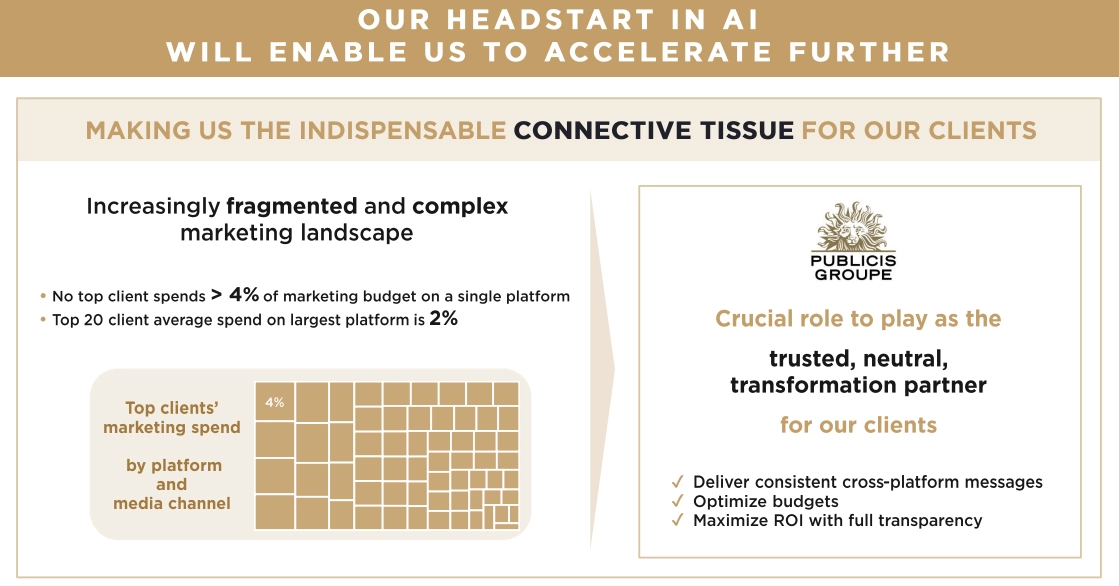
- AI is also helping them increase their addressable mkt: The Co is using AI to integrate new capabilities into their data and tech backbone which is resulting in new sources of growth
- As example, in their Influential business, by using AI to connect Epsilon data w/ Captiv8 technology and influential creator network, they built the world’s largest and most powerful influencer media platform so PUB’s clients can get the same reach that they can get to the Super Bowl for only a fraction of the cost
- AI is enabling the Co to produce content almost 100% in-house vs traditionally being produced by third parties: The Co (and others) can deliver cheaper, better and faster content BUT mgmt stresses that what is very difficult is to make this content “intelligent”, meaning connected to the data and knowing if it is working or not
- AI is also helping PUB to generate further operating leverage: Looking at every opportunity to automate labor-intensive task, “thanks to AI”, including implementing agentic solution at the core of the operations
-> Also pertaining to the ad agencies this week and how they’re integrating AI, WPP and Google annc’d that they struck a 5-yr deal to expand AI svs and embed AI tools (i.e., Gemini, Veo, etc.) into WPP’s offering to clients; The partnership includes a $400mn spending commitment from WPP for Google technologies to bring AI across its svs
M&A Pipeline Remains Strong
- On M&A, reached the €900mn target for the year, including earn-outs and now don’t expect anything material until the end of the year
- Its “too early” to give M&A guidance for 2026 but the pipeline “remains very active” and will “continue to double down on our bolt-on strategy”: Focus is on specific capabilities, be in “identity resolution, data management, new media channels, production, and specifically the technology associated with it and business transformation”
- But will be disciplined
Sources (2025): Publicis Transcript 10/14; Google Press Release 10/14; Financial Times 10/14
Big Video Game Franchises Are Getting Bigger But Is More Competition Coming?
Big IP franchises are getting even bigger in the video game industry as users remain loyal and stick with key titles. The first Battlefield game, Battlefield 1942, was released by EA on September 10, 2002 and now EA’s Battlefield 6 (released this past Friday) just delivered a record-breaking launch, helping the franchise regain footing and also reinforcing the idea that in a crowded market, familiar IP still commands attention.
Tencent, meanwhile, is reportedly looking to replicate that stickiness globally after its domestic success with Delta Force, hence this is something to keep track of competitively going forward. And in the background, the next generation of consoles is starting to take shape, with early specs reportedly hinting at a more premium, PC-like future for Xbox and a steady evolution for PlayStation.
All in all, it was a week of some interesting key updates in the videogame sector, which in our mind will continue to become even more important given the increased engagement demographically.
See details below.
EA’s Battlefield 6 Blows It Out Of The Water
- Battlefield 6 sold over 7mn copies in its first 3 days of launch, which is an all-time high for the franchise, per EA
- The game had over 172mn matches played online and accumulated over 15mn hrs watched on streaming svs during that 3-day weekend as well
- It also had the most concurrent players for Battlefieldever
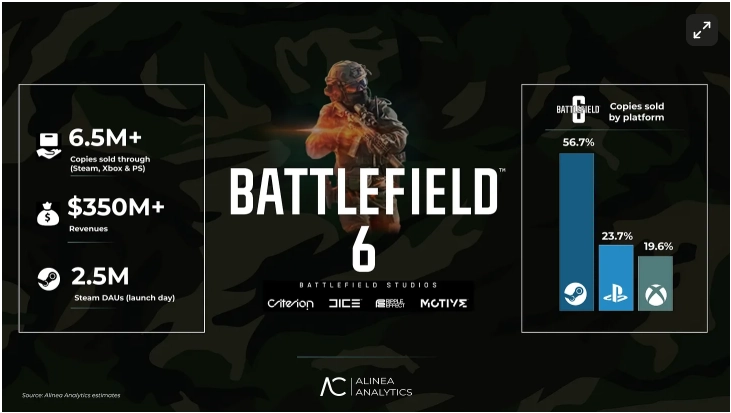
- This followed Alinea Analytics estimating earlier in the week that Battlefield 6 sold over 6.5mn units in its first few days across PC and console: They calculated that that translates to more than $350mn in gross revenue
- PC is seen as a key distribution for BF6 –
- Steam accounts for 56.7%of the copies sold through to consumers (3.5mn+ copies)
- PS5 accounts for 23.7%(1.5mn+ copies)
- Xbox Series consoles take 19.6%(1.2mn+ copies)
- The US is the top Steam market for BF6, with a third of player share
- Germany and the UK hold familiar 3-6% Steam shares, while Japan’s is at 3% and China is at 15%
- On PlayStation, the US again leads (with a 38% player share), followed by 6-9% for the UK, France, and Germany (6.7%)
- PC is seen as a key distribution for BF6 –
-> Also related, Black Ops 7 Beta ended Oct. 9th with the release date set Nov. 14th, 2025
More Global Competition In Shooter Games Globally? Tencent May Be Shifting Focus
- After Tencent scored one of the biggest Chinese hits in 2024 w/ Delta Force, attracting ~30mn daily players, it appears to be shifting to focus more on this genre and the overseas market
- Delta Force developer Leo Yao is reportedly getting more resources from the Co
- Tencent is already dominant among Chinese gamers, with 7 of the top 10 highest-grossing mobile games in the country, it now wants to get the rest of the world hooked
- “Right now, our team is essentially 99% Chinese, what we understand best is Chinese culture, Chinese context and the Chinese environment,” Yao said
- “It’s genuinely difficult for us to know what overseas players are thinking or how they would perceive this game”
- But “building a team capable of distilling a distinct Tencent aesthetic and crafting compelling single-player narratives will be a long process”
- Newzoo has est’d that shooter titles, traditionally dominated by Western players, account for ~9% of the $189bn global games arena
A Sneak Peak At Next Gen Videogame Consoles That Are Set To Reportedly Come To Market In 2027
- Reportedly, both Sony’s PlayStation 6 & Microsoft’s (codename AMD “Magnus”) are expected to launch in 2027
- This latest update comes from Moore’s Law Is Dead, a tech enthusiast with a long track record of accurately leaking console specs
- Unlike previous generations, Microsoft appears to be moving toward a premium, PC-style hybrid console, potentially priced between $800-1,200
- The new Xbox is rumored to feature a larger, more powerful processor than the PS6, offering higher performance but at a greater cost
- Sony, meanwhile, is expected to adopt a more traditional approach w/ the PS6, while also exploring new hardware options like a high-end PlayStation handheld
- Both Cos have reportedly begun early manufacturing plans, signaling that the next-gen race is officially underwa
Sources (2025): EA 10/16, Alinea Analytics 10/14, SCMP 10/13, Bloomberg 10/12, Kotaku 10/14, Vice 10/14
Apple’s AI Future Starts to Take Shape, But There Is Still Room To Grow
Apple has long been perceived as trailing its Big Tech peers in the AI arms race, particularly as companies like Microsoft, Google, and Meta have aggressively rolled out generative AI tools and foundational models. But this week, Apple made a decisive move to try to shift that narrative with the official debut of its new M5 chip, which is a cornerstone of its next-generation silicon strategy and a clear signal of its ambitions in on-device AI. The M5, which will power the new 14-inch MacBook Pro, iPad Pro, and Apple Vision Pro, represents a major leap forward in performance, efficiency, and AI capabilities. Alongside the chip launch, Apple also unveiled its most significant Vision Pro update yet, introducing sharper visuals, longer battery life, improved comfort, and new spatial computing features with visionOS 26, including interactive widgets, enhanced Personas, and expanded Apple Intelligence support. Overall, it is a step in the right direction for Apple as it relates to AI but investors are going to want to see more.
See below for additional details on the Co’s key updates.
-> Apple shares were flat in reaction to the new product releases and are up only +1.1% YTD
Apple Unveils Its New M5 Chip, Which Reflects A Big Leap In AI Performance
- Apple released its new M5 chip: A next-generation 10-core GPU architecture w/ a Neural Accelerator on each core
- How does it compare?
- Enables GPU-based AI workloads to run faster, with over ~4x the peak GPU computing performance compared to M4
- The GPU also offers enhanced graphics capabilities and third-generation ray tracing that combined deliver a graphics performance that is up to 45% higher than M4
- M5 features the world’s fastest performance core, with up to a 10-core CPU made up of 6 efficiency cores and up to 4 performance cores…together, they deliver up to 15% faster performance over M4
- It also features a 16-core Neural Engine, a powerful media engine, and a nearly 30% increase in unified memory bandwidth to 153GB/s
-> M5 is coming to the new 14-inch MacBook Pro, iPad Pro, and Apple Vision Pro, which are all now available for pre-order (more on Vision Pro below)

Apple Also Released Their New Vision Pro, Claiming A “Next Level” Gaming Experience As Well As Other Feature Updates
- “The latest [Vision Pro] version improves performance, display rendering, battery life, & comfort”
- Vision Pro w/ M5 works alongside the purpose-built R1 chip, which processes input from 12 cameras, 5 sensors, and 6 microphones, and streams new images to the displays within 12 milliseconds to create a real-time view of the world
- Faster refresh rate: The refresh rate up to 120Hz reduces motion blur when users look at their physical surroundings
- Better visuals: Renders 10% more pixels on the custom micro-OLED displays compared to the previous generation, resulting in a sharper image with crisper text and more detailed visuals
- visionOS 26: Unlocks innovative spatial experiences, including widgets, new Personas, an interactive Jupiter Environment, new Apple Intelligence features with support for additional languages
- Longer battery life: Now supports up to 2.5 hrs of general use, and up to 3 hrs of video playback, all on a single charge
- Comfort: It comes with the soft, cushioned Dual Knit Band
- With support for the PlayStation VR2 Sense controller, players get a new class of games: Elu Legend, Pickle Pro, Ping Pong Club, and Spatial Rifts are some of the first games available with support for the PlayStation VR2 controller
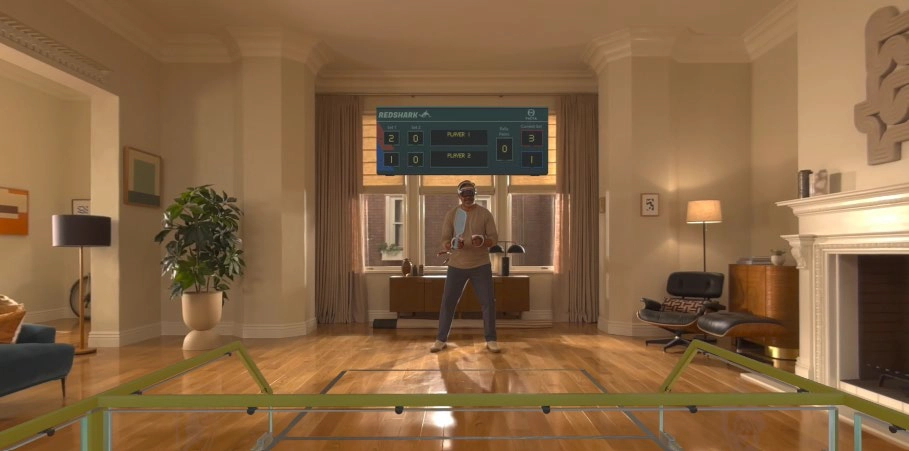
- Content on the device is also growing: There are over 1mn apps and thousands of games on the App Store, hundreds of 3D movies on the Apple TV app, and all-new series and films in Apple Immersive with a selection of live NBA games coming soon
- Availability/pricing: Vision Pro w/ M5 and the Dual Knit Band is now available to pre-order
Sources (2025): Apple Press Release 10/15, Bloomberg 10/12, Apple Press Release 10/15
Protecting Youth Online Is Becoming A Higher Priority Across States & Platforms
Back in 2024, then US Surgeon General Dr. Vivek Murthy called for warning labels to be added to social media platforms, similar to those on cigarettes and alcohol, citing research showing teens who spend 3+ hrs on social media a day face double the risk of mental health problems. This call followed a major public advisory issued the previous yr, in which Murthy raised concerns about the connection between social media use and youth mental health.
Since then, social media and AI innovations have both surged, but regulatory and tech platform protections for younger users have lagged. This week, a wave of updates emerged on this front which we wanted to highlight. California signed new laws requiring devices and apps to verify users’ ages, adding mental health warnings on social media, and implementing safety protocols for AI chatbots, including age-appropriate content restrictions. Meta also announced expanded parental controls, limited AI interactions for teens, and adjustments to teen-facing content on Instagram to align with PG-13 movie standards. Additionally, Florida is suing Roku over alleged misuse of children’s data without parental consent.
These initiatives signal a growing focus on safer digital environments for youth, though implementation has a long way to go to keep pace with evolving technology platforms.
See below for more.
California Cracks Down on Youth Social Media Use With New Safety and Age-Verification Laws
- Signed AB 1043, requiring device makers to check users’ ages online
- What does AB 1043 entail?
- It asks parents to input their kids’ ages when setting up a smartphone, tablet or laptop
- Device-makers must then make the information available to apps; App developers must also request ages for their users
- The law still shields the Cos from liability for “erroneous” age signals as long as they make a good faith effort to comply
- The new rules are slated to take effect on January 1st, 2027, and for devices set up prior to that date, the OS provider must come up with a way for users to enter their ages by July 1st that yr
- This new CA law is considered to be more balanced vs age-checking laws in other states/countries: CA’s law doesn’t require parental consent for app downloads, nor does it require photo ID uploads (which caused uproar in the UK over the implementation of the Online Safety Act)
- Utah became the first state to pass an app store age verification law, followed by Texas and Louisiana
- But AB 1043 has still garnered mixed reactions –
- The Motion Picture Association had urged lawmakers to reject the bill, claiming device-based age checks create confusion when parents and kids use separate streaming profiles under one acct
- Meta notably broke from tech peers to support these age-gating bills, which put the onus on app stores run by Apple and Google, rather than developers like itself
- Google called it “one of the most thoughtful approaches we’ve seen thus far to the challenges of keeping kids safe, recognizing that it’s a shared responsibility across the ecosystem”
- In addition to AB 1043, California also signed AB 56, a law mandating health warning labels for social media
- AB 56 requires platforms like Instagram, Snapchat and TikTok to show users under 18 warning labels
- Such labels must declare that social media “can have a profound risk of harm to the mental health and well-being of children and adolescents,” using language pulled from a 2023 report by former US Surgeon General Vivek Murthy
- Platforms will also need to display a skippable warning for 10 secs when a child first logs on each day, plus an unskippable, 30-sec warning if a child spends more than 3 hrs on the site; The 30-sec warning must repeat after each addtl hour of social media use
- CA is not the first state to pass such a law: Minnesota became the first state to pass a warning labels law in July
-> For some context, research from JAMA this week also found that preteens who use more social media perform worse on reading, vocabulary, and memory tests in early adolescence; Even light users scored 1–2pts lower than non-users, while heavy users scored 4–5pts lower; Researchers note a “dosage effect”, meaning cognitive performance declines as social media use increases, and that ~2/3 of kids start using social media before age 13, with many showing addiction-like behaviors with smartphones
California Also Introduced AI Chatbot Oversight, Which Also Requires Extra Safety Measures for Minors
- California has also become the first state to regulate AI companion chatbots by passing SB 243, which requires AI chatbot operators to implement safety protocols for AI companions
- SB 243 holds Cos legally accountable if their chatbots fail to meet the law’s standards
- Requires Cos to implement certain preventative features, such as age verification and warnings regarding social media and companion chatbots
- Also implements stronger penalties for those who profit from illegal deepfakes, including up to $250k per offense
- Cos must also establish protocols to address suicide and self-harm, and provide statistics on how the svs provided users with crisis center prevention notifications
- Platforms must also make it clear that any interactions are artificially generated, and chatbots must not represent themselves as healthcare professionals.
- Cos are required to have features specific to minors, including break reminders and prevention from viewing inappropriate explicit images generated by the chatbot
- Prior to the signing of the bill, a few Cos have already begun to implement some safeguards
- OpenAI recently began rolling out parental controls, content protections, and a self-harm detection system for children using ChatGPT
- Character AI has said that its chatbot includes a disclaimer that all chats are AI-generated and fictionalized
- Other states have passed laws to restrict or fully ban the use of AI chatbots as a substitute for licensed mental health care, including Illinois, Nevada, and Utah
- Signing of SB 243 comes just a couple weeks after Gov Newsom signed SB 53 into law, which was a “first-in-the-nation” bills that establishes new transparency requirements on large AI Cos
- What does SB 53 entail?
- Mandates that large AI labs be transparent about safety protocols
- Ensures whistleblower protections for employees at those Cos
- Creates a mechanism for AI Cos and the public to report potential critical safety incidents to California’s Office of Emergency Services
- Requires Cos to report incidents related to crimes committed w/o human oversight, such as cyberattacks, and deceptive behavior by a model
- The bill received mixed reactions from the AI industry, as some tech firms have broadly argued that state-level AI policy risks creating a “patchwork of regulation” that would hinder innovation
- Meta and OpenAI lobbied against it, though Anthropic endorsed the bill
Outside Of California, Florida Has Sued Roku Over Alleged Misuse Of Children’s Data
- Florida has filed a lawsuit against Roku for exploring kid’s data w/o parental consent
- Florida’s Office of Parental Rights is accusing Roku of unlawfully exploiting sensitive data about minors’ online activities
- The lawsuit accused Roku of accessing and exploiting data related to children’s online preferences, behaviors, and locations in order to grow its advertising business and fulfill other biz-related goals
- This is in violation of the Florida Digital Bill of Rights, which prohibits tech Cos from using or selling children’s data w/o first notifying parents and obtaining their consent
- “Parents – not tech companies – get to direct the upbringing and control the personal data of their kids”, Florida Attorney General James Uthmeier said in a post on X
- What are the potential consequences? The AG’s office is asking for –
- A court injunction to halt Roku’s alleged data practices, along with civil penalties for violating state privacy statutes
- If awarded, civil penalties could be as high as $150,000 per violation under Florida’s Digital Bill of Rights, and as much as $10,000 per violation under the state’s Deceptive and Unfair Trade Practices Act
- Roku denies the allegations and says the Co plans to challenge them in court
- This is not the first time Roku has been accused: Earlier this yr, Michigan’s AG filed a similar lawsuit that accused Roku of improperly collecting data on underage users and sharing customer data with third parties in violation of consumer protection laws
- Roku has challenged that lawsuit in federal court
Amidst All These Regulatory Developments, Meta Has Been Adding More Guardrails For Teens Across Its Platforms
- Meta is Introducing new supervision tools for “supporting parents as they help their teens navigate AI”
- Parents can choose to turn off their teen’s access to one-on-one chats with AI characters entirely BUT Meta’s AI assistant will remain available “to offer helpful information and educational opportunities, with default, age-appropriate protections in place to help keep teens safe”
- Parents will get insights what their teens are chatting about w/ AI characters and Meta’s AI assistant, “so they can have thoughtful conversations with their teens about AI interactions”
- Parents can see if their teens are chatting with AI characters and set time limits on app use, to as little as 15 minutes per day overall; This includes time spent talking to AIs
- Parents will be able to block specific AI characters if they don’t want to turn off access to AI characters altogether
- Teens can only interact with a limited group of AI characters, focused on age-appropriate topics like education, sports, and hobbies, and not romance or other inappropriate content
- Also…Instagram is revamping Teen Accounts to be guided by PG-13 moving ratings, meaning teens will see content that’s similar to what they’d see in a PG-13 movie, by default
- Teens under 18 will be automatically placed into an updated 13+ setting, and they won’t be able to opt out without a parent’s permission
- Will use age prediction technology to place teens into certain content protections, even if they claim to be adults
- Introducing a new, stricter setting (“Limited Content”) for parents who prefer a more restrictive experience for their teens
- Removes teens’ ability to see, leave, or receive comments under posts
- Starting next yr, the setting will also further restrict the AI conversations teens can have
- Expanding protections across Instagram, including –
- Accounts: Teens will no longer be able to interact w/ accts that have been found to regularly share age-inappropriate content, or if their name or bio suggests the account is inappropriate for teens
- Search: Will block teens’ ability to see content results for a wider range of mature search terms
- Content Experience: If someone sends a teen a link to content in their DMs that goes against Meta’s updated guidelines, they won’t be able to open it
- AI: Updated AI experiences for teens to be guided by PG-13 ratings by default
Sources (2025): HHS 2023, Gov Gavin Newsom Press Release 10/13, Politico 10/13, The Verge 10/13, Politico 10/13, NPR 10/13, TechCrunch 10/13, TechCrunch 9/29, TechCrunch 9/29, CBS12 10/14, Tallahassee Democrat 10/15, Facebook Blog Post 10/17
AVs Are Shifting To A Higher Gear In Europe
While markets like China and the U.S. have been pushing forward with autonomous vehicle (AV) testing and commercialization, Europe has remained a few steps behind. Regulatory caution, fragmented infrastructure, and a strong public transport network have slowed AV momentum across the region. But there were a couple of developments this week that pointed to a continued push in that region. Waymo and Pony.ai, which are two of the most prominent players in the global AV space, announced plans to expand into key European cities, suggesting growing confidence in the region’s readiness. It is still early days but encouraging to see a few steps forward.
Meanwhile, Waymo continues to scale its U.S. operations, including a new partnership with DoorDash that blends autonomous tech with last-mile food delivery. Overall, there has been a tremendous amount of activity and momentum with AVs over the last year, and we expect this pace to continue globally as this burgeoning technology inevitably takes hold.
We included more details on these updates below.
Waymo & Pany.ai Are Both Focused On European Expansion
- Waymo plans its robotaxi launch in London, marking its European debut
- Timeline? Planning to start test drives on London’s roads in “coming months”, w/ human safety specialists at the wheel
- Then it intends to open its robotaxi service next yr, assuming it can get permissions from regulators as well as local and national leaders
- London will mark the Cos second international city after Tokyo, where testing began in early 2025
- The fleet will be comprised of Jaguar iPACE EVs: Equipped with the Cos Waymo Driver autonomous systems; They are already employing engineering teams in Oxford and London
- Timeline? Planning to start test drives on London’s roads in “coming months”, w/ human safety specialists at the wheel
- Chinese robotaxi company Pony.ai to work w/ Stellantis on a Europe expansion
- Timeline? The companies will start testing in Luxembourg in the “coming months”
- Then expand to other parts of Europe next year
- How will it work? ai will provide the autonomous driving software, while Stellantis, owner of brands including Chrysler, Citroën and Jeep, will provide the EVs, starting with the Peugeot e-Traveller
- Timeline? The companies will start testing in Luxembourg in the “coming months”
Waymo Also Annc’d Partnership With DoorDash For Autonomous Delivery Svs
- DoorDash annc’d a new partnership with Waymo to launch an autonomous delivery service in Phoenix on Oct. 16th
- Testing of this new service is now underway, with plans to launch broader commercial operations later this yr; It will begin with deliveries from DashMart, DoorDash’s owned and operated convenience, grocery, and retail store that also powers DashMart Fulfillment Services, with plans to expand over time
- DoorDash also intro’d a limited-time $10 Waymo promotion for DashPass members in Los Angeles, San Francisco, and Phoenix: From now through the end of the year, DashPass members in these three cities can receive $10 off one Waymo ride per month
- A new promotion code will be issued at the start of each month through December 31, 2025
Sources (2025): CNBC 10/15, Fortune 10/15, CNBC 10/17, Pony.ai 10/17, DoorDash 10/16
Grab Bag: Altice France Rejects Bid / Apple Officially Teams Up With F1 / Amazon Plans For The Holiday Season
- Altice France swiftly rejected an unsolicited €17bn joint offer from a consortium comprising of Bouygues Telecom, Iliad’s Free, and Orange, which was received by the Co on Oct 14th, given it was “not in the best interest for shareholders”
- This current offer was to acquire a large part of Altice’s activities in France: It covers most of SFR’s assets, but excludes stakes in Intelcia, UltraEdge and XP Fibre and Altice Technical Services, as well as the Altice group’s activities in French overseas departments/regions
- The price also implied an EV for the whole of Altice France of more than €21bn
- The deal would make possible: 1) Higher investments in superfast network resilience, in cyber security and in new technologies such as AI; 2) consolidate control over strategic infrastructure in France; and 3) maintain a competitive ecosystem for the benefit of consumers
- The consortium would share the targeted activities as follows –
- The B2B biz to be taken over mainly by Bouygues Telecom, and by Free-iliad Group
- The B2C biz to be shared btw Bouygues Telecom, Free-iliad Group & Orange
- The other assets and resources (in particular infrastructure and frequencies) to be shared between Bouygues Telecom, Free-iliad Group and Orange, with the exception of SFR’s mobile network in less densely populated areas, to be taken over by Bouygues Telecom
- The split of price and value would be roughly –
- 43% for Bouygues Telecom
- 30% for Free-iliad Group
- 27% for Orange
- Next steps? The consortium has “taken note” of Altice’s rejection of the offer but “maintain their offer and wish to engage in constructive dialogue with Altrice Group and its shareholders”
-> Shares of Bouygues jumped +7.4% to €41.58 in Paris trading in reaction to the news, while Orange rose +3.3%; Altice France’s bonds rose with euro-denominated notes due Nov. 2029 rising 1.6 cents to about 99.5 cents, per Bloomberg pricing; In sympathy, Swisscom rose +1.4%, Telenor was up +1.5%, Telefonica SA was up +2.4% and United Internet was up +2.9%
- Apple TV becomes Formula One’s exclusive S. broadcast partner: The 5-yr partnership will begin next yr
- Apple TV Coverage includes all practice, qualifying, Sprint sessions, and Grands Prix available to Apple TV subs
- In addition to broadcasting Formula 1 on Apple TV…
- Apple will amplify the sport across Apple News, Apple Maps, Apple Music, and Apple Fitness+
- Apple Sports will feature live updates for every qualifying, Sprint, and race for each Grand Prix across the season, with real-time leaderboards, season driver and constructor standings, Live Activities to follow on the Lock Screen, and a designated widget for the iPhone Home Screen
- What happens to F1 TV Premium? Will continue to be available in the U.S. via an Apple TV subscription only and will be free for those who subscribe to
- Follows global success of Apple Original Films’ F1 The Movie, which is the highest-grossing sports movie of all time
- Financial details of the deal were not disclosed
- Prior to the announcement, CNBC reported it was for $140mn/yr, much higher than the $90mn ESPN was paying per season for F1, which it has broadcast since 2018
- Amazon is hiring 250k workers for the upcoming US holiday season for the third consecutive year: S. regular full- and part-time employees earn an avg of $23/hr with benefits, and seasonal employees can earn an avg wage of over $19/hr (up $1 from last yr)
- The new positions being filled by the Co are across its fulfillment and transportation network
- The jobs include rural areas where Amazon is investing over $4bn to expand its operationsand serve more than 4,000 small towns and communities
- How does this compare?
- Bath & Body Works plans to hire 32k workers this season, which includes 2k roles in its distribution centers
- Spirit Halloween plans to add 50k workers
- Kohl’s annc’d that it was hiring seasonal workers, though it didn’t give a number
- Target posted about its plans but did not make any major announcement. Instead, the co said it would offer hrs to existing workers and tap into a network of 43k “OnDemand” team members
Sources (2025): GlobeNewswire 10/14, Bouygues Press Release 10/15, Apple Press Release 10/17, Reuters 10/17, Bloomberg 10/13, Amazon 10/13
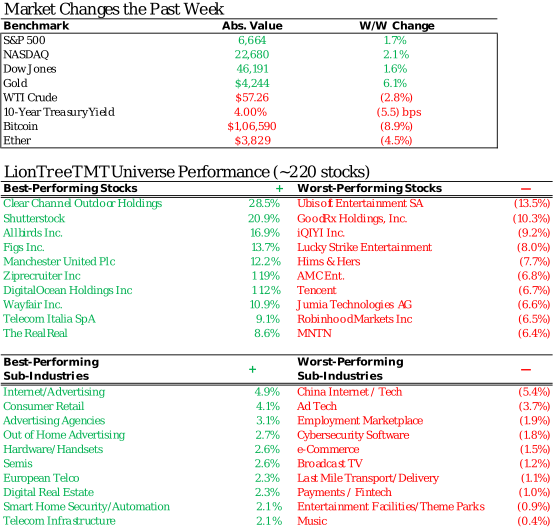
Stock Market Check
This Week's Other Curated News
Artificial Intelligence/Machine Learning
- Ken Griffin said GenAI isn’t helping hedge funds beat mkts, noting it boosts productivity but fails to uncover alpha. Speaking at JPMorgan Robin Hood conf., he stated GenAI hasn’t replaced Citadel’s research. While tech investment is rising, Griffin sees limited impact on the industry, w/ uneven effects across sectors. Citadel, founded in 1990, manages ~$69bn in assets. (Yahoo Finance)
- ByteDance’s Doubao app has overtaken DeepSeek as China’s top AI chatbot. Despite DeepSeek’s Jan. rise to fame, Doubao gained traction due to its user-friendly design, proving that ease of use can outweigh advanced tech. ByteDance, TikTok’s parent Co, leveraged its existing user base to scale Doubao quickly. (Wired)
- Anthropic annc’d “Skills for Claude,” enabling users to load task-specific folders w/ instructions, scripts, and resources to boost Claude’s AI agent capabilities. Used by cos like Box, Rakuten & Canva, Skills aim to streamline workflows across Claude.ai, Claude Code & SDK. Available to Pro, Max, Team & Enterprise tiers. (The Verge)
- Uber annc’d at its event that U. drivers can earn via its app off-road by doing AI-related gig work like photo uploads and voice recordings. Already tested in India, pay varies by task. Uber also rolled out a women rider preference in select cities and a delayed ride guarantee. Drivers can now set rider rating thresholds. (CNBC)
- India’s $283bn IT sector faces disruption as AI chatbots, like those from LimeChat, replace call-center roles. LimeChat claims 80% staff cuts for 10k monthly queries; rivals like Haptik offer similar svs. Hiring in biz process mgmt slowed sharply. Despite PM Modi’s optimism, experts warn of job losses. AI training surges; firms like Mamaearth and Kapiva scale w/ bots. (Reuters)
- Google annc’d Veo 3.1 and new Flow features, enhancing creative control for users. Updates include richer audio, improved realism, and better prompt adherence. Flow now supports audio in “Ingredients to Video,” “Frames to Video,” and “Extend.” New editing tools like “Insert” and object removal offer precise scene control. Veo 3.1 is available via Gemini API, Vertex AI, and Gemini app. (Google)
- AI startup Anthropic projects $9bn in annualized rev by end-2025, aiming for $20–26bn in 2026, driven by enterprise demand. Its Claude Code tool nears $1bn run rate. Enterprise clients make up 80% of rev. Anthropic’s Haiku 4.5 model, priced at 1/3 of Sonnet 4, targets cost-conscious cos. Backed by Google & Amazon, the Co plans to open a Bengaluru office in 2026 and expand globally amid strong AI mkts momentum. (Reuters)
- OpenAI annc’d updates to Sora 2, its AI video app, allowing all users to create 15-sec clips; Pro users get 25-sec videos and access to a storyboard tool. The app, invite-only in US/Canada, topped Apple’s App Store. OpenAI plans a rev-sharing model w/ content owners, offering granular control over character use amid Hollywood concerns. (The Economic Times)
- Roku annc’d major platform updates incl. AI-powered voice control—users can ask questions like “What kind of fish is Nemo?” and get answers. The Co is also enhancing content discovery tools and expanding its sports offering w/ Live Scores and Reminders. These upgrades aim to improve user engagement and streamline access to content across genres. (Cynopsis)
- DirecTV, in partnership w/ AI Co Glance, annc’d screensavers for Gemini devices that feature AI-generated images of users, pets, and shoppable items. Users scan a QR code to upload photos, customize looks via voice, and shop similar products via mobile. Glance uses reverse image search across ~1tn SKUs. (The Verge)
- Salesforce annc’d expanded partnerships w/ OpenAI & Anthropic to embed LLMs into Agentforce 360. GPT-5 powers AI agents in ChatGPT & Slack, enabling sales data access, Tableau viz & agentic commerce via Stripe. Anthropic’s Claude targets regulated industries, integrated w/ Salesforce’s trust layer. (Constellation Research)
- Samsung posted a $8.5bn profit in Sept. qtr, up 32%, driven by AI chip demand. Despite gains, shares dipped 2.1% as investors locked profits. HBM shipments rose 70–80%, w/ orders from AMD & pending Nvidia approval. Samsung & SK Hynix to supply OpenAI’s Stargate project, doubling global HBM demand. (Yahoo Finance)
- Microsoft unveiled its first in-house AI image generator, MAI-Image-1, designed and developed in-house. The tool, integrated into Copilot, uses a proprietary model optimized for speed, cost & safety. It supports real-time generation in Office apps & Edge. Microsoft aims to reduce latency, improve moderation, and tailor outputs for enterprise use. (The Verge)
- Quantum stocks surged after JPMorgan annc’d a $10bn investment across 27 industries incl. quantum computing, part of its $1.1tn decade-long “Security & Resiliency Initiative.” Rigetti rose 25%, D-Wave 23%, IONQ 16%, QUBT 12%. JPM cited reliance on unreliable sources for critical tech. (CNBC)
- Anduril annc’d its AI-powered EagleEye headwear, set to deliver ~100 units to select Army personnel by Q2 next yr. EagleEye replaces Microsoft’s IVAS, w/ modular AR glasses, helmets & visors tailored to roles. Backed by Meta tech, it solves prior issues like cybersickness. Anduril won $159mn SBMC contract; Rivet got $195mn. (Defense Scoop)
- Salesforce annc’d a $15bn investment in SF over 5 yrs to boost AI innovation via a new AI Incubator Hub, workforce dev. & “agentic enterprises”. Move aligns w/ SF’s office mkts rebound, w/ AI cos leasing ~1mn sq. ft. in H1, incl. OpenAI & Harvey. Dreamforce conf. aims to show AI monetization potential amid 25% YTD stock drop. (The Wall Street Journal)
- At Dreamforce, Salesforce annc’d Agentforce 360—its unified agentic AI stack incl. Slack, Data 360 & MuleSoft—to orchestrate AI agents across enterprises. New features: Hybrid Reasoning Engine, voice handoffs, multi-agent orchestration & Slack as agentic OS. (Constellation Research)
- Musk’s xAI joined Meta & Google in racing to build “world models”—AI systems that simulate physical environments for robotics & gaming. xAI hired Nvidia experts to train models using video & robot data to understand real-world dynamics. These models aim to power next-gen video games & autonomous agents. (Finacial Review)
Audio/Music/Podcast
- Spotify annc’d a collab w/ Sony, Universal, Warner, Merlin & Believe to develop “responsible” AI music tools. Focus areas include artist opt-in, new rev streams, and stronger fan ties. A generative AI lab is planned. Execs stress copyright, artist rights, and direct licensing. Spotify removed 75mn spam tracks in past yr and introduced deepfake safeguards. (Variety)
Cable/Pay-TV/Wireless
- French mobile svs rev fell 3.3% YoY to €3.66bn in Q2, marking a 2nd straight quarterly decline after a 2.3% drop in Q1. This is the first negative trend in yrs, per Arcep. The fall is due to competitive pricing favoring new mobile sign-ups in 2024, leading to a cont’d drop in avg monthly bills. Fixed segment growth stalled. (Telecompaper)
- Mint Mobile annc’d MINTernet, a 5G home internet svs starting at $30/mo, powered by T-Mobile’s network. Targeting users fed up w/ high bills, it offers plug-and-play setup, no equipment fees, and bundling discounts. Customers can lock in low rates via 3- or 12-mo. plans. Real savings are emphasized using Natalie “Tilly” Norwood in the campaign, not AI. (T-Mobile Newsroom)
- Orange (EPA:ORAN) has raised its bid for the remaining 50% stake in MasOrange to €4.8bn ($5.6bn), a 20% hike from its initial €4bn offer in Jul. The stake is jointly held by KKR, Cinven & Providence. Including debt, the deal’s total value is €10bn. Orange already owns 50% and aims full control of MasOrange, per El Confidencial’s report. (Investing.com)
- America Movil posted Q3 net profit of $1.24bn, a threefold jump y/y, driven by halved financing costs and 7% growth in mobile rev. Rev rose 4.2% to 232.92bn pesos; EBITDA hit 93.8bn pesos. The Co added ~3mn postpaid mobile users and 526K fixed connections. (Investing.com)
- Altice France “immediately rejected” a €17bn non-binding offer from Bouygues, Orange & Free to acquire most of SFR’s assets. Minister Lescure pledged vigilance on consumer pricing & svs quality. Altice’s debt fell from €24bn to €15.5bn after a creditor deal granting 45% equity. CFDT warned of job cuts, appealed the court-approved restructuring. (BFMTV)
Capital Market Updates
- Europe’s ~$7bn IPO wave this fall shows sellers balancing upfront cash vs. post-listing gains. Major listings—Noba, Ottobock, SMG & Verisure—had mixed debuts. Noba & Verisure trade 28% & 22% above IPO price, while SMG fell after early rise; Ottobock hovers near offer price. Appetite remains strong for select cos in mkts, highlighting investor focus on discount math. (Bloomberg)
- US IPO prospects have narrowed due to the govt shutdown, holidays & reporting rules, leaving cos ~4 viable weeks to go public. Jill Ford of Wells Fargo said only two weeks before & after Thanksgiving are feasible, as mkts typically shut in late Dec. Navan Inc., Beta Technologies Inc., MapLight Therapeutics Inc. & Exzeo Group Inc. are cont’d w/ sizable deals despite constraints. (Bloomberg)
- Jeff Bezos’ stake in Amazon fell below 10% for the first time, now at 9% after selling 100mn+ shares over the past yr. He owned 14.1% when stepping down as CEO in 2021. Recent filings show ~$10.4bn in returns from 50mn shares sold in 2025. Bezos also gifted 500K+ shares to charity. (The Hollywood Reporter)
- Bond traders face a light econ calendar but eye Fed Chair Powell’s keynote at NABE in Philly and tariff updates after Trump’s threat of a 100% levy on Chinese goods from Nov. US bond mkts shut Mon. for Columbus Day. (Bloomberg)
Cloud/DataCenters/IT Infrastructure
- AI-driven data centers, facing power shortages and grid delays, are building on-site energy sources using natural gas, fuel cells, and turbines. Projects like OpenAI’s $500bn Stargate and xAI’s Colossus rely on DIY power amid rising demand. U.S. grid expansion lags, prompting cos to seek flexibility. (The Wall Street Journal)
- Europe’s AI push, incl. plans to triple data center capacity, faces backlash over water scarcity. Data centers need vast water for cooling, raising concerns in drought-prone areas like Spain & Greece. Big Tech cos like Amazon, Microsoft & Meta have invested billions, but critics warn of environmental risks. EU promotes “green computing,” yet tensions persist over sustainability vs. tech growth. (CNBC)
- Nvidia-backed AI startup Poolside, in partnership w/CoreWeave, annc’d plans to build a massive data center—Project Horizon—on ~500 acres in West Texas. Located in the fracking boom’s heart, the site will use local natural gas for power. Poolside seeks $2bn funding, valuing the Co at $14bn. Horizon aims for 2GW capacity, w/modular buildout cont’d through 2027. (The Wall Street Journal (WSJ))
- Orange SA is seeking €400mn–€500mn via a stake sale of up to 50% in its French data center biz, incl. a major Normandy facility. Evercore Inc. is advising on the potential deal, per sources. The move reflects the Co’s strategy to unlock value from its tech infrastructure assets. report cites unnamed insiders familiar w/ the matter. (Bloomberg)
- Google revealed plans to invest $9bn by 2027 to expand its data center campus in Berkeley County, South Carolina, and support the ongoing construction of two new sites in Dorchester County. The South Carolina investment would also fund “programs to protect energy affordability and train the local workforce for careers in the state’s growing tech and energy sector.” (WSJ)
Crypto/Blockchain/web3/NFTs
- U. K. prosecutors plan victim restitution for a $6.8bn Bitcoin fraud by Zhimin Qian, who duped ~128,000 in China (2014–2017). Despite earlier signals to retain funds, a compensation scheme is being considered. Victims cite severe personal losses. CryptoCare warns the U.K. may still keep assets under the Proceeds of Crime Act, as cos often prioritize Treasury over restitution. (Yahoo Finance)
- Trump’s 100% China tariff threat triggered global mkts chaos, wiping out $16bn in leveraged crypto longs. BTC briefly fell below $110K, ETH dropped, and USDe hit $0.9996. CoinGlass noted $19.13bn liquidated, likely underreported. Despite volatility, Ethena said USDe ops remained stable. This marks crypto’s biggest liquidation ever—~20x larger than the Covid crash of Mar. 2020. (CoinDesk)
Cybersecurity/Security
- A ransomware attack has disrupted MuniOS, the main platform for posting debt docs in the $4.3tn muni-bond mkts. Operated by ImageMaster LLC, the site’s outage affects state/local borrowers’ ability to share bond info. MuniOS is widely used by investors/analysts pre-sale. The tech issue has persisted for several days, per sources familiar w/ the matter. (Bloomberg)
- Cybersecurity Co F5 Networks revealed govt-backed hackers had long-term access to its systems, stealing source code and customer data. Hackers infiltrated BIG-IP dev environment and knowledge systems, exposing undisclosed vulnerabilities. F5 annc’d patches, urging customers to update. CISA ordered federal agencies to patch by Oct. 22. F5 serves ~85% of Fortune 500 cos. (TechCrunch)
eCommerce/Social Commerce/Retail
- IKEA’s price-cutting spree is ending as new U. tariffs force the Co to raise prices. Despite a 3% rise in sales volume, total retail sales fell 1% to €44.6bn (~$52bn) in the yr ending Aug. Tariffs on furniture, rising costs, and limited U.S. sourcing (~15%) are pressuring margins. IKEA aims to adapt by sourcing locally and cutting ops costs, but some prices—like the Uppland sofa—have already increased. (Yahoo Finance)
EdTech
- South Korea’s AI textbook program, annc’d to personalize learning and ease teachers’ workload, was rolled back after 4 months due to tech issues, data privacy concerns, and increased workload. Revoked in Aug., its adoption dropped from 37% to 19%. Despite ~$850mn govt spend and $567mn Co investment, rushed rollout and political shifts led to failure. (Rest of World)
FinTech/InsurTech/Payments
- Rakuten is weighing a U. IPO of its credit card biz, per sources, though options like a stake sale are also under review. Triggered by SoftBank’s PayPay IPO plans, Rakuten’s move follows Mizuho’s $1.1bn investment for a 15% stake. Rakuten Card, central to the Co’s ecosystem, has issued ~30mn cards. Despite a 4.5% Q2 profit dip, it targets ¥100bn profit mid-term. (Reuters)
- Coinbase annc’d Coinbase Business, a stablecoin payments platform enabling cos to send/receive USDC w/ seamless API integration, QuickBooks/Xero sync, and 4.1% APY on balances. Aimed at simplifying vendor payments and scaling biz ops, it overlaps Circle’s efforts. Talks to acquire BVNK for ~$1.5bn signal expansion. (CoinDesk)
Handheld Devices & Accessories/Connected Home
- Apple annc’d plans to build smart home devices in Vietnam, incl. a $350 HomePod w/ screen (J490/J491), indoor security cam (J450), and a tabletop robot by 2027. BYD will handle final assembly. The robot, rooted in Apple’s shelved car project, features a 9-inch display and motorized arm. Siri’s AI revamp delayed the launch to spring 2026. (SCMP)
HealthTech/Wellness
- Amazon One Medical annc’d Pay-per-visit care for kids aged 2–11, treating pink eye, lice, eczema, asthma Rx renewals & more. No insurance/membership needed; msg visits cost $29, video $49. Each consult includes a treatment plan & Rx, fulfillable via Amazon Pharmacy. Ideal for families w/o insurance or needing quick care. Service offers 24/7 access to certified providers, ensuring convenience, clarity, & continuity. (Amazon)
- EssilorLuxottica annc’d acquisition of Ikerian AG (RetinAI), a health tech Co specializing in AI/data for eyecare. RetinAI’s platform, Discovery, supports diagnosis/monitoring of AMD, glaucoma, diabetic retinopathy via AI. The move boosts EssilorLuxottica’s med-tech biz, enhancing clinical workflows, drug dev, and patient care. (EssilorLuxottica)
- Hims & Hers Health annc’d new perimenopause & menopause care on its platform, offering personalized plans w/ meds like estradiol & progesterone. ~1.3mn U.S. women enter menopause yearly, yet only 30% of OB/GYN programs train for it. Hers serves 500K+ subscribers, targets $1bn rev by 2026, & posted 137% return past yr. (Investing.com)
- ŌURA annc’d a $900mn raise led by Fidelity, valuing the Co at ~$11bn. Funds will fuel AI, product innovation, and global expansion. ŌURA sold 5.5mn rings since 2015, w/ rev doubling to $500mn in 2024 and projected to hit $1bn in 2025. New launches incl. Ring 4 Ceramic, Charging Case, and Health Panels. (Business Newswire)
Last Mile Transportation/Delivery
- Lyft annc’d acquisition of TBR Global Chauffeuring for ~$110mn, merging Lyft’s tech w/ TBR’s luxury chauffeur svs across 3,000+ cities. TBR, valued in a $54bn mkts, will retain its brand and leadership. The deal boosts Lyft’s premium biz reach w/o impacting Q3 rev. Focus remains on combining global scale w/ bespoke service for execs, events, and corporate travel. (Lyft)
Macro Updates
- Taiwan’s economy ministry said China’s expanded rare earths curbs won’t significantly impact its chip sector, as the banned elements differ from those used in semiconductor processes. Taiwan’s chipmakers, incl. TSMC, source needed materials from Europe, US & Japan. However, China’s move may affect global supply chains for EVs & drones, which will need close monitoring. (Reuters)
- Grocery prices continue to surge, frustrating consumers. Items like coffee (+20.9%), ground beef (+12.8%), and bananas (+6.6%) have seen sharp hikes. Cos like Albertsons and McCormick report shoppers are downsizing, using coupons, and sticking to essentials. Tariffs and rising commodity costs are key drivers. (The Wall Street Journal (WSJ))
- U.S. new car price hit $50,080 in Sept.—a record high—driven by luxury & EV demand. EVs now make up 11.6% of the mkts. MSRPs also rose to $52,183. Price hikes stem from chip shortages, tariffs & wealthy buyers propping up high-end sales. (Forbes)
Media Conglomerates
- Paramount, led by David Ellison, is eyeing a hostile takeover of Warner Bros. Discovery, which recently annc’d plans to split its biz. Paramount’s $150mn Free Press buy and backing from Apollo Global signal intent, despite Warner’s $35bn debt. Paramount’s mkt cap is ~$19bn vs. Warner’s $40bn+. Stocks surged ~45% and 60%. (Cord Cutter News)
- Warner Bros Discovery rejected Paramount Skydance’s ~$20/share bid, citing undervaluation. Paramount, led by David Ellison post-$8bn Skydance merger, may raise its offer, appeal to shareholders, or seek backing from Apollo Global Mgmt. Warner Bros, formed via 2022 merger, holds assets like HBO, CNN, and Max. (Cord Cutter News)
- Disney may name Dana Walden & Josh D’Amaro as co-CEOs to succeed Bob Iger in early 2026. While their complementary skills mirror Netflix’s successful model, Disney’s political culture, past succession issues & Iger’s tendency to linger raise concerns. Experts warn co-CEO setups often fail due to blurred authority. (CNBC)
Metaverse/AR & VR
- Samsung annc’d its “Worlds Wide Open” Galaxy event, revealing Project Moohan, a mixed reality headset built on Android XR—developed w/ Google & Qualcomm. The device blends AI w/ immersive utility and is designed to scale across form factors. Samsung touts it as the first product for the open Android XR platform. (The Verge)
Online Marketplaces/Learning (Real Estate/Education/Jobs)
- TrueCar to be acquired by Fair Holdings, led by founder Scott Painter, in an all-cash go-private deal at $2.55/share (~$227mn equity value). Post-close, Painter returns as CEO, aiming for profitable growth, innovation & alignment w/ auto industry. The Syndicate, a mix of dealer, finance & tech partners, will help scale biz. (PR Newswire)
Regulatory
- The CMA released Google’s Privacy Sandbox commitments, originally accepted in Feb.2022 to prevent distortion in online ad mkts. Google no longer plans to remove TPCs or restrict them via prompts. CMA found its competition concerns no longer arise, citing Google’s retirement of Sandbox techs like IP Protection, Topics API, and PA API. (UK Government)
- Google offered to tweak how search results display links to competitors’ svs in response to EU antitrust scrutiny. The Co aims to avoid a potential fine over claims it unfairly favors its own svs. EU regulators may impose a fine or demand changes if Google’s proposal fails to meet compliance. (Reuters)
- European Union is considering forcing Chinese firms to hand over technology to European Cos if they want to operate locally. The measures would apply to companies seeking access to key digital and manufacturing markets like cars and batteries. The rules would also require the firms to use a set amount of EU goods or labor, and to add value to the products on EU soil. (The Japan Times)
- Trump annc’d a potential 100% tariff on Chinese imports, citing China’s rare earth export curbs. China now requires foreign cos to get approval for rare earth shipments, impacting tech and military svs. Mkts reacted sharply, w/ S&P 500 down 2.7%. (NPR)
Satellite/Space
- SpaceX annc’d a 40% price cut for its Starlink Mini dish—now $299 vs. $499—boosting access to mobile broadband. The compact, Wi-Fi 6-enabled unit offers ~100 Mbps speeds w/ low latency, ideal for RVers, remote workers & disaster zones. Launched in Jun. 2024, the Mini’s affordability aims to expand Starlink’s 3mn-user base, drive rev toward $5bn/yr, and undercut rivals like HughesNet. (Cord Cutters News)
- Amazon’s Kuiper & Far EasTone plan to launch low-Earth-orbit satellite svs in Taiwan. Far EasTone’s applications for telecom network certification were approved by Taiwan’s Digital Ministry & NCC in Aug. The cos held multiple exchanges on tech, biz & ops models, w/ regular meetings to accelerate Kuiper’s commercial rollout. (Bloomberg)
Social/Digital Media
- Pinterest annc’d new controls to limit “AI slop” in user feeds. Users can now restrict GenAI content in categories like beauty, art, fashion & home décor via “Refine your recommendations” in Settings. GenAI labels will be made more visible. GenAI now accounts for 57% of online content. Rollout starts w/ web & Android; iOS to follow. Feedback tools also added to refine preferences. (TechCrunch)
- YouTube, now a $100bn+ media force, is reshaping TV by merging creator-led content w/ traditional formats. CEO Neal Mohan’s vision includes exclusive NFL games, scripted shows, and creator studios like Dhar Mann’s. With $36bn+ in ad rev in 2024 and 3mn+ monetizing creators, YouTube’s dominance grows as mkts shift from legacy studios to scalable, creator-driven biz. (The Hollywood Reporter)
- YouTube’s creative ecosystem added over €7bn to EU GDP in 2024, supporting 200K+ jobs. Rev-sharing helped 15%+ growth in channels earning €10K+. Creators like Marie of Wurzelwerk turned passion into biz w/ 27 staff. 93% use YouTube for knowledge; 80% of parents & 84% of teachers find it valuable for learning. (YouTube)
- Meta annc’d group chats for Threads, letting users msg up to 50 followers in one convo. Group names are customizable, similar to Facebook Messenger. Rollout is global, excluding UK & Australia; EU support coming in days. Future updates will add inbox tools & link-based invites. Meta aims to expand msging “ASAP,” per spokesperson Alec Booker. (The Verge)
- New research links heavy social media use in teens to reduced reading comprehension & memory. Brain scans show less activity in regions tied to focus & retention. Teens who are spending more hours on screen show weaker neural connections. Experts urge limiting screen time, promoting reading & sleep. (NPR)
- Grindr’s stock surged 10% amid reports the Co may go private. The LGBTQ dating app, which went public in 2022 via SPAC, is exploring strategic options following market volatility and valuation concerns. Analysts suggest privatization could offer operational flexibility and shield the Co from public scrutiny. (Forbes)
Software
- Baillie Gifford seeks co-investors for its stake in Milan-based app developer Bending Spoons, targeting a valuation of $8bn–$12bn. Founded in 2013, the Co has used equity and debt to fund takeovers incl. Vimeo, Evernote, WeTransfer, and other consumer software cos. The Edinburgh-based investor may syndicate part of its stake, per a document seen by Bloomberg News. (Bloomberg)
- Microsoft is revamping Windows 11 to create AI PCs controlled by Copilot. New features include voice input via “Hey, Copilot!”, Copilot Vision for screen analysis, and Copilot Actions to perform tasks. These tools aim to make PCs interactive partners. While rollout is cautious due to past trust issues, Microsoft is promoting the shift w/ ads as Windows 10 support ends. (The Verge)
- Salesforce shares rose after the Co annc’d it expects rev to exceed $60bn by 2030, topping analyst estimates. Forecast excludes impact from its pending $8bn Informatica deal. The Co projects >10% organic rev growth from FY26–30. Despite AI concerns, Salesforce is betting on Agentforce, incl. new Voice feature and AI model tie-ups w/ Anthropic & OpenAI, to drive biz. (CNBC)
Sports/Sports Betting
- CME Group Inc. plans to launch financial contracts tied to sports games and economic indicators by end of yr, aiming to compete w/ prediction mkts like Kalshi and Polymarket. Backed by Donald Trump Jr., both cos are gaining traction. CME will distribute via futures commission merchants, incl. one it’s setting up. Move marks CME’s entry into mainstream prediction mkts. (Bloomberg)
- Apple SVP Eddy Cue said the Co aims to acquire more sports rights but only if it can offer “unique” broadcasts. Apple TV’s MLB and MLS deals are steps toward global sports streaming w/o blackouts. Cue criticized current svs fragmentation and praised Apple’s tech, incl. high video quality and creative angles. Friday Night Baseball was a test; future deals may span entire leagues and mkts. (CNBC)
- Kalshi, a SF-based prediction mkts platform, annc’d a $300mn Series D round led by a16z & Sequoia, valuing the Co at $5bn. Founded in 2018, Kalshi offers CFTC-approved event-based contracts. Trading vol surged 200x in 1 yr, users up 20x, now 60% of global mkts. (Tech Funding News)
- NBA annc’d a reimagined NBA TV and streaming via NBA App, offering nonstop basketball content incl. live NBA, WNBA, G League, BAL, intl. leagues, and top U.S. high school games. Flagship show The Association will debut w/ MJ Acosta-Ruiz, Rudy Gay & others. NBA TV to air 60 games this season, incl. tripleheaders and New Year’s Eve slate. (NBA)
- Sports content dominates US streaming, but fragmentation is frustrating fans, per Hub’s survey shared at ScreenShift. 72% of avid fans say sports matter more than any other TV content. 87% would subscribe to new svs if needed, rising to 92% for under-35s. Yet, 65% find using multiple svs a hassle, and 53% say finding games is harder vs. last yr. (Advanced Television)
Tech Hardware
- TSMC raised its 2025 rev growth forecast to mid-30%, citing strong AI demand. net income surged 39% to NT$452.3bn ($14.8bn). Capital spending floor lifted to $40bn for capacity expansion. Despite US-China tensions and rare-earth curbs, CEO Wei said AI demand remains robust. TSMC’s dominance in advanced nodes positions it to raise 2–3nm chip prices by 5–10% in 2026. (Bloomberg)
- Apple’s iPhone Air sold out in China minutes after launch, following CEO Tim Cook’s visit. Despite delayed release and e-SIM-only support, demand surged in Beijing, Shanghai, and Tianjin. Online orders face 1–2 wk delays. Cook met top officials, annc’d Apple Watch heart-monitoring collab w/ Anzhen Hospital. Apple holds 15% of China’s shrinking smartphone mkts, trailing Vivo (18%) and Huawei (16%). (Yahoo Finance)
- Global smartphone mkts saw 3% yr-on-yr growth in Q3, driven by record iPhone sales post Apple’s new launch. Omdia noted stable market shares among top-5 vendors, all showing annual growth. Samsung led w/ 19% of shipments, Apple followed at 18%, and Xiaomi held 14%. (Telecompaper)
- Microsoft, AWS & Google are accelerating efforts to cut China from their supply chains amid U.-China tensions. Microsoft aims for 80% of Surface & data center components to be made outside China by 2026. AWS may reduce PCB buys from SYE, while Google is boosting server production in Thailand. Shifting production is complex due to China’s tech edge. (TechCrunch)
- Amazon plans to cut up to 15% of its HR staff, w/ further layoffs expected across other divisions. Under CEO Andy Jassy, the Co has cont’d investing in AI while aggressively trimming costs. The move aligns w/ Jassy’s push to reduce bureaucracy and increase employee-to-manager ratios. (Fortune)
- JPMorgan Chase annc’d a decade-long $10bn investment in defense/aerospace, frontier tech (AI, quantum), energy tech (batteries), and supply chain/adv. Under its Security & Resiliency Initiative, the Co aims to finance/facilitate $1.5tn, 50% above prior plans. (CNBC)
Video Games/Interactive Entertainment
- Steam broke its CCU record w/ 41.6mn users, up ~10mn from 2022–23. Driven by Battlefield 6, Hollow Knight: Silksong, and Steam Next Fest demos, the surge highlights Steam’s dominance in global PC gaming. Free-to-play hits like CS2, DOTA 2, and PUBG remain top played. Steam’s vast library and integration w/ Xbox’s ROG Ally X handheld reinforce its lead over rival platforms. (TweakTown)
- A major Pokémon leak reveals Game Freak’s roadmap: Gen X titles Wind & Wave launch in 2026 for Switch 2, set in SE Asia w/ open-world & underwater zones. Legends: Ringo, set 1000 yrs before Sword & Shield, features Gigantamax Poké Ball origins. Project Seed, a multi-region MMO, targets 2028. (Kotaku)
- Marc-Alexis Côté, Assassin’s Creed franchise boss, has exited Ubisoft after 20+ yrs. His departure follows the brand’s shift to Tencent-backed Vantage Studios, which now oversees AC, Far Cry & Rainbow Six. Côté declined a leadership role at Vantage, citing differing priorities. Ubisoft praised his legacy, including AC Odyssey & Shadows. (IGN)
Video Streaming
- Apple & NBCUniversal annc’d the Apple TV + Peacock Bundle. For $14.99/mo (Premium) or $19.99/mo (Premium Plus), users get award-winning originals, live sports/events, & blockbuster films. Apple One Family/Premier users get 35% off. Each svs offers curated free episode sampling. (Apple)
- CNN annc’d its “All Access” streaming sub at $6.99/month or $69.99/yr, w/ a limited-time $41.99 annual offer valid through Jan.5. It includes live/on-demand video, exclusive content, and full article access. Parent Co Warner Bros. Discovery plans to split into 2 public cos by 2026 amid takeover interest from Paramount Skydance. CNN’s Basic tier remains for article-only access. (CNBC)
- Philo annc’d a revamped $33 Core plan offering 70+ cable networks plus HBO Max, Discovery+ & AMC+. Current subs pay $28 for 1 mo. before price adjusts. New subs get a 7-day trial. The plan includes live TV, 110+ free channels, unlimited DVR & on-demand svs. HBO Max content spans hit series, films & franchises. The bundle delivers ~$15+ value for $5, aiming to shake up the streaming mkts w/ better value. (The Hollywood Reporter)
- Roku annc’d its CTV ad platform launch in Brazil, enabling brands to reach millions via premium ad-supported content. Advertisers gain access to curated channels, proprietary data, and advanced targeting tools. Brazil’s rising FAST mkts position supports Roku’s global growth strategy, w/ 30 new FAST channels added earlier this yr to enhance local streaming engagement. (Roku)
- Comcast may acquire Warner Bros. Discovery, merging Peacock w/ HBO Max in a bid to reshape streaming. WBD, facing debt and weak rev, could benefit from Comcast’s Xfinity reach and content synergy. Skydance’s rival bid is threatened by Comcast’s $150bn market cap. A merger could yield billions in synergies, but antitrust concerns loom. (Cord Cutters News)
- Apple annc’d it’s rebranding Apple TV+ to Apple TV, aligning its streaming svs w/ its app and hardware. Launched in Nov. 2019, the platform has earned 553 awards and 2,562 nominations, incl. Emmys and an Oscar. Originals like Ted Lasso, Foundation, and Shrinking define its prestige focus. (Cord Cutter News)
- Spotify annc’d a deal w/ Netflix to stream select video podcasts starting early 2026. Initial lineup includes sports, culture, lifestyle & true crime shows from Spotify Studios & The Ringer. The move follows Spotify’s pivot to video amid ad rev challenges. Video podcast views now grow 20x faster than audio, w/ 350mn+ users streaming. (TechCrunch)
- Streamers’ linear media spend plunged 48% YTD to $241.8mn, w/ airings & impressions down sharply. Paramount+, Disney Bundle, Hallmark+ & AMC+ cut placements on own networks. Max saw steepest drop: $2.6mn vs. $52.5mn last yr. Apple TV+ spent just $258k. (Media Post)
