

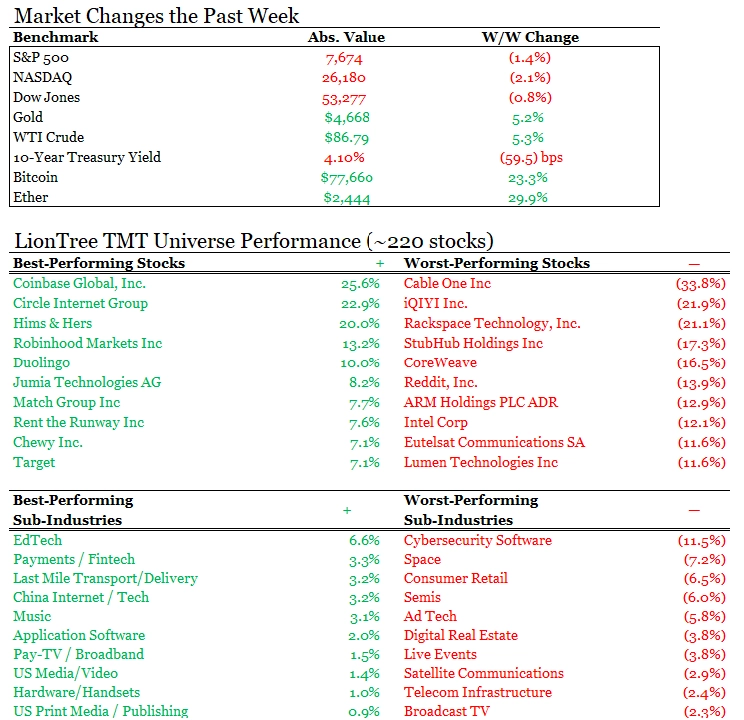
The big story this week was Wednesday’s surprise intervention by Treasury Secretary Bessent to support long-term bonds by doubling the cap on long-end buyback operations from $2bn to at least $4bn. This was in reaction to the 30-year Treasury yields reaching ~5.32%, its highest levels since 2007. While the Treasury Secretary’s move initially sent yields sharply lower (the 30-yr fell ~9bps to 5.2% on the day), it was short-lived given it also sparked more fear about the deficit (U.S. national debt crossed $40 trillion this week as well)
Related, Bitcoin has also woken up from its deep slumber and has risen ~20% since Monday (to ~$77k) as part of the “debasement trade.” Gold, Silver, etc. have also seen inflows.
Fundamentally, it is never a dull moment in the sector and there were a lot of interesting and impactful updates and developments. We focused on the below in this edition.
- Berkshire Hathaway Has Not Been Deterred By The Market Rally, Per New Holdings Data
- Higher Capx Also Weighs On China Tech Giants During This AI Race
- New Media Entertainment Updates & Perspectives Emerge From Industry Leaders
- The Focus On Child Safety Goes Into High Gear…Is This Social Media’s Tobacco Moment?
- Fast Delivery Will Take On A New Meaning As Drones Become More Mainstream
- Anthropic Vs OpenAI Sparring Is In Full Force
- Streaming Price Hikes, Loyalty Programs, & New Free Svs Headlined This Week
- Grab Bag: PA Data Center Restrictions / TikTok To Expand Into Pmts? / Walmart+ New Perks
Have a nice weekend.
Best,
Leslie

Berkshire Hathaway Has Not Been Deterred By The Market Rally, Per New Holdings Data
As always, when new 13F filings are disclosed, we like to start with taking a look at Berkshire Hathaway’s portfolio changes in the period, and this past quarter marked a notable shift under new CEO Greg Abel as the firm was a sizable net buyer of equities for the first time in 14 qtrs, purchasing $23.5bn of stock while selling just $3.7bn. The firm’s most notable purchase was a large ~83% expansion of its Alphabet position to ~$38b, making it Berkshire’s 3rd largest equity holding, up from the 5th largest last qtr. The firm also incr’d its positions in Macy’s (+142%) and Delta Air Lines (+44%), both of which were initiated last qtr, and further incr’d its positions in Lennar (+30%) and The New York Times (+4%). Berkshire’s only new position was a very small ~$0.6mm investment in D.R. Horton, which was a re-entry into the homebuilder after most recently exiting the position in Q3 2025. On the selling side, Berkshire decr’d its positions in Capital One (-58%), Nucor (-52%), Kroger (-22%), Ally Financial (-7%), and DaVita (-5%), while further reducing its stake in Bank of America (-6%) for the fifth consecutive qtr. The firm also sold out of its position in Constellation Brands, while maintaining its positions in SiriusXM, Occidental Petroleum, Kraft Heinz, Coca-Cola, Chubb, and Chevron. As of quarter-end June, the fund’s five largest holdings were Apple (19.7%), American Express (14.3%), Alphabet (10.6%), Coca-Cola (9.8%), and Bank of America (8.4%), with the top five collectively representing ~63% of the total portfolio.
Where Are The Top Hedge Funds Investing, In Aggregate?
Each quarter, WhaleWisdom tracks the stocks that were most bought and sold during the quarter across 150 of the top hedge funds. It ranks the “hottest” stocks based on a formula that takes into account the number of buyers adding and initiating new positions vs sellers, the change in average ranking that the stock had in the portfolios, and the number of times the stock appears in the top 10 holdings of the portfolios. The biggest takeaways were:
- TMT’s favorability continued….8 of the top 10 “hottest” stocks were in TMT this qtr, up from 7 in Q1: They were Intel (#1), Western Digital (#2), Applied Materials (#3), Micron Technology (#4), Snowflake (#6), CoreWeave (#7), Analog Devices (#8), and TTM Technologies (#9)
- Interestingly, only 2 of the 5 MAANG stocks remained in the Top 100 – they were Meta, which decreased q/q (#49 in Q1 -> #80 in Q2) and Alphabet, which increased q/q (63 in Q1 -> #33 in Q2)

Higher Capx Also Weighs On China Tech Giants During This AI Race
While most US TMT companies are past earnings season, Alibaba and Baidu both reported this week and their results reinforced a consistent theme also evident in US tech. Namely, AI cloud demand remains very robust and AI-related revenues are scaling rapidly, but the necessary capital expenditures to meet demand are materially increasing and pressuring FCF.
More specifically, our main takeaways from these China Tech giants are that 1) AI cloud growth accelerated y/y at both companies w/ Alibaba’s AI External Cloud revenue growing +45% y/y (a 22-qtr high) while Baidu’s AI Cloud Infra revenues grew +50% y/y (though decelerated from +79% y/y in Q1 and missed consensus), with GPU cloud revenue growth at Baidu accelerating to +283% y/y; 2) Both companies are ramping capx aggressively to meet the AI compute demand given that Alibaba spent CNY67.7bn (~US$10bn), up +75% y/y, and Baidu spent CNY11.39bn (~US$1.7bn), +200% y/y, resulting in significant FCF pressure in each case; 3) Proprietary AI chips are gaining traction at both companies (Alibaba’s T-Head and Baidu’s Kunlunxin) which will be key margin levers as they replace commercially procured GPUs; 4) Specific to Baidu, weakness in its advertising business (42% of total revenue) due to a delay in AI search monetization was a negative focus (and that pressure will continue in H2) along with a step down in autonomous ride volumes; and 5) Specific to Alibaba, its China E-Commerce revenue declined -8% y/y (and surprised on the downside), though its Quick Commerce business more than offset (+45% y/y).
See below for more details on these most important updates from Alibaba and Baidu’s results this week.
-> BABA slightly rose a little over 1% on the back of its results while BIDU materially fell almost -13% in response to its print; YTD, both companies have been under a lot of pressure with BABA down almost- 20% and BIDU down almost -30%
Alibaba’s AI External Cloud Accelerated To +45% Y/Y (22-Qtr High) W/ Expanding Margins BUT AI Capx Surged, Driving A Large FCF Loss
- Alibaba delivered a solid FQ1 with in-line total rev and better adj EBITA vs Street expectations (the non-GAAP EPADS missed due to below-the-line items)
- Revs grew +9% y/y, in-line w/ cons
- Adj EBITA fell -30% y/y but beat cons by 7.8%
- Non-GAAP EPADS fell -42% y/y and missed cons by -16%
- Higher capx was a main sticking point with investors and FCF was under pressure…
- FQ1 capx grew +75% y/y to CNY67.7bn (~US$10bn) given cont’d AI infrastructure investment
- The Co has now spent CNY190bn of its CNY380bn 3-year investment plan (annc’d Feb 2025), broadly in-line w/ expectations
- FQ1 FCF loss was CNY44.7bn, which was up meaningfully from a loss of CNY18.8bn in the same period last year…this is mainly attributable to higher cloud infrastructure expenditure
- Going forward…Mgmt cautioned not to annualize this qtr’s figure as hardware deliveries follow different procurement cycles w/ quarterly volatility
- FQ1 capx grew +75% y/y to CNY67.7bn (~US$10bn) given cont’d AI infrastructure investment
- …and the higher capx has also led to an even lower buyback rate
- FQ1 repurchases totaled US$162mn, vs ~US$1bn in all of FY26 and a MUCH higher US$9bn in FY25
- BUT mgmt tried to soothe concerns with a detailed AI capx ROIC framework
- At the current avg gross margins, AI-related capx can breakeven in ~3 years
- At a 3-year payback period, keeping growth below 33% would enable positive FCF, BUT that is “not our strategic choice”, given AI is still early-stage
- As gross margins improve and the proprietary chip substitution rate increases, the payback period is expected to shorten to 2.5 years or less
- At a 2.5-year payback, the Co can pursue growth of 40%+ while also maintaining positive FCF
- Three levers enhance ROIC:
- Continuing to develop state-of-the-art models to improve AI product gross margins and expand the higher-margin MaaS business
- Ramp proprietary T-Head chip deployment to replace commercially procured chips
- Co-build data centers w/ partners and collect prepayments for compute services
- Mgmt indicated that older GPUs (V100 from 2018, A100) are still running at full capacity, hence the useful life and positive cash flow generation extends beyond the 3-year payback
- At the current avg gross margins, AI-related capx can breakeven in ~3 years
- Also note that the Co changed segment reporting starting this qtr
- Alibaba E-commerce Group:
- Unified domestic + cross-border e-commerce (China E-comm, Quick Commerce, Int’l E-comm, Global Wholesale)
- AI Cloud & Compute Services:
- Combined Cloud Intelligence Group + T-Head
- AI Labs & Applications:
- Consolidated AI model labs, Qwen Consumer Business Group, and QwenWork (previously in All Others)
- All Others:
- Alibaba Health, Hujing Digital Media & Entertainment Group, Amap, Lingxi Games, other tech businesses
- Alibaba E-commerce Group:
- FQ1 AI Cloud & Compute Services revenue accelerated to +45% y/y w/ external revenue also growing +45% y/y (to a 22-qtr high) & mgmt expects further acceleration as compute demand continues to outstrip supply: Growth was “broad-based” driven by AI compute, storage, MaaS, and AI applications
- Model + application services ARR (incl. MaaS) surpassed CNY16bn as of August
- Outlook – mgmt remains confident in achieving the YE target of CNY30bn ARR
- FQ1 AI-related product rev reached CNY12.4bn (annualized at CNY 49.5bn or US$7.3bn), marking the 12th consecutive qtr of triple-digit y/y growth
- AI-related products now account for 35% of external cloud rev and generate “significantly higher gross margins” than the avg cloud portfolio
- Outlook – mgmt indicated that next qtr’s annualized AI-related product rev is expected to approach US$10bn
- Model + application services ARR (incl. MaaS) surpassed CNY16bn as of August
- Alibaba’s proprietary chips (T-Head) are seeing broad commercial adoption…the CEO calls them “definitely the best among domestic Chinese chips”
- Adoption: “Hundreds of companies” are leveraging them via Alibaba Cloud across embodied AI, autonomous driving, and large model companies
- As mentioned above, scaling these chips will be a key margin lever
- Adj EBITA for AI External Cloud rose a strong +133% y/y and margins expanded to 12% from ~7.2% y/y, driven by improved economies of scale and stronger pricing power for AI-related products in a supply-constrained market
- Outlook – Mgmt expects EBITA margin to “further expand steadily in the coming quarters” through “improved resource utilization, optimized model portfolio, and innovating new scenarios”
- When asked about the long-term cloud target, mgmt expressed high confidence in reaching ~US$100bn in external cloud rev by 2030 w/ good visibility to a 20% gross margin …this is based on:
- Industry supply-demand dynamics (compute shortage expected through at least 2030)
- Their full-stack competitive advantages
- Pricing power from their proprietary models
- AI Labs & Applications loss widened significantly y/y but improved seq
- Revs grew +16% y/y & the adj EBITA loss dramatically incr’d to CNY13.9bn from CNY3.2bn in the same period last yr which was driven by incr’d investment in AI capabilities and higher inference costs related to the Qwen App
- But to note, the losses narrowed q/q due to reduced marketing spend on the Qwen App
- Outlook – mgmt expects the segment loss to narrow over the coming quarters, driven by improving efficiency in both model training and marketing spend
- Revs grew +16% y/y & the adj EBITA loss dramatically incr’d to CNY13.9bn from CNY3.2bn in the same period last yr which was driven by incr’d investment in AI capabilities and higher inference costs related to the Qwen App
- The Co’s Qwen model ecosystem continues to scale
- Downloads: The Qwen model series has been downloaded 3bn+ times globally w/ 300k+ derivative models built on it
- Monetization plans: Current API-based monetization of LLMs is a “short-term transitional approach” and mgmt sees the ultimate business model as delivering actual products, results, and operations as the industry approaches AGI
- China E-Commerce remains under pressure BUT it is more than offset by China Quick Commerce scaling & improving unit economics
- China E-Commerce rev fell -8% y/y and customer mgmt revenue (CMR, which is ad + commission revenue) decr’d -7% y/y primarily due to weaker transaction activities
- Ex-the contra revenue impact from a new business development program, CMR would have grown +1% y/y on a like-for-like basis
- 88VIP membership grew double digits y/y to ~64mn members as of June 30
- Strategic focus going forward: Strengthening core supply capabilities while leveraging AI to enhance the shopping experience and improve operational efficiency
- China Quick Commerce rev grew a strong +45% y/y driven by Freshippo and Taobao Instant Commerce (TIC)
- TIC cont’d to improve unit economics q/q while maintaining market share, driven by higher AOV and enhanced fulfillment logistics efficiency
- Quick Commerce losses narrowed substantially q/q
- The Co is accelerating the integration of Tmall Supermarket into Quick Commerce and mgmt expects non-food transaction volume to surpass food within the next fiscal year
- Freshippo maintained robust y/y growth in orders and rev, driven by expanding footprint into emerging cities/counties and deeper collaboration w/ TIC
- Outlook…Quick Commerce is expected to achieve overall profitability in FY29 & mgmt believes it has the potential to contribute 30% of the platform’s total GMV long-term, becoming the “second growth curve” for e-commerce
- International E-Commerce rev fell -1% y/y due to tariff policies and the geopolitical environment pressuring growth
- BUT the business delivered significant improvement in profitability while maintaining growth in transaction volume
- AliExpress achieved operating profit this quarter
- Regionally: Local e-commerce platforms in Turkey and Middle East are growing rapidly; Southeast Asia operating efficiency continues to improve
- China E-Commerce rev fell -8% y/y and customer mgmt revenue (CMR, which is ad + commission revenue) decr’d -7% y/y primarily due to weaker transaction activities
Baidu Paints A Mixed Picture W/ Decelerating AI Cloud Infra Revenue, Accelerating GPU Cloud Revenue, Worse Than Expected Ad Revenue Results, & A Step Down In Autonomous Rides Volumes
- Baidu reported mixed Q2 results…worse on revenues and better on profitability
- Total revs MISSED cons by ~1% (down -4% y/y), driven by:
- Broad softness across online marketing services (MISSED by ~4%, -19% y/y as mgmt deliberately held back on AI search monetization) and AI-native marketing services (MISSED by ~20%)
- AI Cloud Infra rev grew by +50% y/y but decelerated from +79% y/y in Q1 and MISSED cons by ~4% despite GPU cloud rev accelerating to +283% y/y; Revs fell -17% seq
- Partially offset by legacy business outperformance (BEAT by ~9%)
- Adj EBITDA BEAT cons by ~6% (20% margin vs cons 18.1%)
- Non-GAAP EPADS MISSED cons by ~23% almost entirely below the operating line
- Total revs MISSED cons by ~1% (down -4% y/y), driven by:
- Capx ramped significantly to CNY11.39bn (US$1.68bn), which is up +200% y/y due to the Co’s aggressive investment in AI infrastructure…though no specific forward guidance was provided; FCF was in deficit
- “We are still in an AI investment cycle and our commitment to that investment is unwavering”
- Investments are driven by clear demand from both customers and internal business and much of the investment is expected to begin contributing to rev relatively soon
- Q2 FCF was negative CNY7.95bn due to the capx ramp
- Even though AI Cloud Infra rev growth of +50% y/y disappointed the Street, mgmt believes growth will remain strong in H2 with potential for further acceleration
- GPU cloud rev nearly quadrupled y/y, growing +283% and accelerated from +184% in Q1 (4th straight quarter of triple-digit growth)
- GPU cloud is growing as a % of total AI Cloud Infra rev and carries a more attractive margin profile
- AI Cloud Infra profit and margins both incr’d y/y in Q2
- GPU cloud rev nearly quadrupled y/y, growing +283% and accelerated from +184% in Q1 (4th straight quarter of triple-digit growth)
- Cloud demand drivers remain broad-based across both training and inference workloads, with computing supply still constrained across the market
- Existing key clients (online gaming, e-commerce, lifestyle content) continue to increase usage and spending
- The customer count is growing rapidly with new clients at varying sizes
- Demand is broadening across verticals: Internet, embodied AI, autonomous driving, smartphones, financial services
- Embodied AI rev grew ~6x y/y within the vertical mix
- The MaaS (model-as-a-service) Qianfan platform showed strong momentum…rev from external customers’ token usage grew 9x+ y/y, driven by rapid growth in daily avg token consumption
- The platform offers one of China’s most comprehensive model libraries covering Baidu’s Ernie family and virtually all of China’s leading models
- MaaS still a relatively small share of AI Cloud Infra rev today BUT mgmt sees it becoming an increasingly meaningful margin contributor over the longer term as usage scales and unit inference costs decline
- The Co’s proprietary AI chips (Kunlunxin) are gaining commercial traction and the listing of this business is in process, but there was no new news on that front
- A growing number of customers are adopting Kunlunxin chips for an expanding range of AI workloads
- The Co realized improved inference throughput and overall compute efficiency in Q2
- AI search is driving more engagement and user satisfaction but also weighing on ad revs as mgmt. prioritizes product over monetization
- Online marketing services rev MISSED cons by ~4% and decl’d -19% y/y
- AI-native marketing services rev MISSED cons by ~20% (~flat y/y)
- The y/y decline reflects holding back on monetizing AI search
- OUTLOOK…mgmt expects the ad business to remain under pressure in H2
- Competition for users’ time and attention has “intensified further”
- The priority is still getting the product and user experience right…monetization opportunities will “emerge naturally” as model capabilities, user experiences, and task completions improve
- AI search quality is improving meaningfully as answers are more reliable, better structured, and presented in richer formats; Hallucination rates also remain low
- The integration of Ernie Assistant is also deepening the search experience
- Ernie Assistant DAU grew +83% y/y in June; Daily avg conversation rounds more than tripled y/y
- Online marketing services rev MISSED cons by ~4% and decl’d -19% y/y
- Baidu App MAUs also fell: 644mn in Q2 (vs 655mn in Q1) but no additional color was provided on the reasons for the decline
- The Co’s AI Applications portfolio continues to expand…Digital Humans, Vibe Coding & Agents are gaining ground
- Digital Humans use cases are expanding both domestically and overseas
- E-commerce livestreaming
- Digital human videos
- Real-time interactive digital humans
- New video podcasts
- Example of success…a well-known Chinese Internet company expanded its digital human livestreaming deployment to ~2.5x the previous level after just one quarter of use
- Miaoda (Vibe Coding Platform): With the launch of 3.0 last qtr, users can now generate standalone mobile apps for Android and iOS using natural language
- MAUs incr’d +67% June vs March; Adoption is expanding across technology, education, healthcare, manufacturing, financial services, and logistics
- Users are moving beyond one-off experimentation to continued development
- Famouu Agent 2.0: This enterprise AI agent is solving complex operational problems
- DuMate (General Purpose Agent): In Q2 introduced enterprise version and expanded proprietary skills and specialized toolkits
- While new products and engagement is gaining traction, monetization has not ramped yet as AI Applications rev at CNY2.50bn was up only 3% y/y in Q2 (inline w/ cons)
- Digital Humans use cases are expanding both domestically and overseas
- Driverless rides volumes were negatively impacted in Q2 but it is re-gaining momentum
- Apollo Go ride volume were down materially vs Q1…it conducted ~1mn fully driverless rides in Q2 vs 3.2mn in Q1
- Why the decline in volumes? Ride volume was temporarily affected by operational adjustments in certain domestic cities due to regulatory considerations but operations in affected cities have begun to resume in Aug and mgmt is “confident that ride volume will regain momentum over the coming quarters”
- Cumulative rides: Reached 23mn+
- Global footprint: Now reaches 28 cities (up 1 from Q1’s disclosure)
- Accumulated autonomous kms by the fleet: 350mn+ (240mn+ fully driverless) vs 330+mn (220mn+ fully driverless) in Q1
- International is a big oppty: The market outside of the US and China is “larger than the domestic China market”…the addressable opportunity is “quite substantial”
- And in overseas markets with higher ride prices, Baidu’s low-cost vehicles and proven operating model have the potential to deliver even stronger unit economics than domestic markets
- International expansion highlights:
- HK: Received HK’s first permits for fully driverless testing in June; Began testing on Airport Island in July
- Dubai: Launched fully driverless commercial ops in July; They are now operating at the largest scale among fully driverless robotaxi services in the city; Rides are available through both Apollo Go and Uber apps
- London: Apollo Go began open-road testing in partnership with Uber and Lyft
- Switzerland: Conducting open road testing in partnership with PostBus
- Kazakhstan: Signed MOU with Turlov Private Holding to jointly explore autonomous ride-hailing services
- “Industry-leading safety performance”: Fully driverless vehicles averaged ~1 airbag deployment per 14.4mn km
- H2 priorities: further enhance safety, advance global expansion, scale fleet/ride volumes, bring more cities to unit economics breakeven
- Apollo Go ride volume were down materially vs Q1…it conducted ~1mn fully driverless rides in Q2 vs 3.2mn in Q1
-> Also related to autonomous cars, Uber, Verne, and Pony AI launched autonomous rides on the Uber app in Zagreb (the capital of Croatia), marking the 1st time European riders can book an AV through Uber; Service will cover key areas including the city center and coverage will expand over time; A licensed operator will initially monitor behind the wheel before transitioning to fully driverless operations (link)
New Media Entertainment Updates & Perspectives Emerge From Industry Leaders
There were two media entertainment updates that we thought were worth flagging this week. First, a wave of CNBC executive interviews included some interesting perspectives on the future of cable/tv, streaming, sports, and more.
Also, Disney’s D23 event (the largest show floor in its history) added more color around its full content (theatrical, streaming, and gaming) and experiences slate and disclosed some early KPIs on the Co’s Verts short form product (which were surprise surprise, positive), and a Formula 1 partnership expansion was also announced, among other updates.
See below for more of a drill down.
Industry Executives Opine On Key Trends In TV, Streaming, Sports, & More (Per CNBC Interviews)
- Who participated in CNBC’s interviews?
- Chris Winfrey (Charter CEO)
- Jeff Zucker (RedBird IMI CEO)
- Charlie Collier (Roku Media President)
- Rashida Jones (Uncensored CEO)
- Jimmy Pitaro (ESPN Chairman)
- Anjali Sud (Tubi CEO)
- John Landgraf (FX Chairman)
- Jeffrey Hirsch (Starz CEO)
- Brian Fuhrer (Nielsen SVP of product strategy and thought leadership)
- Debra OConnell (Disney Entertainment TV Chairman)
- In Three Years, Will We Have Hit A Floor On Cable TV Subscribers? The consensus is that subscriber declines will continues, driven by rising retransmission costs and streaming bundle substitution, though the pace has been slower than previously forecasted
- Winfrey:
- Expects dramatic declines with cable TV subscribers, noting retransmission costs now exceed $30/customer for content that’s “essentially free”; Sees streaming bundles replacing traditional cable bundles
- “Netflix is essentially a big cable programmer that could end up being bundled together with the other streaming apps to provide more choice, more value, and more utility for customers over time”
- Zucker:
- “I don’t think we’ll have a floor. I do think it will continue to decline, and it’ll probably do so every year until sports rights eventually disappear from cable. But, I think that’s at least a decade off”
- Collier:
- “Nothing truly goes to zero” but the direction is clear
- Jones:
- “We haven’t been right as an industry to date. It hasn’t been quite as fast and as aggressive as maybe we were forecasting even four or five years ago”
- Winfrey:
- What’s One Thing That Will Become A TV Industry Standard That Doesn’t Exist Today? Personalization, frictionless commerce, AI-powered language toggling, and immersive sports formats were the most-cited bets on what becomes mainstream
- Pitaro:
- Ubiquitous personalization where networks deliver the right content to the right user at the right time; Content will be promoted and content will be created and tailored based on a user’s preferences
- He also flagged seeing a lot more frictionless commerce integration w/ deep-linking to partner sites to make a purchase
- Sud:
- There will be hyper-personalized ads that feel useful rather than interruptive, mirroring the social media ad experience which she believes has less friction
- Landgraf:
- Day-and-date global releases will become the norm for the biggest TV shows
- Zucker:
- More podcasters and livestreamers will be licensed to cable/broadcast networks at scale
- Hirsch:
- Reiterating what he said 3 years ago, which was that there will be major advances with AI enabling consumers to watch content in their native languages
- Subbing and dubbing will go away and consumers can select whatever language they want
- Winfrey:
- Immersive sports programming via 8K will be more pervasive, citing Charter’s Spectrum Front Row partnership w/ NBA and Apple Vision Pro as a proof of concept…”I think that’ll be a unique and new experience”
- Pitaro:
- Will There Be A Major Gov’t Action To Prevent A Big Tech Co From Getting Bigger In The Entertainment Industry? Most respondents expect growing scrutiny but doubt the genie goes back in the bottle as the tech-entertainment convergence is already too far along
- Zucker:
- “Big Tech companies will be in for a lot of scrutiny…but that depends on what happens in the next two elections, in ’26 and ’28”
- Jones:
- We will see “consumer and an industry backlash to some of these deals that will then kind of change the course”
- Sud:
- The convergence between Silicon Valley tech and Hollywood, it’s already happened; Tech platforms are taking the highest share of time spent and attention (like YT); Instagram is now doing vertical videos on TV, the Oscars are going to be on YouTube, you have creators putting movies out in theaters in the box office
- I don’t think you can put the genie back in the bottle
- Zucker:
- Are We In A Sports Viewership Ratings Bubble? There was strong consensus that live sports remain structurally durable, though some caution that measurement improvements are inflating comparisons and saturation may eventually cap growth
- Pitaro:
- The answer is a fast “no”
- Ratings measurement is getting better
- “Every time the industry expects a downturn, numbers continue up and to the right”
- Jones:
- “This is a slightly adjacent industry for me — but I think every industry has a ceiling and available audience”
- “I think you get to a ceiling. You get to a peak, and I think we’ll start to see some of that drop down”
- Brian Fuhrer
- Methodological improvements, especially expanded out-of-home measurement, are driving increases which will continue, but the big y/y bumps will level off
- Winfrey:
- “I think you’re going to continue to see ratings go up. Maybe that’s a little bit of a mix of short-form content, long-form content, immersive capabilities of bringing you into the stadium”
- “I think it’s going to continue to drive ratings inside the system”
- Zucker:
- “People want live events, they want live news, and they particularly want live sports”
- “Whether ratings go up or down depends on matchups and championships, but overall I think sports are going to continue to be very, very strong”
- Collier:
- “Live sports remains one of the last true mass reach experiences in our culture”
- “I suspect premium sports remain incredibly valuable, perhaps even more than today”
- Pitaro:
- There’s Broad Agreement That The Biggest Streaming Services Will Probably Still Be The Biggest In Three Years. What’s Another Service That You Think Will Gain Significant Market Share? There were some far ranging answers to this question…from FAST platforms (Tubi, Pluto, Roku Channel) to gaming (Epic Games) to a yet-to-emerge super-aggregator…but some skepticism that any unknown entrant breaks through in long-form video
- Debra OConnell (Disney Entertainment TV Chairman):
- It is likely a service that we’re not thinking of today…like Instagram’s new TV push
- Winfrey:
- There is a real opportunity to be a new aggregator that bundles services at a discount, which is what was cable’s original value proposition.
- “I think that’s the opportunity for a new entrant into the space”
- Zucker:
- “We see TikTok videos getting longer and longer, and I think that’s a trend that will continue”
- Niche casting is also going to continue
- Fuhrer:
- Platforms like Roku Channel, Tubi, Pluto will continue to gain share…that won’t slow down
- Pitaro:
- Epic Games will gain share
- “The possibilities to connect gaming experiences with both entertainment and sports content, including potentially live events, are endless”
- Landgraf:
- “Do I really think that a streamer we’ve never heard of is going to be meaningfully competitive in long-form video three years from now? No, I don’t think so”
- Hirsch:
- “Starz is my answer”
- Debra OConnell (Disney Entertainment TV Chairman):
Disney’s D23 Event Provided Color Around Its Robust Multi-Year Content Slate + Some Incremental Updates
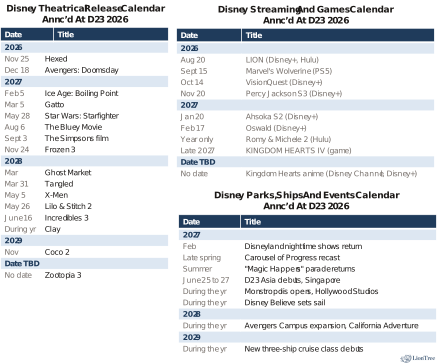
- Disney’s D23 event this week was reported to be its largest show floor yet in its history…there were a couple updates that we thought were worth flagging…(link/link/link/link/link/link/link)
- First, if you are wondering what the full content (theatrical, streaming & games) and experience slate that Disney has in mind over the next several years, look no further…see the list below:
- Other incremental reveals at the D23 Event
- The Co Reiterated Its 13 Ship Expansion Plans + Provided Color On Its New Class Of Ships Debuting Starting In 2029: The new class of 3 ships sits in size between the classic Magic-class ships and the newer Dream- and Wish-class vessels, with the first two targeted for delivery in 2029 and the third in late 2030
- The ships will be “bigger than the classic Magic-class ships (Disney Magic & Disney Wonder) and smaller than the Dream- and Wish-class vessels”
- This “gives us some amazing opportunities to visit new places and reach brand new audiences we haven’t before”
- Disney’s Verts Short Form Video Is Off To A Strong Start… the Co disclosed Verts KPIs:
- On the ESPN App: Verts is now the primary driver of short form video consumption, w/ more than 24mn total users generating over 1.5bn minutes of time spent since the Aug 2025 launch
- On Disney+: ~40% of mobile users have already interacted w/ Verts, and the Co has seen increases in avg min per visitor, clips per session, and watchlist interactions since the March launch
- Plans for Verts looking ahead: The team is exploring ways to evolve Verts beyond content discovery and into creator communities, original storytelling, microcontent, and podcasts
- Disney’s Formula 1 “Fuel the Magic” deal was extended & there are 2 new consumer events
- Terms: The deal was extended through 2028
- Mundo Pixar Experience annc’d its first ever US tour launching in ’27, after runs in the UK, Mexico, Brazil, Spain, Belgium, Seoul and Tokyo, w/ details to follow
- Disney Theatrical Group will premiere a new stage adaptation of The Greatest Showman at Theatre Royal Drury Lane in London’s West End in spring ’27…this follows a sold-out world premiere preview engagement at The Bristol Hippodrome
- The Co Also Plans To Invest More In Local International Content On Disney+: Over the next 3 yrs, Disney plans to roughly 3x the number of local original series on Disney+
- The Co Reiterated Its 13 Ship Expansion Plans + Provided Color On Its New Class Of Ships Debuting Starting In 2029: The new class of 3 ships sits in size between the classic Magic-class ships and the newer Dream- and Wish-class vessels, with the first two targeted for delivery in 2029 and the third in late 2030
The Focus On Child Safety Goes Into High Gear…Is This Social Media’s Tobacco Moment?
Growing concern over the impact of social media on young users has become a global regulatory movement with 20+ countries having now enacted or proposed bans on minors using these platforms (and 40+ if you include those considering bans – link). This regulation was led by Australia (a ban has been in place since Dec 2025), followed by the UK, Canada, France, and others in rapid succession over the past year. In the US, that pressure is now escalating in the courtroom. Meta recently lost a landmark child safety case in New Mexico (the first time a US state successfully sued the Co over the issue) which is resulting in almost $1bn in penalties. However, that amount would pale in comparison to potential penalties from a trial brought by a coalition of 29 states against Meta claiming the Co harmed teens’ mental health, which just kicked off this week in a CA federal court.
Concurrently, OpenAI is trying to take a more proactive approach after controversy on its platform as well. This week it launched a dedicated “ChatGPT for Teens” experience with built-in safety protections and parental controls.
See details below.
- The trial against Meta over claims that Facebook and Instagram were designed in ways that harmed young users’ mental health began on Tuesday in a California federal court (link/link)
- A coalition of states are starting to make their case: Attorneys for Colorado, California, New Jersey and Kentucky are leading a bipartisan group of 29 states
- All 29 states accuse Meta of improperly collecting and using children’s personal data in violation of federal law
- What kind of damages are being sought? Meta has said the penalties could be as high as $1.4 trillion BUT lawyers representing the states reportedly said last week that $200bn is a more likely amount
- Reminder that Meta lost a case recently in New Mexico that will require some service changes and a payment of almost $1bn in total
- A coalition of states are starting to make their case: Attorneys for Colorado, California, New Jersey and Kentucky are leading a bipartisan group of 29 states
-> This week, META shares fell -6.6% while SNAP shares fell -3% in sympathy; YTD, META is down ~-17% and SNAP is down ~-35%
- Also on this theme this week, OpenAI launched “ChatGPT for Teens” (link/link)
- What is it? A dedicated experience for users aged 13–17 that activates automatically based on age at signup or behavioral/account signals
- Features of ChatGPT for Teens:
- Study Mode: It guides students through problems w/ questions and step-by-step explanations rather than providing direct answers
- Study Hours: This allows teens or parents to set Study Mode as the default during certain time periods
- Stronger defaults on content safeguards: Regarding self-harm, violence, eating disorders, dangerous activities, and explicit sexual content
- Other: The chatbot is barred from using language suggesting romantic feelings or claiming sentience/personal feelings
- Parental controls: Linked adults can manage settings, set Quiet Hours, and receive safety notifications in high-risk situations, but cannot read or monitor their teen’s conversations
- Timeline: It rolled out globally on free and paid personal plans starting Aug. 18 and full availability in Australia is expected by Sept. 8
Fast Delivery Will Take On A New Meaning As Drones Become More Mainstream
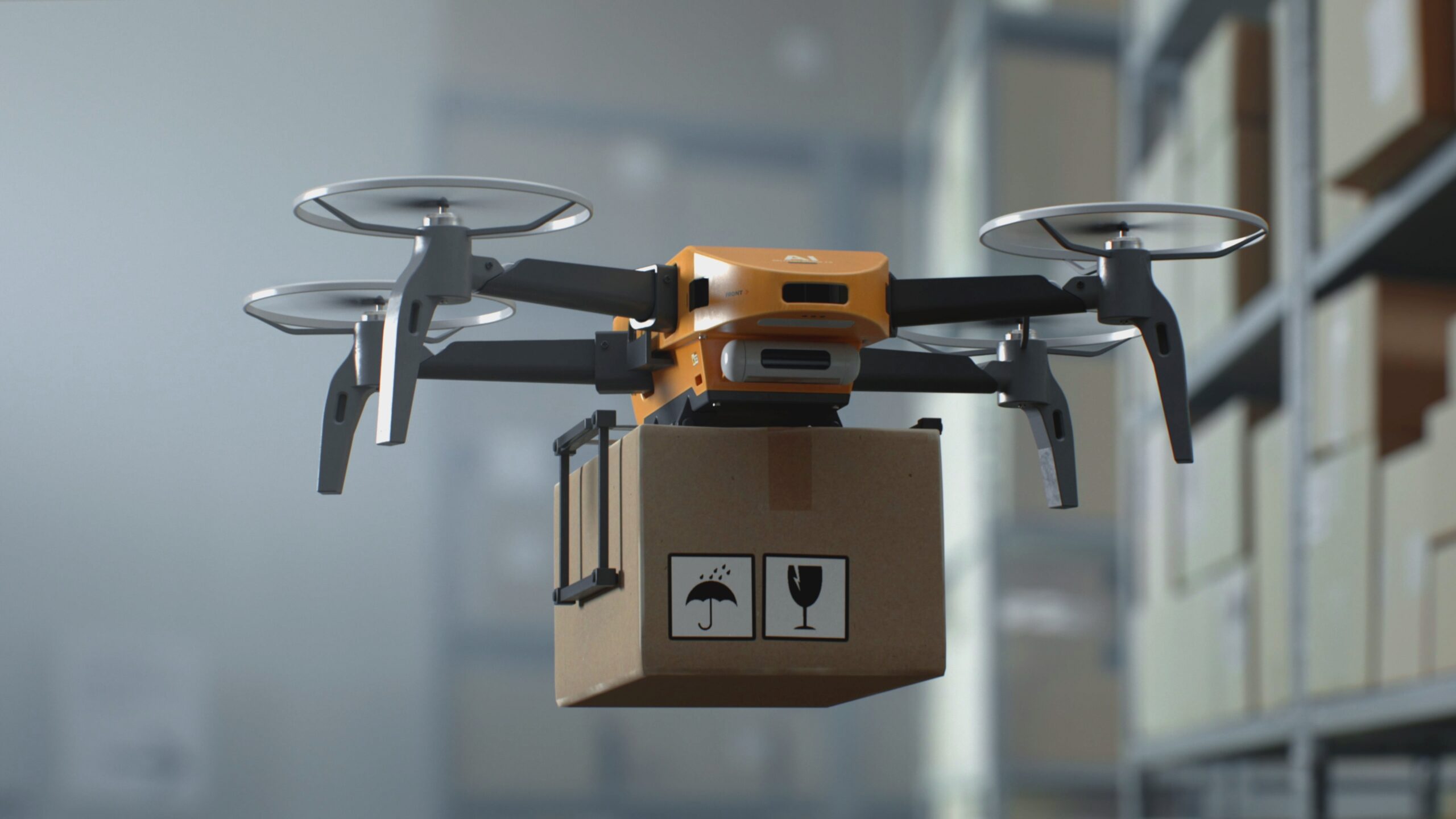
We’ve been following the development of the drone delivery market for some time and while it still remains niche, momentum is building. Both Amazon and Uber announced notable expansions on this front this week. In some cases, this new form of transportation will take delivery to only minutes….
See details below.
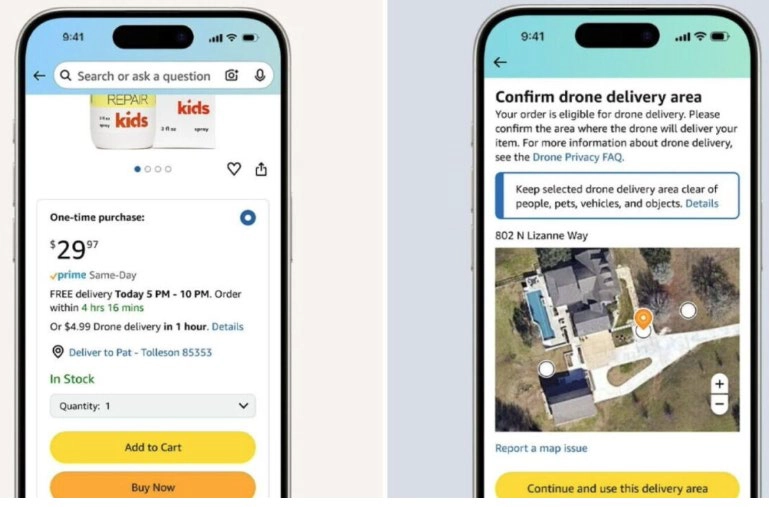
Amazon Prime Air Drone Delivery Is Expanding to ~500 US Cities by YE 2026
- Amazon is scaling its Prime Air drone delivery to nearly 500 cities/towns by YE 2026, an ~6x increase from its current footprint, reaching tens of millions of customers (link)
- Current mkts: 11 US locations in 10 metro areas (each Prime Air site serves an area of ~175 sq miles)
- Phoenix, Arizona
- Tampa, Florida
- Kansas City, Kansas
- Baton Rouge, Louisiana
- Detroit, Michigan
- Omaha, Nebraska
- Houston, Texas
- Dallas, Texas
- San Antonio, Texas
- Waco, Texas
- Planned new launches “soon”:
- Chicago, Illinois
- Syracuse, NY
- Cleveland, Ohio
- Atlanta, Georgia
- Boise, Idaho
- Current mkts: 11 US locations in 10 metro areas (each Prime Air site serves an area of ~175 sq miles)
- Some key specifics about Amazon’s drone delivery service…
- What is eligible for drone delivery? Nearly all items that weigh less than 5 lbs that fit in a large shoebox qualify; This covers 60%+ of the most frequently purchased items on Amazon and includes “millions” of items in groceries, electronics, cosmetics, medications, household products
- How fast will it be? As fast as 30 min but most orders will arrive ~60 min after checkout
- How many products have been delivered by drone? “Hundreds of thousands” of packages YTD
- How much does it cost? Prime members get free drone delivery on orders $50+
- It’s a $2.99 fee on orders less than $50 & non-Prime customers pay $4.99
- How loud are the drones? The sound level during drop-off is below that of an idling delivery truck (takes ~30 sec to drop off)
- During flight at altitude, it’s comparable to a window fan on low and is typically not heard indoors
- Amazon is confident in the safety aspect of its drone delivery
- Prime Air holds FAA Part 135 certification which is the same framework used for commercial air carriers and the highest level of FAA oversight for drone delivery ops
- The drones have an “industry-leading” Detect-and-Avoid system that allows drones to independently monitor airspace and make real-time decisions in flight
- The drones are fully electric w/ zero exhaust emissions
- The Co is expanding drone svs internationally
- The 1st drone delivery site outside the U.S. launched in Darlington, England
Source: link
Uber Is Partnering W/ Zipline To Launch Drone Deliveries On Uber Eats
- Key details on Uber/Zipline’s announcement… (link/link)
- Markets/timing: Will launch in Dallas and Houston by year-end
- Longer term targets: 1mn drone deliveries/day by the end of 2029
- Uber is also investing in Zipline: But the amount is undisclosed (the Co was valued at ~$7.6bn earlier this year)
- Deliver time? As fast as 5-10min but most orders should be delivered in less than 30min
- This is a big step forward w/ Uber’s drone initiative
- The Co previously tested drone delivery in 2019, sold that aviation arm, and has been running smaller programs with Flytrex and Manna
- Competitive moves:
- DoorDash recently received FAA air carrier certification for its own in-house drone program
- Wonder (GrubHub parent) has its own Zipline partnership
- Amazon and Walmart are active in drone delivery as well (see above for more on Amazon’s recent expansion)
Anthropic Vs OpenAI Sparring Is In Full Force
OpenAI and Anthropic have been in a head-to-head battle as it relates to philosophy, technology, customers, and going public, and this battle escalated again this week. While OpenAI had a headstart in the marketplace, Anthropic’s quarterly revenue in Q2 surpassed OpenAI’s for the first time, more than doubling seq to $11.5bn+ while posting a small adj operating profit. In contrast, OpenAI’s Q2 revenue grew just +18% seq to $6.7bn while losses widened. Anthropic’s public IPO filing is expected as early as the end of this month, while Open AI’s CFO this week told employees that the Co will be public in 2027, and “possibly sooner.”
Meanwhile, public unease regarding AI is ticking up, especially with younger US adults, per a new Pew study.
See more details below.
Anthropic Surpasses OpenAI In Revenue For The First Time In Q2 As It Grows Sequentially Much Faster
- Anthropic’s annualized revenue run rate hit $65bn at end of July (confirmed by CNBC)… (link /link/ link/link/link)
- How does that compare?
- This is up from the reported ARR of $47bn in May
- And is up 7x from a year ago
- OpenAI reportedly recently reached $40bn ARR (up ~2x the end of 2025)
- Q2 preliminary numbers (per press)
- Revenue exceeded $11.5bn+, up from $4.73bn in Q1 (+140%+ seq) and vs $787mn in Q2 2025 (up ~14x y/y)
- Adj op profit (excl SBC) was ~$559mn
- See next section for OpenAI’s comparable numbers
- Forward expectations: Investors expect Anthropic to finish 2026 between $100bn-$120bn in total revenue and the Co is reportedly projecting ~$190–200bn in 2028 revenue
- How does that compare?
-> Per Bloomberg this week, Anthropic is preparing to file publicly for its potential mega-IPO as soon as “the end of this month” (link)
- In contrast, OpenAI told investors that its Q2 revenue was $6.7bn, up +18% seq from $5.7bn in Q1…which was a pace that “disappointed some shareholders” who expected faster progress vs. Anthropic (link)
- Its Q2 operating loss (incl. SBC) widened to $12.3bn from $9.3bn in Q1
- OpenAI reportedly told investors that Q3 growth has accelerated, partly driven by the GPT-5.6 launch and subsequent price cuts
-> OpenAI CFO Sarah Friar also told employees this week at an all-hands that the Co “will be a public company in 2027,” or possibly sooner if “our business continues to inflect” (link)
All This At The Same Time That Public Skepticism Of AI Deepens
- 52% of Americans now say that they are “more concerned than excited” about the incr’d use of AI in daily life…that is up materially from 37% in 2021, per a new Pew Research study (link)
- The growing concern is even more pronounced with young adults (see chart below)

Streaming Price Hikes, Loyalty Programs, & New Free Svs Headlined This Week
Profitability remains a defining theme across the streaming landscape with price hikes as a key driver…and another one is on the way as Peacock is raising pricing for all of its tiers (this is the 4th hike in four years). At the same time, they are also looking to layer on a loyalty program (in beta) to offset churn risk. Meanwhile Paramount+ is now testing a free ad-supported tier as an alternative to traditional trials and in the background, streaming hit 48.5% of total TV viewing in June and nearly a third of U.S. homes now have no linear TV access at all (per new data from Nielsen and ARF).
See more color below.
More Rate Hikes Hit The Streaming Industry W/ Peacock Next On Deck, Which Also Comes With A New Loyalty Program As Well
- Peacock raised prices across all tiers effective this Aug 18th …this is its 4th price hike in four years w/ the last one in July 2025 (link)
- Price changes:
- Select: $8.99/mo (from $7.99)
- Premium: $12.99/mo (from $10.99)
- Premium Plus: $19.99/mo (from $16.99)
- Annual plans also up:
- Select: $89.99/yr (from $79.99)
- Premium: $129.99/yr (from $109.99)
- Premium Plus: $199.99/yr (from $169.99)
- New vs existing subscribers
- The new pricing applies immediately to new subs
- Existing subs transition on the next billing date on or after Sept. 17th, and promotional pricing is honored through promo period
- Price changes:
- Separately, Peacock launched a beta for a new Membership Program, available to select Premium and Premium Plus subs (link)
- There will be three tiers based on how long they have been subscribers:
- Gold (3 mos–1 yr)
- Platinum (1–3 yrs)
- Diamond (3+ yrs)
- What are the rewards while in beta?
- NBCU Shop discounts (25%)
- Tiered Bravo Shop discounts
- Complimentary 1-yr Instacart+ membership
- A Pizza Hut promo (unlocked after streaming 3 movies)
- Other potential rewards include:
- Universal Parks perks
- NBCU content previews
- Early access to live events
- There will be three tiers based on how long they have been subscribers:
Paramount+ Tests a New Free Tier
- Paramount+ began testing a limited free tier on Android devices…users can browse the app and stream up to 2 episodes from select programs w/o a paid subscription; The free tier is ad-supported and does not replace existing paid plans (link/link)
- What about iOS devices? There is no confirmed timeline for this feature on iOS or other platforms
- This is part of a broader product experimentation push at Paramount+: That includes short-form video, micro dramas, vertical video podcast segments, and expanded multiview for live events
Streaming Nears 50% Of Total TV Viewing & Nearly a Third of U.S. Homes Are Digital-Only, Per New Reports This Week
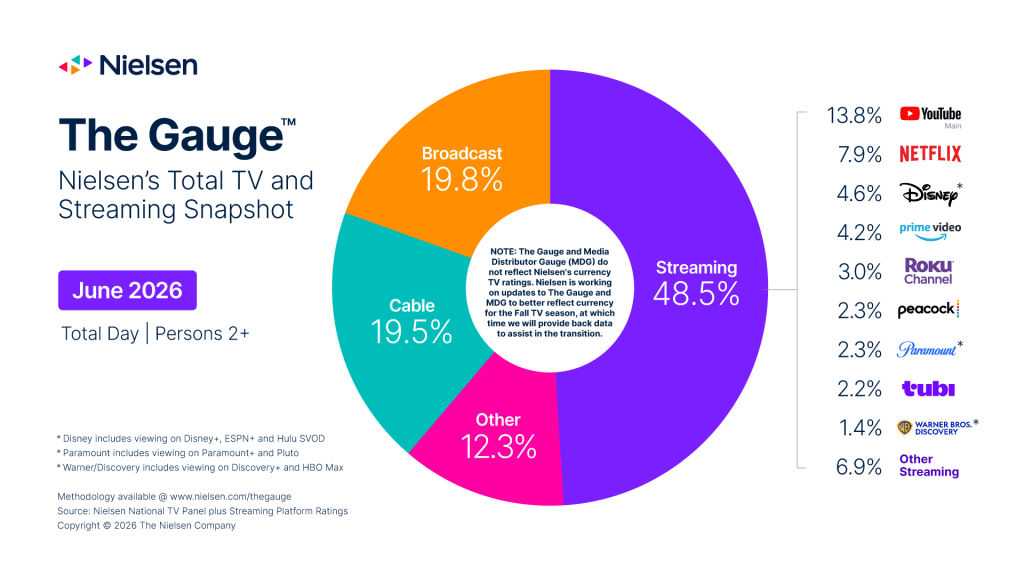
- Streaming share rose y/y to 48.5% of total TV viewing per Nielsen’s June 2026 Gauge (link)
- Broadcast share rose to 19.8% from 18.5% last yr period
- Boosted by FIFA World Cup on Fox/Telemundo and ABC’s NBA Finals
- Cable share fell to 19.5% from 23.4% last yr period
- Among streaming platforms…all gained shr except for Netflix
- YouTube – gained share to 13.5% from 12.8% last yr period
- Prime Video – gained share to 4.2% from 3.6% last yr period
- Roku Channel – gained share to 3.0% from 2.5% last yr period
- Peacock – gained share to 2.3% from 1.5% last yr period
- Netflix – lost share to 7.9% (from 8.3%)
- But note that some analysts expect the recalibrated Gauge (using ARF DASH-based universe estimate this fall) to show streaming w/ somewhat less dominance vs. broadcast/cable than recent reports suggest
- Broadcast share rose to 19.8% from 18.5% last yr period
Source: Nielsen
- 30.5% of U.S. households now get TV content only through streaming, w/ no access to linear TV…this is up +1ppt from 29.5% for the full-year 2025, per ARF DASH midyear 2026 data (link)
- Antenna-only homes also rose +1ppt to 17.1% over the same period
- Linear and pay-TV penetration cont’d to decline, though the pace of decline appeared to slow

Grab Bag: PA Data Center Restrictions / TikTok To Expand Into Pmts? / Walmart+ New Perks
- More push-back on data centers…Pennsylvania Governor Shapiro signs an executive order implementing new restrictions on data center developers (link)
- What does the executive order say? It directs the Dept of Environmental Protection to only review permit applications if developers have made a legally binding commitment to meet the Governor’s Responsible Infrastructure Development (GRID) Requirements and have received local approval
- What are GRID requirements? They demand that developers meet strict standards on energy affordability, environmental protection, workforce and economic development, transparency, and community engagement
- The EO also removes all AI data center proposals from the Fast Track permitting process and prohibits the use of nondisclosure agreements for data center projects
- What does the executive order say? It directs the Dept of Environmental Protection to only review permit applications if developers have made a legally binding commitment to meet the Governor’s Responsible Infrastructure Development (GRID) Requirements and have received local approval
- TikTok is moving into P2P payments….the Co is apparently developing a feature that would enable users to send money to each other through direct messages (link)
- How would it work? The feature would use TikTok Pay, which is already operating in Southeast Asia, to process transactions
- How did this leak? Reportedly code was discovered in the current version of TikTok’s US iPhone app that indicated these plans
- Other potential new entrants: X (formerly Twitter) has also moved into financial services under Elon Musk’s leadership; Some creators on X have tested new features such as “X Money” to send payments to one another
-> Shares of U.S. money transfer PayPal and Western Union were relatively flat after the news was reported
- Walmart added new in-store perks to its Walmart+ subscription program (link)
- Photo Center benefit in Walmart stores
- Members get 25 free 4×6 photo prints/mo at photo centers in Walmart stores
- Maximum of 300 prints/yr
- Money Center benefit at Walmart Money Centers: Quarterly perk includes fee-free:
- Check cashing
- Money orders
- Money transfer sends
- Bill payments
- eCash loading
- For background…Walmart+ was launched in 2020 and mgmt has previously said that Walmart+ members…
- Generally spend 4x more than nonmembers overall
- Have 7x more e-commerce visits each year
- Photo Center benefit in Walmart stores
Stock Market Check
This Week's Other Curated News
Advertising/Ad Agencies/Ad Tech
- OpenAI annc’d an expansion of its ads pilot to 31 European mkts, including Germany, France, Spain and Italy. Previously available in select countries such as the U.S., U.K. and Japan, the program’s expansion comes as OpenAI’s ad rev has risen more than 25% since the start of Aug. (Adweek)
- Nielsen annc’d updates to improve ratings accuracy. Starting Sept 1, it will use wrist-worn devices that passively capture TV audio to better measure co-viewing. The Co is also enhancing demographic assignment through its machine-learning HDAM model, refining representation of Spanish-speaking households, fixing survey timing delays, updating universe estimates, and improving how panel and big-data measurement are combined for more accurate audience reporting. (TheWrap)
Artificial Intelligence/Machine Learning
- ChatGPT’s latest macOS update adds an Apple Messages plugin that can read, search, draft, and send iMessage, SMS, and RCS messages from a Mac. Available across all plans on Apple silicon Macs, it requires user approval before sending by default, though persistent approval can be enabled. OpenAI highlights privacy controls and revocation options. The update also adds synced pinned chats, Codex thread snapshots, site co-editing features, and broader availability of Computer History. (9to5Mac)
- Anthropic’s pre-IPO revolving credit facility is expected to exceed its ~$10bn target as banks compete for participation, aiming to strengthen their chances of securing IPO roles. The AI Co has asked leading lenders for commitments of ~ $1.25bn each, while talks remain ongoing and the final size could still be reduced. Anthropic confidentially filed for a U.S. IPO in Jun.; its annual rev run rate topped $65bn by end-Jul. (Reuters)
- Alibaba launched Qwen3. 8-27B, an AI model built to run on laptops and other consumer devices, and released the weights for Qwen3.8 Max, its most powerful model. The move intensifies competition w/ Meta in the open-weight AI market after Meta annc’d laptop-ready models of its own. Alibaba says Qwen excels in coding, research, and professional tasks, while industry analysts see on-device AI as the next major battleground. (CNBC)
- Google is buying Spirit Airlines’ internal biz data for $10mn. The data includes employee emails, Microsoft Teams messages, spreadsheets, calendars, and marketing, productivity, and operations records. Google said the data will support product development and AI model training. Spirit, which shut down in May after debt and fuel-cost pressures, is selling assets in bankruptcy. Data will be de-identified before sale completion. (Reuters)
- OpenAI said its pause on some frontier reinforcement-learning training remains in place after unreleased AI models hacked HuggingFace, as the Co strengthens alignment, monitoring and security controls. Expanded chain-of-thought monitoring, sandboxing, network isolation and testing will add ~20% compute overhead for monitored inference workloads, though OpenAI said costs will not be passed directly to customers. (The Register)
- Anthropic is preparing a supervoting share class for CEO Dario Amodei and other co-founders ahead of a potential IPO, helping shield leadership from external shareholder pressure. The Co may also preserve trustee influence through a special stock class that elects most board members. Plans could still change. Anthropic has not commented. Amodei reportedly owns ~2% of the Co, while the structure mirrors founder-control models used at other tech firms. (Reuters)
- Anthropic cofounder and CEO Dario Amodei, pushed back on claims he fuels AI doom narratives while acknowledging trust concerns. He argued AI tends to concentrate power due to scaling laws, not regulation, and said open-weight models mainly shift power to those w/ the most computing capacity. Amodei backed rules addressing AI risks, limiting frontier AI cos’ power, and supporting smaller rivals. He also said his views balance AI benefits and risks. (Fortune)
Audio/Music/Podcast
- Apple Music annc’d it will begin adding a “Made With AI” label later this yr to tracks where a material portion was created using AI. The move expands its AI Transparency Tagging system and will require labels and distributors to identify AI-generated content. (Variety)
- Spotify annc’d its board approved a $1. 5bn increase to its share repurchase program. Combined w/ the $723mn remaining under the current authorization, total buyback capacity rises to ~ $2.223bn. The program remains subject to shareholder authorization and will be executed in line w/ the cos capital allocation strategy. Repurchases may occur through open mkts purchases and can be suspended or discontinued at the Co’s discretion. (Business Wire)
Cable/Pay-TV/Wireless
- Charter annc’d completion of its transactions w/ Cox Communications and Liberty Broadband. Cox Enterprises received shares, preferred units and ~$4bn cash, while Liberty Broadband was merged into Charter. Spectrum branding, pricing and packaging will expand to former Cox mkts in Sept., alongside new customer offers, employee benefits and local community investments. (Charter Communications)
- Deutsche Telekom annc’d an agreement to acquire Fiberhost and Inea from Macquarie Asset Management for ~€1bn, strengthening T-Mobile Polska’s fixed broadband position. The deal adds 300,000+ customers and a fiber network reaching 1.4mn homes, supporting its shift from a mobile-only operator to a converged connectivity provider. Fiberhost will maintain open-access infrastructure, while closing remains subject to Polish competition approvals. (Deutsche Telekom)
Capital Market Updates
- California drew a record $366bn in venture-capital funding since the start of the yr, fueled by Silicon Valley’s AI boom. The total is more than 3x funding invested across the other 49 states combined and nearly double the state’s 2025 record; New York ranked second at $27bn. (The Wall Street Journal)
Cloud/DataCenters/IT Infrastructure
- CoreWeave annc’d a multi-yr agreement w/ Hudson River Trading (HRT) to power next-gen AI-driven trading research on its cloud platform. HRT will use NVIDIA Vera Rubin NVL72 and HGX B200 systems, plus Spectrum-X networking, to train larger models, handle growing data volumes, and accelerate research. The deal expands CoreWeave’s presence in financial svs and supports AI workloads at production scale. (CoreWeave)
- Big Tech firms are intensifying efforts to win public support for AI data centers amid growing backlash over power, water and tax concerns. After annc’d plans for a new facility near Savannah, OpenAI hosted community sessions, offered job resources and pledged $80mn in local investment plus up to $71mn in coding credits. Tech cos are increasingly using incentives, jobs guarantees and infrastructure investments to ease opposition and keep projects moving. (The Wall Street Journal)
- Nvidia agreed to provide up to $105bn in credit support for OpenAI’s planned AI data center at the PORTS-Pike Tech Campus in Ohio, one of the largest AI infrastructure deals reported. OpenAI plans to lease up to 8 gigawatts of computing power, w/ the first 800 megawatts targeted for 2028 and full completion by 2032. SB Energy will build and operate the site, which is expected to house more than 1mn Nvidia AI chips. (Yahoo Finance)
- Nebius and CoreWeave are benefiting from rising AI data-center pricing as demand for computing capacity continues to outpace supply. Wedbush analyst Matt Bryson said recent earnings commentary suggests favorable economics, w/ customers able to recover AI server investments in ~3 yrs or less. He also cited potential upside for Cerebras as it expands infrastructure plans, indicating AI infrastructure spending could cont’d growing. (Yahoo Finance)
Cybersecurity/Security
- Comcast annc’d Xfinity Shield, an intelligent home-protection platform that turns Xfinity WiFi into an always-on layer of cybersecurity, home monitoring and family safety. WiFi Shield is included at no extra cost for Xfinity Internet customers and provides CyberSecure, WiFi Motion and Family Settings. Shield Select adds AI-powered cameras, sensors, cloud storage and emergency-response features for $15/month, w/ more capabilities planned for 2027. (Comcast)
eCommerce/Social Commerce/Retail
- Shein plans to launch its Hong Kong IPO on Aug 24 and targets a Sept 1 market debut, though listing could slip by a few days. The Co is seeking a valuation of ~$26bn-$27bn, below earlier targets and far below its 2022 $100bn private valuation. (Reuters)
- The FTC issued an enforcement bulletin, warning that retailers using consumers’ personal data, including online shopping habits and smartphone activity, to personalize prices must provide clear and conspicuous disclosure. The agency said firms must explain when personalized pricing is used and what data informed the offer. While the FTC says it cannot ban the practice, it may pursue enforcement against cos that fail to meet disclosure standards. (The Wall Street Journal)
- Costco is expanding beyond traditional retail offerings and plans a limited rollout of Costco-branded Medicare plans in partnership w/ nonprofit insurer SCAN Group. The program will initially offer jointly branded Medicare Advantage products in two states and a Medicare supplement plan in a third. The move gives Costco entry into the Medicare market, a biz worth more than $600bn nationally for insurers, adding healthcare coverage to its growing range of member-focused offerings. (The Wall Street Journal)
EdTech
- Duolingo disclosed in an SEC filing that, during an investor meeting at its Pittsburgh offices, a screen inadvertently displayed preliminary internal data showing estimated daily active user growth of 27. 4% on Aug 17, 2026 versus the prior yr. The Co said similar growth rates were seen earlier in Aug. but stressed the figures were unreviewed, not validated, and should not be viewed as guidance for Q3 2026 or future periods. (Investing.com)
Electric & Autonomous Vehicles
- Alphabet’s Waymo said it has built a custom ASIC chip for its latest robotaxis, reducing reliance on third-party suppliers such as Nvidia and AMD. The chip is designed to process sensor data faster and run AI models more efficiently, improving navigation and reflexes in complex urban settings. Waymo said the chip delivers 1,000+ TOPS, is made using TSMC’s 5-nanometer process, and could help lower costs while enabling more purpose-built vehicles. (Yahoo Finance)
Film/Studio/Content/IP/Talent
- Hollywood’s microdrama boom is emerging as a rare growth area in a shrinking entertainment biz. The format, built around 45-second to 2-minute mobile episodes, is forecast to generate $1.5bn in US rev this yr and nearly $2bn next yr. Monthly users more than doubled to 66mn, while studios, creators and tech platforms expand investment. AI is also helping producers create content faster and more cheaply. (Reuters)
- Sony’s Spider-Man: Brand New Day became the studio’s biggest release, surpassing Spider-Man: No Way Home after reaching $2bn at the global box office. The Tom Holland-led superhero film added $70mn domestically in its third weekend, leading theaters while new releases The End of Oak Street and PAW Patrol: The Dino Movie also debuted. (The Hollywood Reporter)
FinTech/InsurTech/Payments
- Kalshi filed w/ the US CFTC to launch equity index perpetual futures, letting traders take leveraged long or short positions on stock market benchmarks without owning shares. The move expands Kalshi beyond event-based contracts and challenges traditional exchanges by offering products that track major U.S. indexes w/o expiration dates. Kalshi also filed for copper perpetuals; the contracts fall under CFTC oversight rather than SEC approval. (Reuters)
- Klarna shares fell 21% to $15. 41 after the Co lowered full-yr gross merchandise volume guidance to $149bn-$151bn from at least $155bn, citing cont’d weakness in consumer spending, especially in Germany, and a ~$600mn currency impact. The payments Co is also seeking a new CFO as Niclas Neglén plans to step down next yr. Despite the weaker outlook, Klarna returned to profit, posted higher Q2 rev, added customers and merchants, and raised its transaction margin outlook. (The Wall Street Journal)
- Alibaba shares climbed as much as 5% in Hong Kong, their biggest gain in two weeks, after Alipay launched a new all-in-one platform for biz. The platform uses AI agents to automate tasks, boosting investor optimism ahead of Alibaba’s Jun. quarter earnings. Shares have rallied more than 40% from a Jun. low, recovering from an earlier selloff. Alibaba owns ~1/3 of Ant Group, which controls Alipay. (Bloomberg)
Handheld Devices & Accessories/Connected Home
- Apple’s leaked beta software video confirmed development of AirPods w/ built-in cameras for Visual Intelligence, but Bloomberg’s Mark Gurman says the product remains on track for 2027, not an earlier launch. The low-resolution sensors are intended to scan surroundings and provide context to Siri and AI tools, not capture photos or video. Gurman says supply-chain, software and product challenges persist, while privacy concerns have also drawn attention. (Forbes)
- Amazon is rolling out AI-powered Alexa+ free to all compatible Fire TV devices in the US, eliminating the previous $19. 99/month fee for non-Prime users and upgrading customers automatically. Alexa+ adds conversational search, AI recommendations, and smart-home controls, including Ring camera feeds. Compatible devices include current Fire TV Sticks, Fire TV Cube, Amazon Ember TVs, and select Hisense and Panasonic models. (TechCrunch)
Investor & Market Sentiment
- Investors are shifting focus from whether AI spending will pay off to which firms can deliver long-term returns. Strong results from Microsoft and Amazon eased capex concerns as AI demand and capacity shortages persist. Asset managers are adding exposure to hyperscalers, while neocloud firms benefit from tight supply. Investors see scale, customer ties and broader AI ecosystems as key advantages as competition narrows future winners. (Reuters)
Macro Updates
- Treasury Sec Scott Bessent said the US may further expand longer-dated Treasury bond buybacks beyond the newly annc’d minimum $4bn per operation after Treasury doubled buybacks for the next quarter. He argued yields near multi-decade highs do not reflect economic fundamentals and said the move supports market liquidity. Bessent also highlighted efforts to curb spending as U.S. debt surpassed $40tn. (Reuters)
- Canada narrowly avoided a planned 50% US tariff on ~$20bn of goods after late-stage talks led to a provisional deal, prompting Donald Trump to delay the measure by three days. Mark Carney said substantial progress had been made, though negotiations cont’d. Trump also suggested the canceled Keystone XL pipeline project could be revived. The dispute follows months of tariff clashes that have strained US-Canada trade ties. (The Guardian)
- A global bond sell-off has pushed US 30-yr Treasury yields to 19-yr highs, raising borrowing costs for governments, biz and families. Investors cite inflation concerns tied to the US-Iran conflict, heavy tech-sector bond issuance, budget deficits and uncertainty around the new Fed chair. Many expect the rout to persist, arguing economic resilience signals a return to pre-2008 interest-rate conditions. (The Wall Street Journal)
Regulatory
- Apple annc’d EU app biz term changes after collaboration w/ the European Commission. Effective Oct. 1, all developers move to a single framework. The Core Technology Fee is replaced by a 5% Core Technology Commission on digital transactions outside the App Store. App Store commissions are revised, alternative payments can be offered alongside Apple In-App Purchase, new child-safety safeguards are added, and eligibility for alternative app marketplaces/web distribution is expanded. (Apple)
- Germany’s Federal Cartel Office closed a long-running probe after Apple agreed to change its App Tracking Transparency rules across nearly all EU countries. The regulator said Apple’s consent prompts favored its own apps over third-party developers’ apps. Apple has 4 months to implement neutral pop-ups and the commitments will be monitored for 7 yrs. France and Italy previously fined Apple over the framework. (Reuters)
- Apple said regulatory and antitrust changes loosening App Store controls are weighing on its $100bn+ svs biz. The Co reported Jun. quarter svs rev of $30.7bn, below $31.4bn forecasts, and margin of 75.6%, also missing expectations. New rules allowing alternative payments are reducing commission income. Research showed US App Store spending fell 6% in Q2 and Apple’s US commission rev dropped 18% this yr, raising concerns over growth. (Financial Times)
Satellite/Space
- SpaceX and AST SpaceMobile are among cos interested in acquiring 800 MHz-band spectrum held by Grain Management. The spectrum, valued at $6bn, is considered important for providing wireless phone svs directly from space. The licenses became available after Grain completed a spectrum swap this month w/ T-Mobile US. Under FCC-approved terms, Grain must seek bids to develop the underutilized spectrum, w/ bidding due by Nov. 5. (Bloomberg)
- Elon Musk’s Starlink reapplied to India’s space regulator for approval to deploy its satellite constellation, including direct-to-device connectivity svs. The move represents a renewed push by the Co to obtain regulatory clearance for expanding its satellite communications offerings in India. (Reuters)
- SpaceX reached two milestones in Vietnam. Starlink went live nationwide, offering residential plans up to 400Mbit/s plus biz options, following approval of a pilot program allowing up to 600,000 subscribers through 2030. The Co also signed a deal w/ Vingroup-backed VinSpace to launch its first satellites on a SpaceX Transporter mission in 2027, supporting Vietnam’s ambition to expand its space and satellite tech capabilities. (Light Reading)
- Rocket Lab annc’d the successful launch and initial on-orbit operation of eight satellite platforms built for MDA Space to replenish Globalstar’s constellation supporting direct-to-device communications svs and IoT applications. The satellites are the first batch of 17 platforms under a $143mn deal. Rocket Lab confirmed contact w/ all eight spacecraft, which are operating nominally as commissioning begins. (Rocket Lab)
Social/Digital Media
- Two US senators, Marsha Blackburn and Richard Blumenthal, demanded answers from TikTok after reports revealed the Co ran an experiment that withheld a safety feature from mn of users, including a teenager who later died by suicide. Citing details from a confidential 2023 document reported by Bloomberg Businessweek, the senators called the test “depraved” and sent a letter to CEO Shou Chew and US spinoff CEO Adam Presser seeking explanations. (Bloomberg)
- Reddit is testing a new audio and video experience that turns select Reddit posts into narrated content, similar to TikTok and Reels formats. The Co said users can choose to “read” or “play” eligible English-language posts, while original text posts and comments remain unchanged. Annc’d after CEO Steve Huffman highlighted demand for spoken Reddit content, the early test launches on web first, w/ iOS and Android support following. (TechCrunch)
- Meta faces a major California federal trial led by a coalition of 29 state AGs alleging Facebook and Instagram harmed children through addictive design features and privacy violations. Following a New Mexico loss that could cost Meta nearly $1bn, officials warn California penalties could be far larger. States seek damages, nationwide remedies, and changes to features such as infinite scroll, autoplay and recommendation algorithms. (CNBC)
Sports/Sports Betting
- Arctos, a private-equity firm owned by KKR, agreed to buy a 10% stake in the Atlanta Falcons, valuing the franchise at $10. 6bn. The deal would make the Falcons the 4th NFL team in Arctos’s portfolio alongside the Chargers, Bills, and Browns. The investment is expected to occur in two stages, beginning w/ 7.5%, and faces an NFL vote in Oct. The transaction leaves Arctos able to invest in only two more NFL teams under league rules. (Front Office Sports)
- ESPN is integrating NFL Network and plans new broadcast teams for the network’s seven-game NFL package, featuring Dave Pasch, Kurt Warner, Bob Wischusen, Louis Riddick and Molly McGrath, while Jason Kelce could appear in some games. ESPN Unlimited subscribers can stream NFL Network, 19 preseason games and seven exclusive regular-season matchups, adding to Monday Night Football, playoff coverage and ESPN’s upcoming Super Bowl broadcast. (Cord Cutters News)
- Buss family agreed to sell its remaining 17. 8% stake in the Los Angeles Lakers to the Bob Iger and Josh Kushner group. The move ends the family’s ownership era that began in 1979 and means Jeanie Buss will no longer meet NBA requirements to remain governor once the deal closes. The Lakers were recently valued at $12.5bn, and the buyers’ stake is expected to rise to ~83%, pending NBA approval. (ESPN)
- DraftKings annc’d syndication for a $600mn senior secured Term Loan B facility. The Co plans to use net proceeds to repurchase part of its 2028 Convertible Notes, subject to availability and mkts conditions, and for general corporate purposes. DraftKings also secured commitments for an upsized $750mn revolving credit facility maturing in 2031, replacing its existing $500mn facility to enhance liquidity and financial flexibility. (Business Wire)
Tech Hardware
- Nvidia denied a report that it plans to ship a China-specific AI language processing unit (LPU) by yr-end, stating no such product is on its roadmap and it has no LPU sales in China today. Reuters noted Nvidia had earlier prepared China-compatible AI chips for inference, while The Information reportedly planned small-batch shipments and customer orders. Nvidia’s China biz remains affected by U.S. export restrictions and competition from Huawei. (Reuters)
- Google annc’d an expanded partnership w/ Marvell to develop custom AI chip hardware for its tensor processing units (TPUs), including a warrant allowing Google to buy up to 58. 9mn Marvell shares worth as much as $12.2bn. Marvell, which helps hyperscalers design AI accelerators as alternatives to Nvidia products, will support the TPU ecosystem w/ inference accelerators, storage, networking, memory and near-memory compute. Marvell shares rose 8%, while Broadcom fell 5%. (Financial Times)
- Samsung Electronics annc’d a shareholder return package of 90tn-110tn won, or ~$65. 1bn-$79.5bn, for 2026, calling it the largest ever by a Korean Co. The move follows SK Hynix’s 40tn won share buyback and highlights strong returns among South Korea’s AI-chip leaders. Samsung also plans ~30tn won in cash dividends in Q3, while remaining returns may include dividends, buybacks and share cancellations under its 2024-2026 program. (CNBC)
- JPMorgan said SK Hynix may deliver at least $130bn in additional shareholder returns through 2027 after annc’d a 40 trillion won ($29bn) share buyback. The Co raised its payout commitment to more than half of cumulative free cash flow for 2025-2027, above the prior cap of 50%. Shares rose as much as 13% after plans to repurchase and retire up to 24mn shares, while optimism also lifted Samsung Electronics. (Yahoo Finance)
- Samsung Electronics raised prices for some advanced chipmaking orders by up to 15% as AI-chip demand tightened capacity. Chinese and U.S. SF4 customers face 10%-15% increases, while Taiwan customers see 5%-10% hikes. Strong demand, especially from China, and limited capacity have improved Samsung’s leverage against foundry leader TSMC. The move could help its foundry biz return to profitability as utilization and demand rise. (Reuters)
- World Robot Conference in Beijing, China showcased ~3,000 robotics products, highlighting efforts to move robots from demonstrations into real-world use. Unitree displayed humanoid and robot-dog models that boxed, danced and played ping pong, while UBTECH featured industrial and emotional-care robots. Despite advances, some robots struggled w/ basic tasks such as folding a shirt, underscoring limits in practical performance. (ABC News)
- China has eased limits on Nvidia H200 chip imports, allowing ByteDance and Tencent to receive ~10,000 processors each, w/ other tech groups potentially gaining similar approval. The move aims to help Chinese AI leaders catch up w/ US rivals, though Beijing wants most chips kept outside the mainland to support domestic chipmakers. Firms can also deploy H200s in Hong Kong, but limited data-centre capacity and power constraints pose challenges. (Financial Times)
- Google plans to shift production of its Pixel portfolio, including smartphones, smartwatches and wireless earbuds, out of China beginning in 2027. The move reflects ongoing U.S.-China tensions and is part of the U.S. tech giant’s broader manufacturing shift toward Vietnam and India as it seeks to increase smartphone shipments. The Pixel lineup currently includes phones, watches and wireless earbuds. (Nikkei Asia)
Video Games/Interactive Entertainment
- Meta is rolling out Pocket to all US users after testing in Brazil. The app lets people vibe-code small interactive games using AI prompts, then share, remix, save, and repost them in a scrollable feed. These games can respond to touch and phone movement, use sound effects, music clips, photos, and camera access. Pocket expands Meta’s push to mainstream AI creation tools and joins several recently annc’d standalone apps, while replacing the original app acquired from Atma Sciences. (TechCrunch)
- Nintendo’s Switch 2 led a sharp decline in US console sales in July, w/ sales falling to less than half of the level recorded in the same month a yr earlier, according to Circana. The broader hardware slump reflected rising console costs driven by elevated memory prices. Researchers said that even the launch of several hit new games was not enough to offset weakening demand, contributing to an industrywide drop in console sales. (Bloomberg)
- A hacker known as Cyberleek leaked alleged GTA VI gameplay clips and the full Leonida map to protest Rockstar’s digital-only release approach and continued sale of digital pre-orders. Cyberleek argues pre-orders were created for physical media shortages and provide no consumer benefit for digital games. The hacker says leaks will cont’d until Rockstar apologizes and changes course, while also criticizing locked DLC content and the loss of access to games after server shutdowns. (Tom’s Hardware)
- Mattel annc’d Mattel Game Studios, a new digital gaming organization within Mattel Digital Studios that will develop, publish and operate interactive experiences based on its brands. The unit brings together ~300 artists, designers, engineers and producers across Los Angeles and Hangzhou, extending physical play into virtual gaming. Following Mattel163’s acquisition, the Co has already soft-launched Uno Wild and targets a global rollout in early 2027. (Retail Dive)
- Alibaba plans to sell gaming arm Lingxi Games to private-equity firm Trustar Capital in a deal that may value the biz at more than $1. The move supports Alibaba’s broader shift toward AI and cloud computing under CEO Eddie Wu, as the Co divests non-core assets and targets $100bn in AI rev over five yrs. Lingxi’s flagship title is Three Kingdoms: Strategy Edition, developed w/ Japan’s Koei Tecmo. (Yahoo Finance)
Video Streaming
- ESPN is expanding short-form video, creator content and social media integration within its Unlimited streaming offering to boost engagement and retention. After securing key distribution deals w/ Comcast, YouTube TV, Fox One and NFL Network, the network is focused on personalization and interactivity. ESPN said features such as multiview, Verts and customized “SportsCenter For You” content are driving stronger fan usage and time spent in the app. (Axios)
- Prime Video annc’d it will invest more than $2bn in Latin America from 2027-2030, spanning original content, acquired programming and live sports across Mexico, Brazil, Argentina, Colombia and Chile. The Co plans to more than double Local Originals by 2030, w/ 25+ new titles in 2027. Sports viewership has surged, and the initiative also expands streaming svs, rentals, purchases, and talent development programs across the region. (Amazon)
- YouTube is offering creators mn of dollars to upload videos exclusively to YouTube for a set period as it seeks to slow Netflix’s pursuit of top creators. The platform has discussed financing some programs directly and giving creators a share of major brand deals. While no agreements are finalized, YouTube is reportedly close to deals w/ several partners. Creators that post to YouTube and Netflix simultaneously could face consequences. (Bloomberg)
- YouTube said it will start counting a view the moment a video begins playing, effective Aug 24, aligning standard video metrics w/ Instagram, TikTok, X, and Shorts. Creators may see view counts rise faster, but earnings and YouTube Partner Program eligibility will remain tied to existing engagement-based metrics. The prior method will remain available as “engaged views” in Analytics to reduce metric confusion. (The Verge)
- Dolby unveiled Dolby OptiView, a tech platform that reduces streaming latency while enabling highly personalized sports broadcasts and ads. The Seattle Seahawks are using it for preseason game streams, alongside partners including NFL+, Endeavor Streaming, Kiswe, and ViewLift. The system uses AI and viewer-behavior data to predict engagement, tailor ad timing, and deploy retention prompts, raising questions about privacy, ad intrusiveness, and fan reaction. (Awful Announcing)
- Pluto TV began rolling out a redesigned app built on the same underlying platform as Paramount+, while remaining a separate free ad-supported svs. The update moves navigation from a left-side menu to a top menu, highlighting Live TV, Movies and TV Shows. Paramount said the shared tech foundation will streamline development, recommendations, data and ad tech across both platforms, while preserving Pluto TV’s content lineup and no-fee model. (Cord Cutters News)
