

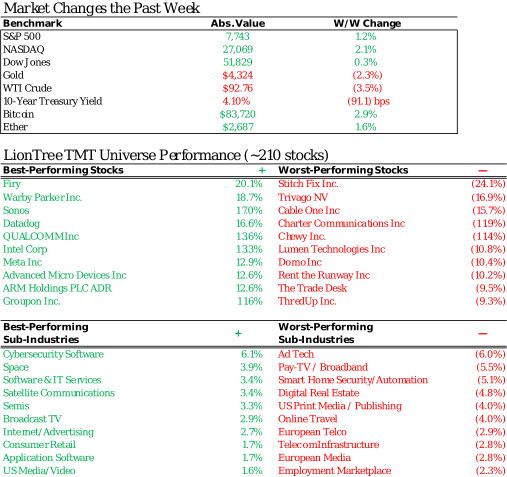
It was a busy week with a lot of interesting updates across AI (of course), media entertainment, wearables, and cable (to name a few) but I’d say Meta’s Muse was of particular note given the breadth of its stock and market impact this week. While Meta shares themselves were up a stunning ~+13%, it also helped drive the SOX up +6.3%, while pressuring a slew of “consumer inertia” stocks (see Theme #2). All in all, Nasdaq hit a new record high earlier this week and the S&P 500 is only 1% from its August record high. However, small caps continue to be under pressure as interest rate yields maintained their ascent.
In this edition, we focused on the themes below:
- The AI Build As A % Of GDP Is Expected To Dwarf All Other Capx Booms In History
- Muse Takes Meta From The Penalty Box to Pole Position & Puts “Consumer Inertia” Stocks on Notice
- Paramount + WBD Moves A Big Step Closer To The Finish Line
- The Competition For Creators Is Getting Fiercer
- Meta’s Wearable Takeover Is Coming Into Shape
- Almost Across The Board, Cost Per Tokens Were Cut This Week…
- Grab Bag: Disney+ Price Hike / Apple Music Hall / Humanoid Robot Sales Reach 7k
- Stat Of The Week – Cable’s And FWA Diverging Customer Satisfaction Scores
Enoy the read and weekend!
Best,
Leslie

The AI Build As A % Of GDP Is Expected To Dwarf All Other Capx Booms In History
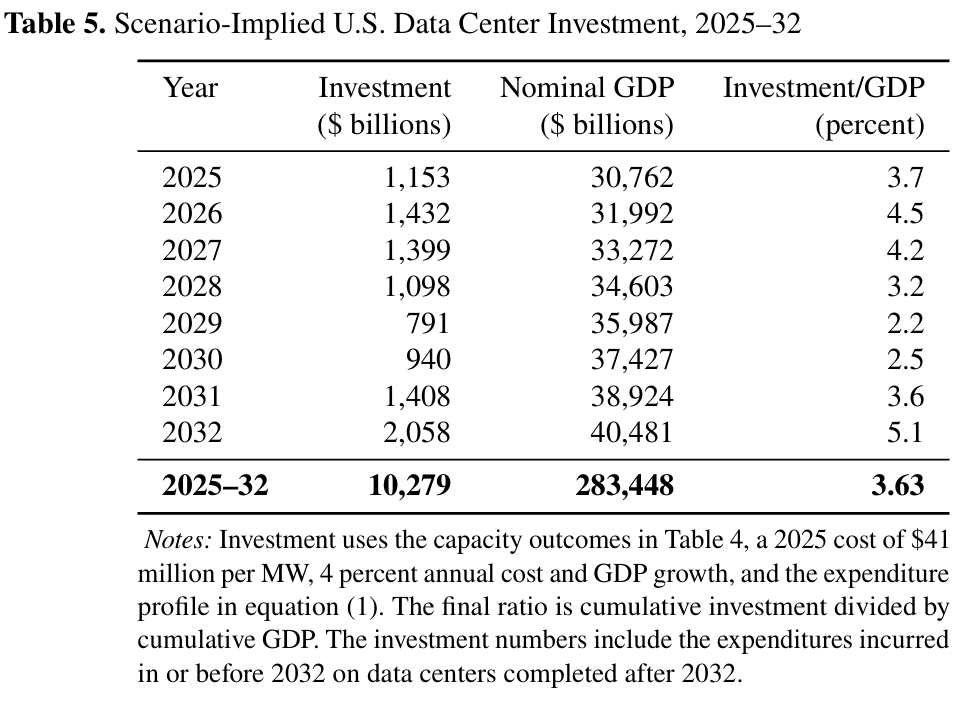
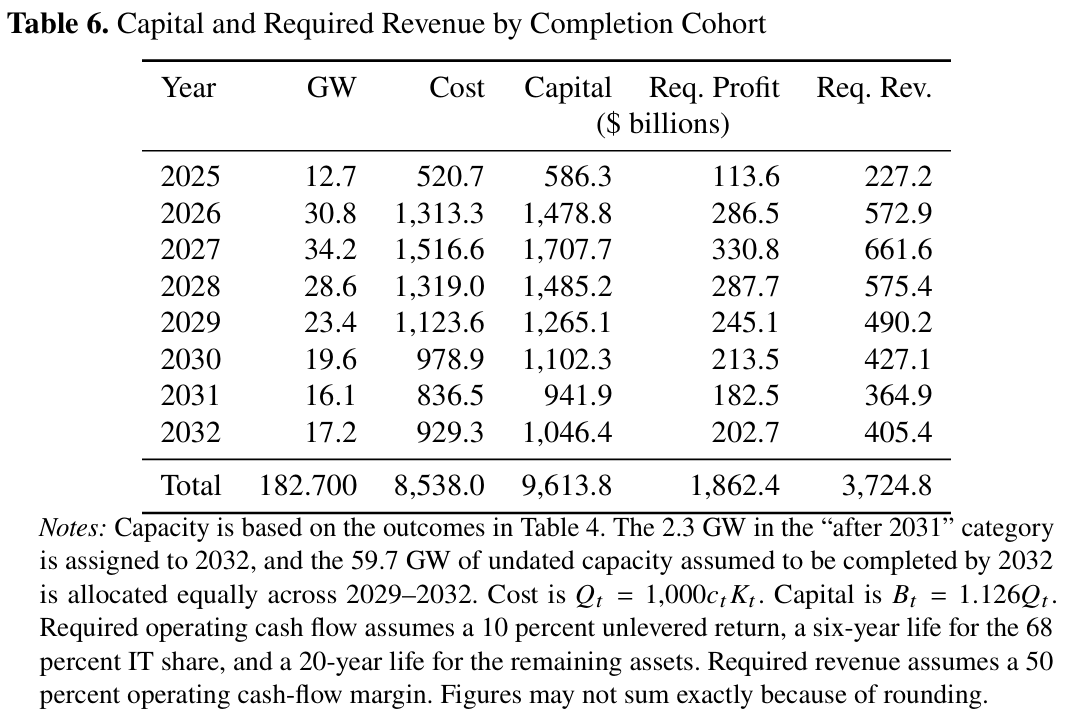
The cumulative AI buildout spend is expected to reach $10.3 trillion through 2032 or 3.63% of GDP per year on average, which is much higher than any other capital investment cycle in history and easily tops the Railroad buildout spend from 1870-1890, which reached 2.24% of GDP per year on average.
This data is based on a BPEA conference paper presented at Brookings on Sept 25 by Stijn Van Nieuwerburgh, a Belgian-American academic and economist who is a Professor of Real Estate at Columbia Business School. His paper, which made several headlines across the press this week, has some interesting analysis and food for thought that we wanted to highlight. He ultimately argues that increasingly opaque, off-balance-sheet financing structures are redistributing and potentially amplifying risk across the financial system coming from this unprecedented capital cycle ahead.
See the points and charts that we found particularly insightful below and see link to report for more.
- To start, what are the underlying assumptions regarding the data center build?
- ~183 GW of new US data center capacity is completed by 2032, on top of ~57 GW operating today
- A 1 GW AI campus costs ~ $41bn, and that cost is expected to grow at +4% annually
- Overall, this build will require an est’d ~$10.3tn of investment from 2025–2032
- Assuming nominal GDP also grows by +4% annually, the aggregate ~$10.3tn would equate to 3.63% of GDP/yr on avg
- The investment is est’d to peak at ~5.1% of GDP in 2032 under the base case
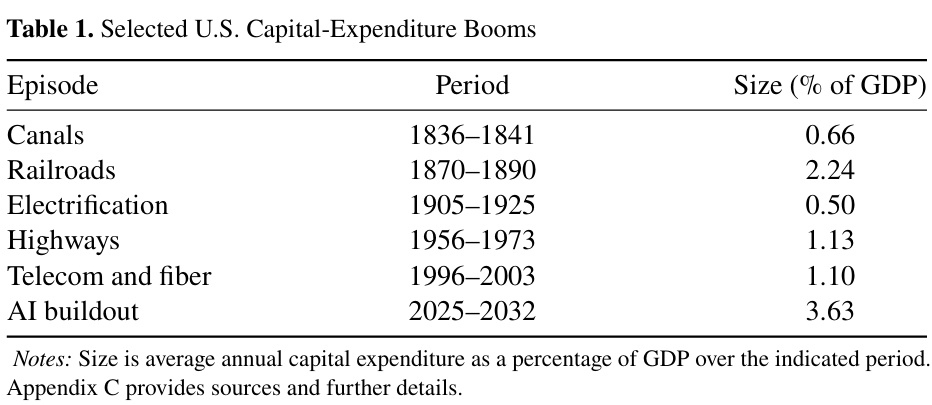
- At an avg ~3.63% of GDP/yr, the AI buildout would exceed every prior US infrastructure boom including railroads (2.2%), telecom/fiber (1.1%), highways (1.1%), and electrification (0.5%)
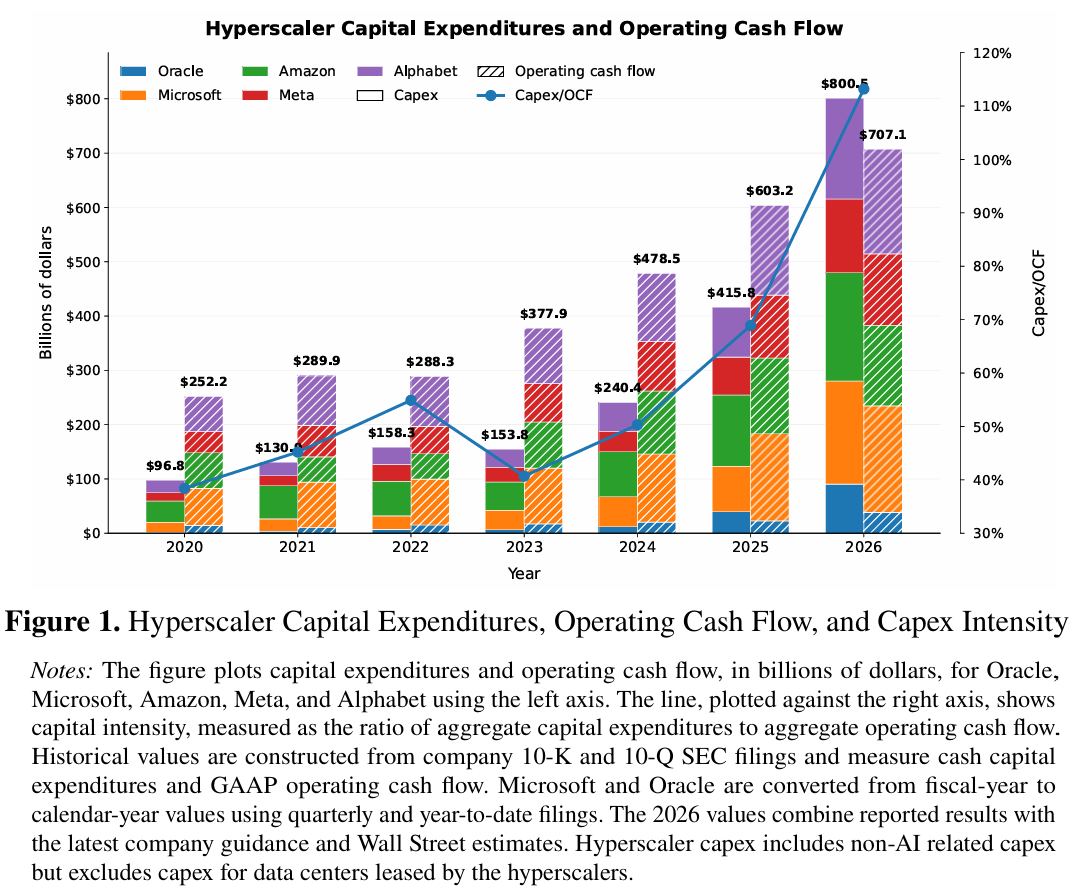
- Aggregate capex/operating cash flow for Oracle, MSFT, AMZN, META, and GOOG is projected to increase from ~38% in 2020 to over 113% in 2026, highlighting the structural shift toward external financing
- The paper cites Morgan Stanley ests that over 50% of the ~$2.9tn required to meet hyperscaler compute needs through 2028 will come from outside capital, w/ an approx 60/40 equity-debt split
- Wiithin debt: Private credit is projected to account for ~$800bn, corporate debt ~$200bn, and structured finance ~$150bn
- The paper cites Morgan Stanley ests that over 50% of the ~$2.9tn required to meet hyperscaler compute needs through 2028 will come from outside capital, w/ an approx 60/40 equity-debt split
- A key concern is that the financing is migrating from transparent on-balance-sheet hyperscaler debt to opaque off-B/S structures (JVs, SPVs, project debt, private credit, securitization, and lease commitments that don’t appear in reported leverage ratios)
- It is estimated that only ~1/5 of the ~$3tn in datacenter-related obligations are currently recognized on hyperscaler balance sheets
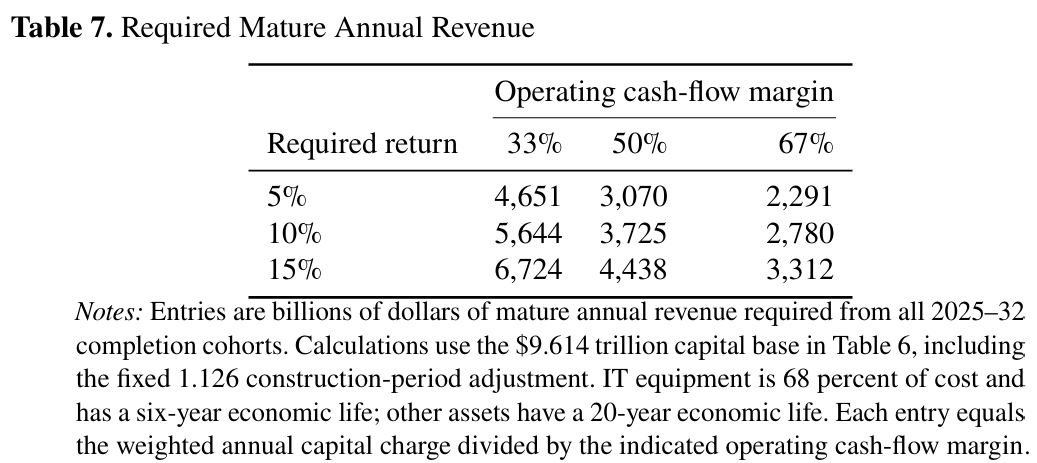
- How much revenue would have to be generated to yield a 10% unlevered return at a 50% OCF margin? The 183 GW buildout would need to generate ~$3.7tn in annual revenue by 2032
- That is equivalent to ~$5.5/GPU-hr at full utilization or ~$6.9/GPU-hr at 80% utilization
- See sensitivity based on required returns below…
- Key risks could be amplified given the sector’s financing structure
- Tenant concentration: Many AI campuses are effectively single-tenant facilities; If compute demand disappoints, hyperscalers may protect utilization of owned facilities by shifting workloads away from leased capacity, concentrating losses on third-party asset owners
- Technological obsolescence: AI hardware is evolving rapidly; Campuses built around current chip generations may become less competitive well before their physical structures wear out, creating a mismatch between long-dated debt maturities and potentially shorter asset economic lives
- Execution risk: Grid interconnection delays, rising power costs, local opposition, GPU shortages, and geopolitical concentration of semiconductor production can all push out revenue timelines
- Correlated exposure: Chip designers, cloud providers, model developers, DC operators, and infra investors depend on each other through long-term contracts and financing arrangements
- A shock to one segment can propagate across the chain
-> A related data point…DC REIT betas have risen from ~0.5 to ~1.0 since 2021, meaning returns now move much more closely w/ the broader equity market and they look less like defensive infra and more like part of the same AI risk complex
- What are his recommendations? “Improve measurement, clarify disclosure, understand asset valuation and capital-structure choices, and identify the conditions under which these exposures could become financially consequential”
Muse Takes Meta From The Penalty Box to Pole Position & Puts “Consumer Inertia” Stocks on Notice
The main question that we posed last week on the back of Meta’s Muse launch was whether users will feel comfortable handing their personal information over to the Co’s agent in order to act on their behalf, and at least for the early adopters, the answer is a resounding yes! Early downloads and engagement are running ahead of ChatGPT at the same point after launch and feedback has been positive.
Use cases are far and wide with helping people to manage inboxes/kid’s schedules, to book their next vacation, to fill out paperwork, but shopping is a central focus. Commerce-related companies jumped in left and right this week starting with Shopify announcing a partnership with Meta to enable agentic checkout across all its Shopify stores, and other large retailers are set to follow. Others such as PayPal, Expedia, and Instacart are also among a growing list of companies announcing partnerships and integrations. However, not everyone was onboard as Amazon is blocking Muse from its retail site.
All the buzz about the strong user reception and adoption also notably triggered both optimism and panic this week as investors assessed the downstream winner and losers. Chips stocks rallied on projections for agentic AI computing needs. “Consumer Inertia” stocks fell on concerns that AI agents will make it easier for consumers to shop around, compare prices and switch providers to save money.
All in all, over the last year, Meta has gone from the penalty box with investors (was down ~30% from its Aug ’25 all-time high to mid-Aug this yr) to the new AI winner (the stock has rallied ~+37% from mid-Aug and is up +31% in Sept alone!). It is still early, but the Co has a clear lead in the new personal AI agent battleground.
See below for what we view as the post important Muse related updates this week and see Theme #5 for more from Meta’s Connect event on associated devices as well as the other important announcements.
-> Meta shares jumped +11% on Monday, reaching its highest close since last October, and its biggest percentage gain since April 2025
-> Also, check out these two crowd-sourced sites which lists hundreds of ways that people are using Muse – Muse Use Cases 1 & Muse Use Cases 2)
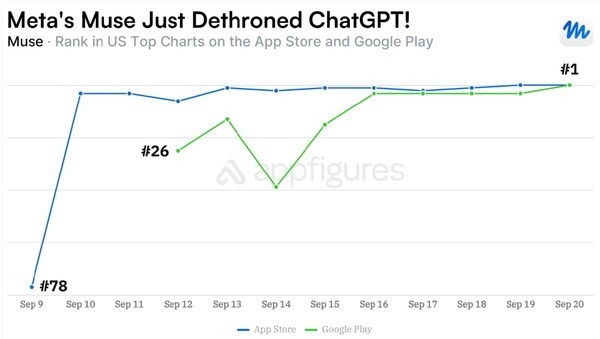
Muse Is Off To A Roaring Start…Outpacing ChatGPT’s Adoption (link/link/link)
- Meta’s Muse is experiencing the fastest consumer AI adoption since ChatGPT’s Nov 2022 launch
- Downloads in its first 12 days post-launch (Sept 8, US-only via standalone app and WhatsApp):
- Muse: 1.8mn iOS (and 1mn Android)
- ChatGPT: 1.3mn iOS
- DAUs over the same period:
- Muse: 642k
- ChatGPT: 231k
- Over 2mn+ prompts have been submitted on Muse since launch
- Downloads in its first 12 days post-launch (Sept 8, US-only via standalone app and WhatsApp):
- Meta is leaning on its social media flywheel to drive adoption
- 95% of Muse adopters are also Facebook users
- 63% are Instagram users
- Also, for context, Muse’s 902k downloads in its first six days also topped the 773k for Meta’s own Meta AI app over the same window
Source: Appfigures
Given That Commerce Is A Key Muse Use Case, Big Retailers Are Reacting…But In Different Ways (link/link/link/link)
- Shopify annc’d that it would be “partnering deeply” w/ Muse to enable agentic checkout w/ Shop Pay on all Shopify stores, per Shopify CEO Tobi Lutke
-> Shopify shares jumped on the back of the news and ended the day up +7.3%
- And Meta AI chief Alexandr Wang said at Connect that other large retailers including Walmart, Best Buy, Gap, Sephora, Wayfair, and others, are joining to help the AI agent “enable new shopping experiences”
- Meta also wants Muse to connect w/ small bizs too: Meta opened its platform to allow developers to build their own “connectors”, and the Co received 1.5k+ applications in less than week
- BUT Amazon is blocking Muse from its retail site
- Why?
- Amazon says it never agreed for Muse to access its store, the agent doesn’t identify itself when it browses, and it appears to capture and store customer credentials, which Amazon says could create privacy and security risks
- Amazon says that Muse should have the same opt-in requirement as is standard practice for food delivery apps and online travel agencies…”we’ve requested that Meta remove Amazon from the experience”
- What happens if a shopper tries to use Muse on Amazon? They will see a series of pop-ups saying its use violates Amazon’s terms of use; “Continued access by an unauthorized AI agent violates Amazon’s Conditions of Use, to which our customers have agreed”
- But Muse isn’t the only agent being blocked: Amazon prohibits other Cos from deploying automated tools to shop its site
- AMZN sued Perplexity AI last yr, saying the Co sought to conceal its shopping agents after AMZN asked Perplexity to remove them
- Implications? So far, consumers are mostly using bots to research products vs to make purchases, BUT if consumers start using AI agents to buy items, the bots could select other e-commerce sites, costing Amazon sales and ad rev
- Why?
A Whole Slew Of Other Muse Partnerships Were Also Announced… (link/link)
- In payments…PayPal annc’d that it was partnering w/ Meta to enable PayPal customers to shop and check out using Muse personal agents -> as a reminder, fintech platform Stripe was Muse launch partner, w/ the Co integrating its Link digital wallet with Muse, allowing users to pay for agentic purchases; The system provides a one-time-use card number so the user’s actual data remains hidden.
-> PayPal shares ended the day up +0.5% on the day of the announcement
- In travel…Expedia annc’d a partnership w/ Muse to help users plan trips and make travel arrangements
- Travelers can describe their destination, dates, and hotel preferences in their own words, and Muse can surface relevant hotel options from Expedia
- Expedia remains the merchant of record for hotel bookings made through Muse; Payment is completed through the checkout experience in Muse
-> EXPE fell -7.7% after the announcement
- In grocery delivery…Instacart annc’d its grocery delivery system will integrate directly w/ Muse to help simplify shopping (link)
-> CART fell -2.5% on the day of the announcement
The Strong Muse Adoption & Engagement Drove A Chip Stock Rally… (link/link)
- CPU-linked stocks rallied on Monday, Sept 21st…
- ARM +17%
- Intel +12%
- AMD +10% -> also saw its market cap surpass $1 trillion for the first time in intraday trading
- Why? While early generative AI workloads relied primarily on heavy GPU acceleration for isolated text and image generation, autonomous agents run continuous background routines, logic loops, and local data orchestration, which makes agentic AI far more CPU-intensive
…BUT Also Drove A “Consumer Inertia” Sell-Off (link)
- Shares of major banks, insurers and online travel agencies slid on Tuesday, Sept 22nd, as investors fear that tools like Muse could disrupt bizs that benefit from “consumer inertia”, the tendency to keep buying something out of habit even when a better alternative exists
- As AI assistants get better at price comparison, trip booking and dealing with customer svs interactions, industries that rely on recurring bills, negotiable pricing and add-ons could come under pressure
-> The Goldman Sachs Consumer Inertia basket shed -2.6% on Tuesday, its worst day since February
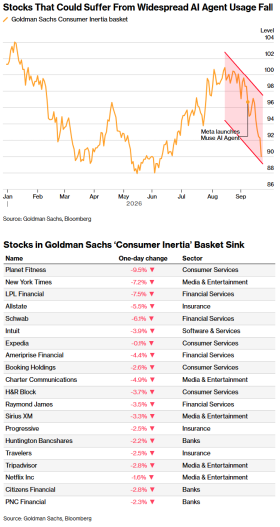
Source: Bloomberg (performance data for Sept 22nd)
-> Also to flag, per a Reuters report, Meta began testing Muse’s phone-calling capability with employees in August before rolling it out to users after the app’s debut; When some businesses hung up upon learning they were speaking with AI, Meta tested a “human concierge” feature allowing Muse to hand calls off to trained contractors, with internal tests showing 95–98% success rates; However, employees raised privacy concerns over the lack of disclosure that humans could be handling calls, prompting Meta to roll back the feature; Meta said it will only launch the capability publicly when ready and with proper disclosures in place (link)
Paramount + WBD Moves A Big Step Closer To The Finish Line
It was a big week for Paramount Skydance given the settlement out of the gate with California and 11 other states that had sued the Company to block the merger with WarnerBrosDiscovery. Concessions were viewed as not onerous and the Co subsequently started to line up financing. However, nothing is a straight line and the expected rubber stamp court hearing on Thursday (Sept 24) hit a snag when the judge instead allowed opposition briefs and delayed the formal approval, asking for more information by Sept 29th. Investors are watching the clock as the $0.25/shr/quarter ticking fee (~$650mn/quarter) begins accruing after Sept 30th if the deal hasn’t closed.
-> PSKY shares rallied as much as +13% and WBD’s rallied +11% in reaction to the news but PSKY gave back gains to close the week down -2.5% post the judge’s Thursday decision (WBD still ended the week up +11%)
Paramount’s 12-State Settlement Moves It Closer To The WBD Deal Close (link/link/link/link/link)
- Key settlement terms with the 12 states led by CA but also includes AZ, CO, CT, MA, MN, NV, NJ, NM, NY, OR, and WA
- Film release commitment over the next 5 years
- 30 films/yr (incl. 20 wide releases) in yrs 1–2
- 32 films/yr (incl 21 wide releases) in yrs 3–5
- Of these, at least 4/yr need to be independent films
-> PSKY had previously committed to a min of 30 films annually when they annc’d the deal, but under the settlement, if they miss the film # targets, they have to pay a penalty of $30mn per missed film which will be paid into Hollywood union healthcare/retirement trust funds and a shortfall would also trigger a mandatory divestiture of Miramax Studios
- Domestic production & spend increases –
- The Co has to spend an incremental $1.5bn+ on US film production over 5 yrs ($300mn/yr) above 2025 levels (baseline)
- If a federal film tax credit of over 20% passes, Paramount needs to increase its domestic production % from 5% to 20% in yrs 1–2, and to 30% in yrs 3–5
- If a more expansive state film tax credit is also passed in either CA or NY, at least 40% of all film production needs to be in the U.S instead of overseas
- Restrictions on affiliate deals: The Co must negotiate Paramount’s and WBD’s basic cable channels independently for 5 yrs
- The Co must maintain a free streaming service (i.e., Pluto TV) and an editorial-independence board for CNN and CBS
- Independent film fund: The Co will contribute $5mn/yr for 5 yrs into the fund ($25mn total) to purchase independent films
- Workforce protections: The Co will commit $47.5mn in a workforce fund over 5 yrs for training/career development for displaced workers
- Film release commitment over the next 5 years
- Paramount moves to put financing in place
- PSKY launched syndication for a proposed $7.5bn senior secured term loan (Term B facility), underwritten by BofA, Citi, and Apollo
- This is part of its plan to raise ~$44.4bn in total additional secured debt to fund the WBD acq and repay existing debt
- PSKY has also reportedly weighed asking Elon Musk (along w/ other unnamed wealthy individuals) to join an equity investor syndicate
- PSKY launched syndication for a proposed $7.5bn senior secured term loan (Term B facility), underwritten by BofA, Citi, and Apollo
- However on Thursday, Judge Araceli Martinez-Olguin delayed the settlement sign-off and instead (a) granted the Block the Merger coalition’s emergency motion to file amicus briefs; and (b) asked the parties to address concerns raised by Sen. Cory Booker (D-NJ) and others by Sept 29
- The judge questioned whether the consent decree actually “addresses the Clayton Act concerns” and said she would issue a ruling “in due course”
*LionTree Advisors advised Paramount Skydance on the pending acquisition and a LionTree-advised fund has committed to invest in the financing for the transaction
The Competition For Creators Is Getting Fiercer
At Google’s annual Made on YouTube event this week, the platform rolled out 30+ features aimed squarely at attracting and retaining top creator talent, which Netflix has in particular been very active in trying to poach as it tries to scale its creator content over the last few months. YouTube’s new AI powered products essentially are across creation, connection, and monetization. While YouTube CEO Neal Mohan made a point to highlight that over the last 4 years, YT has paid out of $100bn to creators, artists, and media companies, that is the same figure that he highlighted back in January (link). With that said, the YouTube platform remains a premier distribution arm for the creator community and the Co is fighting to keep it that way. But given that creators are increasingly taking share of media consumption, competition for creator talent is not likely to ease anytime soon.
See more details below on the new YouTube creator tools that we found most impactful.
-> Also, on the topic of more competition for creators, OpenAI is launching a new Creator Product division to be led by Patreon co-founder Sam Yam; Also joining are former Patreon SVP of Product Drew Rowny and former Head of Engineering Shannon Ma; Yam also teased new creator-focused tools to be revealed at OpenAI DevDay (Sept 29th) (link)
YouTube Is Making It Easier To Create & Edit W/ New AI Tools (link/link)
- The Co released Conversational AI editing which is a new Gemini-powered editing assistant for Shorts and the YouTube Create app
- It uses suggested prompts or custom instructions to auto-trim pauses, reorder for pacing, and more
- Manual override is available throughout
- Other key platform upgrades/features –
- Storytelling assistant for feedback on video drafts / script analysis
- Dynamic thumbnails: YouTube recommends the best of 3 thumbnail options to different audience segments
- Video A/B testing: Creators can test up to 3 different video cuts to see which performs best (for context, creators have already run 40mn+ A/B experiments on titles/thumbnails since that feature launched in 2024)
- Ask Studio can now run in the background to review older videos and suggest/test refreshed thumbnails
- Studio feedback feature: Personalized advice on pacing, structure, storytelling for video drafts
- Studio Insights & Research destinations: Understands past video performance and discovers outlier videos
- AI-powered personalized comment moderation: It is opt-in and learns a creator’s moderation style over time
- The Co expanded likeness detection and it now adds speaking voice detection alongside facial detection
- This is also coming to mobile for on-the-go review and action
The Co Is Also Driving More Live Programming & Microdramas (link/link/link/link/link)
- Users are watching more and more live viewership on YouTube…600mn+ logged-in viewers watched live content daily on avg in Aug ’26 (incl. archived live content)
- New live tools annc’d include –
- Live Showdowns: Creators can merge streams for head-to-head competitions (coming in 2027)
- Real-time auto-dubbing: Auto-translates speech during live streams (piloting early 2027)
- Expanding Watch With: Now includes all eligible long-form videos (previously limited to major broadcasts
- Go Live Together / Co-host matchmaking: Browse live creators or quick-match queue to co-stream (early 2027)
- The Co renewed its exclusive Coachella license through 2030: They reportedly beat rival bids from Netflix and Amazon and were picked given their global reach and free, no-registration access the event
- Creators can now publish short, vertical video series, putting it in competition with microdrama apps
- Shorts Series is a new feature that lets creators organize Shorts into structured series w/ seasons, episodes, custom thumbnails, and sequential playback
- It is available globally in YouTube Studio on desktop, and across web, mobile, and TV for viewers
- Microdramas on YouTube surpassed 6.5bn views in H1:26, w/ watch time growing +50% y/y; Views of microdrama content on TV alone grew +90% y/y
-> Omdia previously estimated that the global microdrama industry generated ~$11bn in rev in 2025 and it is expected to grow to ~$14bn by end of 2026, w/ the U.S. accounting for ~$1.5bn this year
YT Is Improving Discovery & The Viewer Experience (link/link)
- Custom Feeds is a new Gemini-powered feature that lets users type conversational prompts to create dedicated homepage feed tabs by mood, routine, or interest
- Essentially, it allows users to build their own algo w/ AI
- It is rolling out to U.S. users on web, mobile, and TV “soon”
- This does not replace the main home feed
-> For reference, similar other AI-powered feed-building features have been launched by X, Threads, Instagram, and Spotify (Taste Profile in the U.S)
- The Co is expanding shopping/product recommendation with Ask YouTube: It will surface organized video recs w/ comparison tables based on user preferences
- It is also launching Ask Music, which is conversational search across 300mn+ songs/podcasts, and Podcast Lineup, which is a weekly AI audio previews of recommended podcasts
Expanding Shopping Affiliates & Brand Partnerships (link/link)
- YouTube is expanding their Shopping affiliate program to 35 countries by YE:26: Amazon product tagging (already live in U.S.) is expanding to India and Brazil in coming weeks and more countries before YE
- The program now has 1.3mn+ creators, w/ GMV growing 13x over the past two years
- Localized product tags: Tags now auto-update to show localized offers based on viewer location, allowing creators to earn commissions on eligible global sales
- YouTube Creator Partnerships are now in 20 countries
- They have a new one-click code that gives brands access to a partnered video’s performance for paid media amplification
- Ask Studio will help creators craft tailored pitch materials for brand briefs
Meta’s Wearable Takeover Is Coming Into Shape
There’s been no shortage of activity around the next generation of consumer hardware devices. Snap showed off a slew of new capabilities for its AR-focused Specs last week, while OpenAI is reportedly developing its own screen-free AI device expected next yr. And this week, Meta used its annual Connect event to lay out an increasingly broad hardware vision of its own.
On the glasses front, Meta is going all in. The Co unveiled its first camera-free Ray-Bans, updated its camera-equipped Ray-Bans w/ a third-gen model and added new capabilities to its Display glasses. It also continues to broaden the category across price points, styles and use cases, w/ 100+ AI glasses options expected across Ray-Ban, Oakley and its own Meta Glasses lineup by year-end. Beyond AI glasses, Meta announced a new pair of lightweight VR glasses, stretching its lineup from $249 entry-level AI glasses to $1,300 VR glasses.
Muse (as we discussed in Theme #2) was featured prominently at the event as well, with Zuckerberg describing the agent as the “centerpiece” of his AI vision. In addition to Muse integration with its new smart glasses, Meta also introduced a dedicated handheld “Charm” for interacting w/ the agent on the go.
Lastly, the Co notably introduced two AI game-creation tools for its Horizon platform.
All in all, Connect gave a fairly clear picture of how Meta sees AI moving off the phone and into devices that people wear or carry w/ them throughout the day. And with its glasses lineup continuing to expand across price points, capabilities and use cases, wearables continue to be an increasingly prominent piece of that vision.
See below for the key takeaways.
On The Glasses Front…The Co Unveiled Ray-Ban Meta Audio, Its First Pair Of Glasses W/o Cameras (link/link)
- The glasses essentially strip out the camera while retaining many of the audio + AI capabilities of Meta’s existing glasses
- Users can listen to music / podcasts, take calls and interact w/ Meta AI hands-free
- The glasses weigh 43 grams and offer up to 12 hrs of battery life, plus another 48 hrs through the charging case
- Available across 23 color / lens combinations in Clubmaster and Burbank styles
- Both are compatible w/ a “wide” range of optical prescriptions
- The glasses start at $349 and are scheduled to ship Oct 3
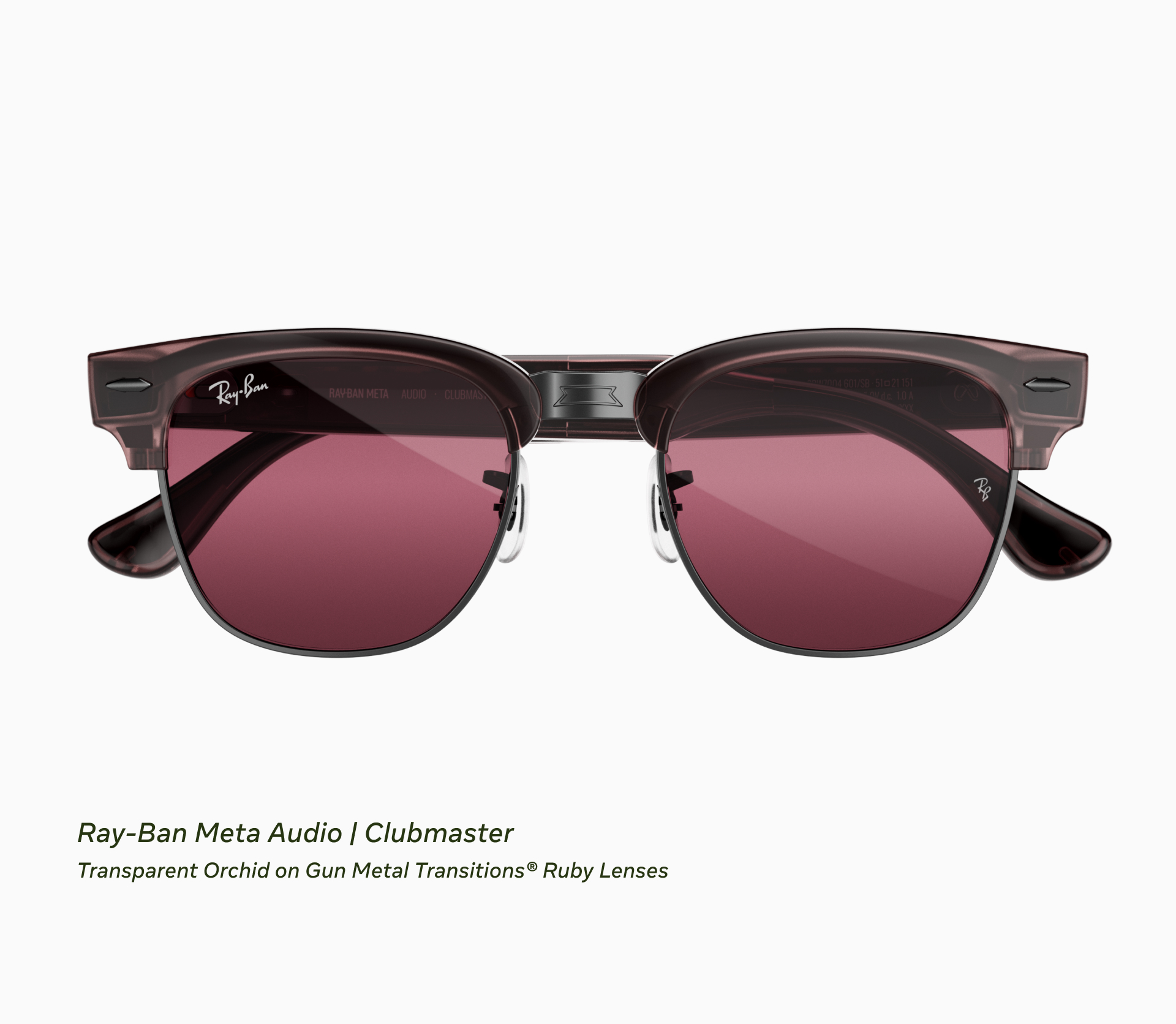
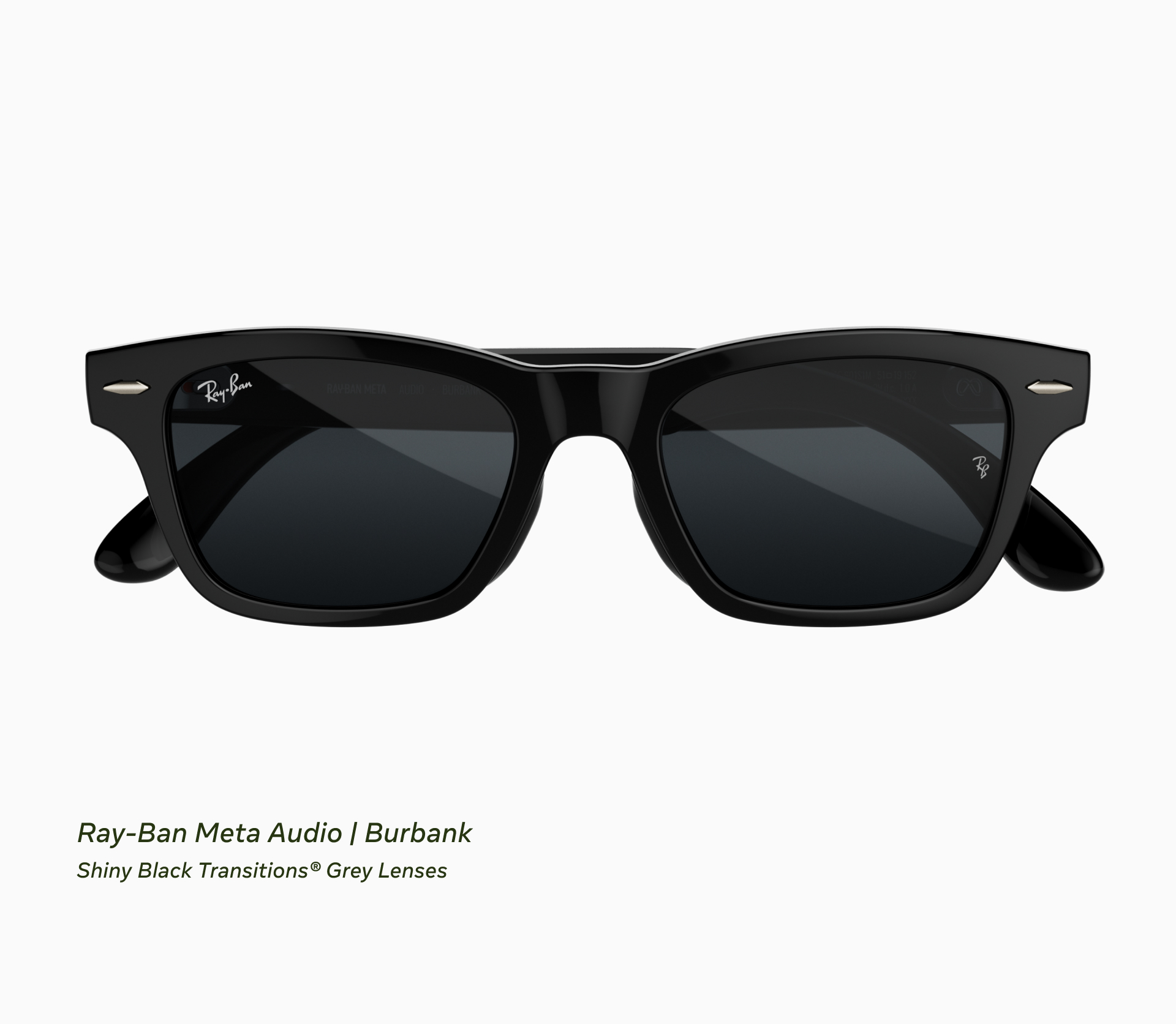
Source: Meta
The Co also Introduced A 3rd-Gen Model Of Its Camera-Equipped Ray-Ban Meta Glasses
- The new glasses have a slimmer / lighter design and offer up to 9 hrs of battery life (an hr more than Gen 2)
- Include a new customizable action button that can be set to quickly launch Meta AI or other features
- A new six-microphone system is designed to cut out 90%+ of background noise during calls / voice interactions
- No major change to camera specs: The Co keeps the 12 MP camera + 3K Ultra HD video recording
- Comes in 27 color and lens combinations across 3 styles: Aviator, Zena (a bold new cat-eye frame), and Wayfarer
- Starts at $449 and is available now
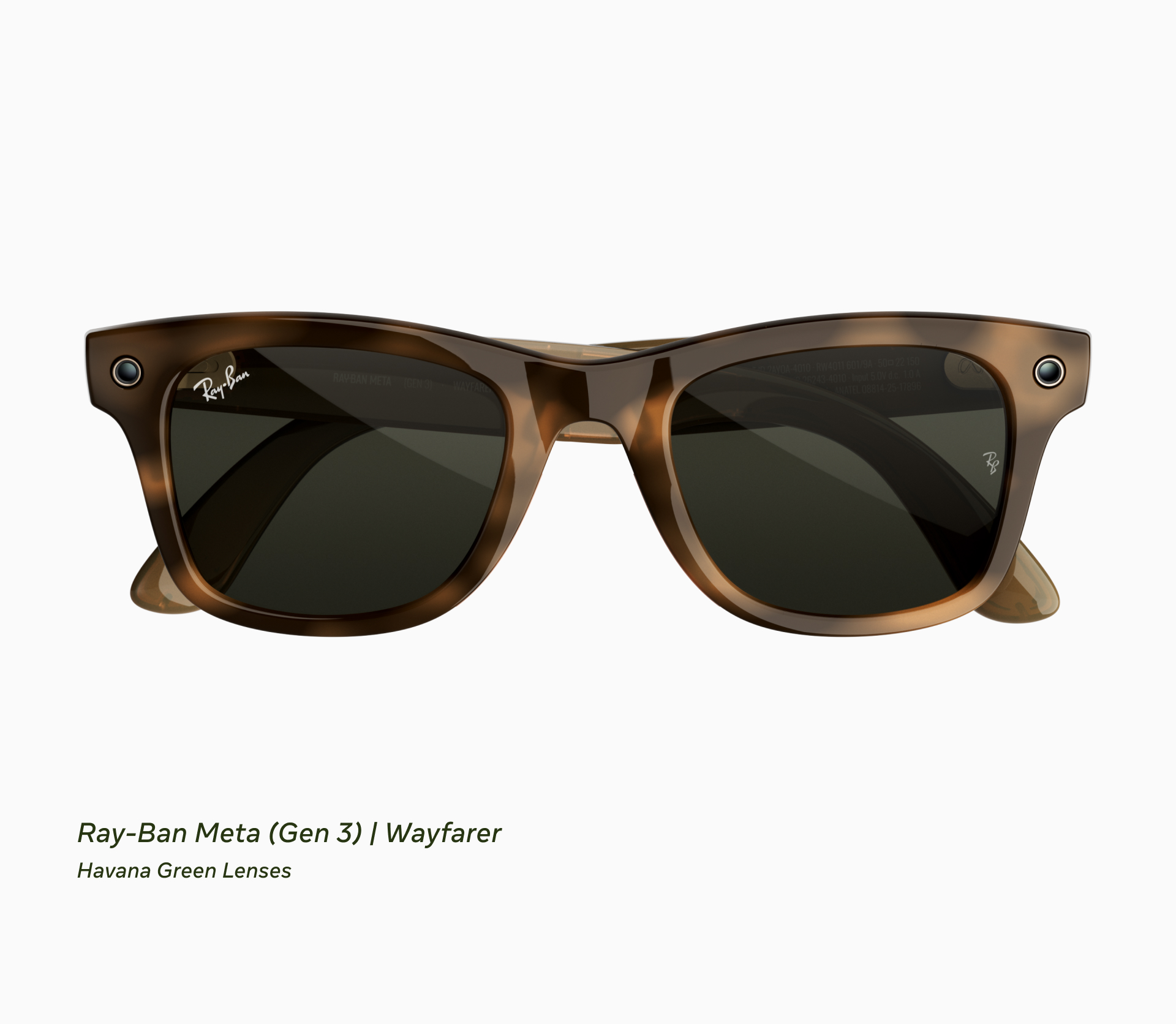
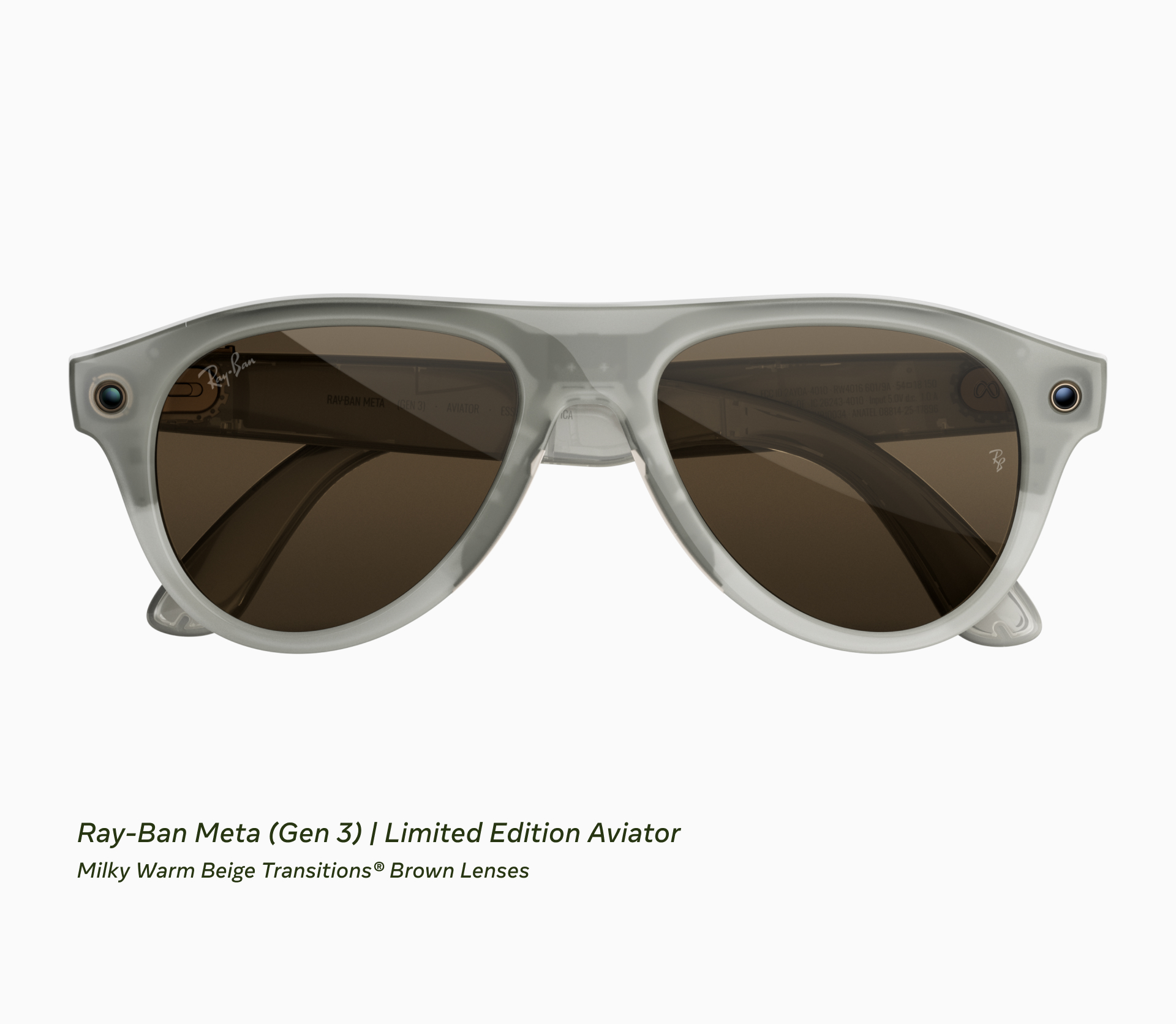

Source: Meta
Meta Ray-Ban Display Is Getting More Capable Too (link)
- More navigation: Users will be able to get cycling and public-transit directions directly in the display, while walking directions will increasingly use visual landmarks rather than just street names
- For example, the glasses will tell you to turn left at the yellow house, rather than “turn left at Third Street”
- Phone notifications: Notifications from a user’s phone will soon appear directly on the glasses
- Calendar: Users will be able to see meeting attendees, accept / decline invitations and join meetings directly from the glasses
- Explore: Meta is adding a new app for discovering experiences built specifically for Ray-Ban Display
- Introducing “Hologram” for hands-free video calls: Users can create a photorealistic digital version of themselves that appears to others while they’re calling from Ray-Ban Display
- Rather than tracking the wearer’s face, Hologram uses their voice to infer their expressions; Rolling out in Early Access on WhatsApp in the US later this fall
- Also expanding availability: Ray-Ban Display is coming to the UK, Canada, France, Italy, and Germany, while Meta is also adding online ordering in the US + those five markets
All In All, Meta Expects To Have 100+ AI Glasses Options Across Ray-Ban, Oakley and Its Own Meta Glasses Lineup By Yr-End
- Introduced its cheapest AI glasses yet: A new $249 version of its Meta Adventurer glasses, featuring a black frame and grey lenses, w/ a plug-in case
- Adding an FDA-cleared Hearing Enhancement feature to compatible AI glasses later this year, designed for adults w/ perceived mild-to-moderate hearing loss
- Users will be able to set up the feature at home w/o needing a clinic visit or prescription
- Will be available in the US for a one-time $149.99 payment or through a Meta One subscription
- Also adding more audio accessibility features across its AI glasses
- Audio Balance will let users shift sound toward their left or right ear
- Mono Audio will let users route all sound to one side
- And Meta AI glasses will be able to capture + play back video w/ Dolby Atmos and 360-degree spatial sound later this yr
- Meta says its AI glasses will be the first consumer devices to enable users to both capture and experience video in Dolby Atmos
- Also annc’d several new styles / collaborations, including…
- Unveiled its first collection w/ LISA, featuring special-edition versions of the Adventurer and Capri
- Added a new Ivory colorway to the existing Kylie Jenner Starfire glasses
- Added two new frame shapes to its Meta Glasses lineup, Capri (cat-eye) and Nova (classic Pantos)
- Introduced new limited-edition version of Meta Fury glasses w/ a clear-frame and mirrored-lens that will initially only be available at Connect + Meta Lab stores
- And adding more customization: Meta launched a new Mix & Match program that lets users choose their frame, lenses + case color online or at Meta Lab stores
- Expanding availability geographically: Meta Glasses launched in Singapore, South Korea, Mexico and the UAE this week and are coming soon to Brazil
- Ray-Ban Meta, Oakley Meta and Ray-Ban Meta Optics are also set to expand to another 11 markets later this yr, including Turkey, Poland, Portugal, South Africa, Thailand, Hong Kong and New Zealand
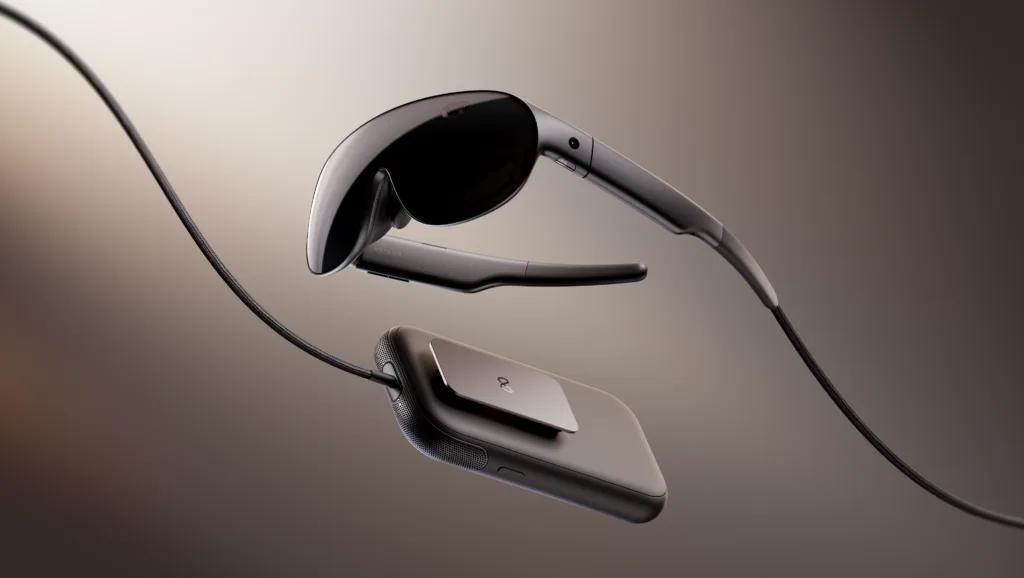
Also New…Meta Is Trying To Shrink VR From A Headset Into Glasses W/ Meta VR Glasses
- Meta VR glasses “put a cinema, a workspace, and a console into a comfortable form factor”
- At ~100 grams, Meta VR Glasses are five times lighter than Meta Quest 3
- Features a two-part design that moves the battery and processors into a puck that can be clipped to a belt, pocket, or bag, keeping the weight off the face
- Allows for multi-panel virtual displays with surface input built in, letting the user turn any table or desk into a keyboard and touchpad, and spin up a massive screen, or several, anywhere they are, with the option to connect their other devices and extend their screens
- Meta AI is built directly into the operating system, allowing users to control the device using voice, eye movements and hand gestures rather than traditional controllers
- Also intro’d a more advanced version of Hologram calling, which provides a photorealistic digital version of the user, including their real-time expressions + reactions, for hands-free video calls
- This differs from the Hologram feature coming to Ray-Ban Display, which infers facial expressions from a user’s voice
- Other entertainment and gaming device capabilities: First VR device w/ IMAX Enhanced certification; Meta expects to offer 100+ immersive live sporting events / yr and 75+ games playable entirely w/ hand gestures at launch
- Will be available in spring 2027 starting at $1,299.99
Source: Meta
Also On The Gaming Front, Meta Introduced Horizon Create And Horizon Studio, Two AI Game-Creation Tools (link/link)
- Meta is introducing two prompt-based generative AI tools that let users quickly and easily create, share, and play customized 2D and 3D games on its Horizon platform
- Meta Horizon Create is a mobile app aimed at quick creation, while Horizon Studio is a browser editor with more detailed controls for refining a project
- Both are built on the Meta Horizon Engine and support publishing across Meta apps
- Meta Horizon Create and Horizon Studio lets creators describe an idea and generate a 2D or 3D mobile game with art, progression, difficulty and multiplayer elements
- Facebook and Instagram become the publishing platform: Eligible Horizon games may be recommended in Facebook and Instagram feeds; A person could tap a clip and enter a multiplayer session without installing a separate game app or leaving the feed
- Reach will depend on whether games are stable, engaging, culturally relevant and able to bring players back
- Gives small creators access to Meta’s existing audiences, but it also means distribution remains tied to the Co’s recommendation systems and publishing rules
- Meta has not published final access requirements, monetization terms or a general release date
- Early access is rolling out gradually
- Both the Create and Studio apps are available to selected creators; Creators will also be backed financially via the Meta Horizon Creator Fund
On The AI Agent Front, Meta Introduced Several Updates To Its Muse Agent (link/link/link/link)
- Muse Realtime Avatar turns Realtime Voice into expressive, interactive avatars
- Users can interact with Muse through a chosen character that speaks, expresses emotion and moves in sync with the conversation in real time
- Muse will get its own email address: Users will also be able to add Muse to an email thread or forward emails from the agent to handle on their behalf
- The feature is in development and will be made available “soon”
- Computer use is now available with Muse for Mac: With the user’s permission, Muse can drive any app on a user’s Mac, so they can walk away from their computer and it keeps working for the user on all the tasks it has lined up
- Muse will also be integrated with Meta’s smart glasses line
- From the glasses, users can activate Muse by saying its name and telling it a request, like …
- Guide personalized workouts
- Log meals
- Get nutrition insights on demand
- Book an appointment
- Get prices on a flight
- And more…all w/o pulling out a phone
- Muse will work in the background and check back in when it’s done
- From the glasses, users can activate Muse by saying its name and telling it a request, like …
- On monetization…Muse monetization will be centered on transactions: Speaking to a room of developers, Meta CEO Mark Zuckerberg said, “we believe that Muse will make you money. We’re standing behind this by making Muse free for a huge number of tokens, with the expectation that over time we will profit by taking a small fee from transactions”
- On the free tier, users get 100mn tokens/wk; Meta also offers paid tiers at $20/mo for 500mn tokens and $100/mo for 3bn tokens
Meta Also Unveiled A Dedicated “Charm” Device For Using Muse AI (link/link)
- Muse Charm is a small (~2 inch display), always-on handheld device built around Meta’s AI assistant Muse
- The device can be held in the center of a palm and navigated with a thumb on the OLED touch screen
- An onboard 5G modem lets users access Muse models while away from Wi-Fi, though it does NOT make phone or video calls
- Cameras on the front and back can capture photos and video, though they are intended primarily to give Muse visual information for analysis and AI-assisted actions
- Users can also view the photos and videos they have taken on the device
- It supports music and video playback and includes speakers, microphones and a USB-C charging port
- It will rely on a fingerprint sensor to unlock the interface for users
- But the device is NOT the center of Meta’s broader AI hardware strategy…the Co expects substantially more people to use Muse through their phones and Meta’s smart glasses than through a dedicated Charm
- The initial model is intended largely for Muse enthusiasts and will serve as a first run, and the Co is considering follow-up generations if the concept proves successful
- …but rather meant for those who don’t wear Meta’s smart glasses… “If you’re not wearing glasses, this is going to be by far the fastest way to talk to your Muse and to show what’s going on around you”’
- The device can be worn with a wrist strap, carried in a pocket or attached to a bag or keychain with a lanyard
- Described more as a “holdable” vs a wearable, meaning it’s a small, dedicated device that people can pick up and talk to throughout the day
- Muse Charm will ship by the holidays in Dec; Meta did not announce a price and said more details will come later

Almost Across The Board, Cost Per Tokens Were Cut This Week…
The common theme with the flood of new frontier AI models released this week (by Anthropic, OpenAI, and SpaceX) was that users will be getting a lot better performance for lower cost. This is obviously important as the cost of inference has been a sticker shock for many business owners as they try to integrate the technology into business processes. All these model update also highlight the level of competition between the AI platforms, which not only aim to “keep up the Joneses”, but to keep one step ahead.
See more color below on these key model updates.
The Lower Cost & Better Performance Was The Name Of The Game With The Deluge Of New Models Released This Week
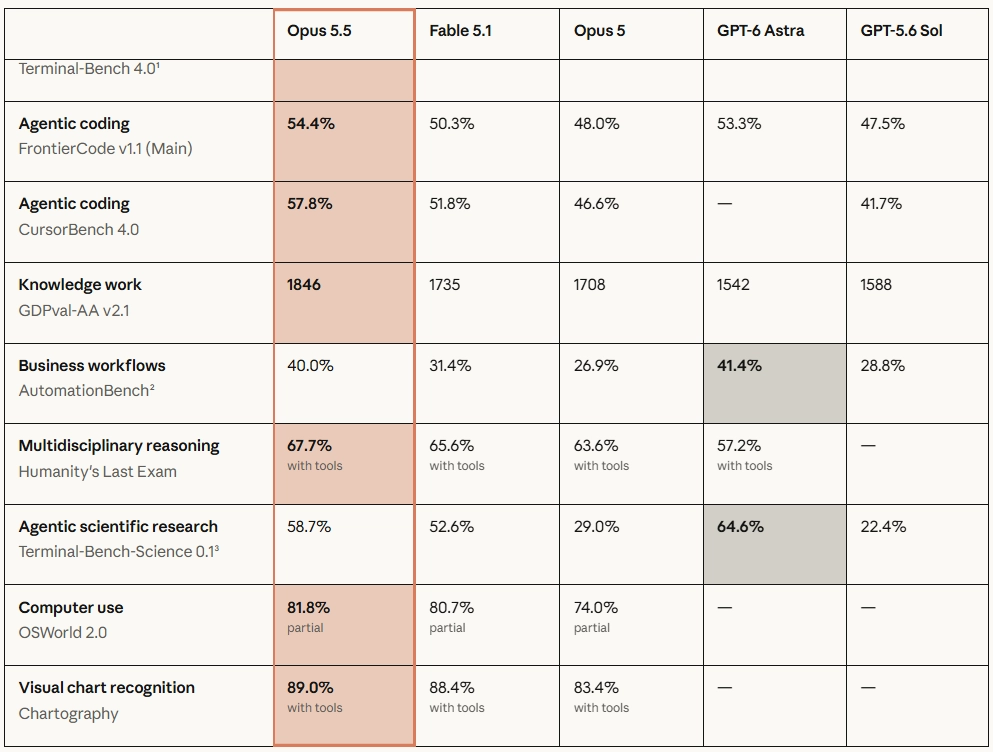
- Anthropic… launched Claude Opus 5.5, which is a better model for 40% less (link)
- Performance surpassed Fable 5.1 on agentic coding, knowledge work, computer use, visual chart recognition, and multidisciplinary reasoning benchmarks
- One tester completed 680k line code migration in less than a day (vs would have taken an engineering team weeks)
- A different tester had several Claude models build a game from a single prompt
- Opus 5.5 scored higher than any other model on the strength of its graphics and polish
- The model writes clearer and is easier to follow
- Safety improvements: Opus 5.5 achieves the best scores of any model to date on the Co’s automated behavioral audit
- It ships w/ “preserved thinking” anti-distillation safeguard (same as Fable 5.1); The safety is comparable to Mythos 5.1 in biology and cybersecurity
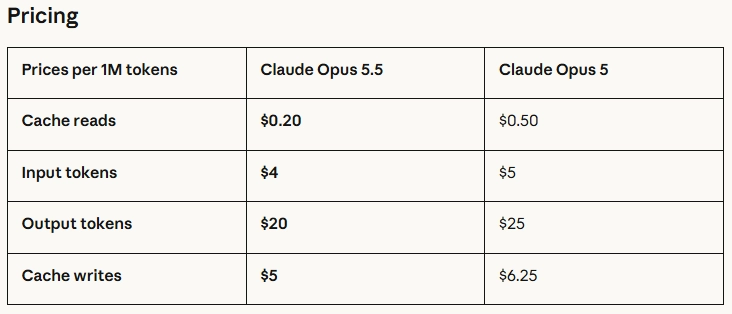
- Cost and speed improvements…at default settings, it will cost ~40% less to run than Opus 5 on typical workloads
- Input and output tokens are $4 and $20 per mn, 20% less than Opus 5
- Cache reads (which make up the majority of agentic and coding work costs) are $0.20 per mn tokens, 60% less than Opus 5
- Output speed is 30%+ faster
- Performance surpassed Fable 5.1 on agentic coding, knowledge work, computer use, visual chart recognition, and multidisciplinary reasoning benchmarks
- In addition to price cuts, the Co is increasing its 5 hr usage limits on Pro, Max, Team and Enterprise seats
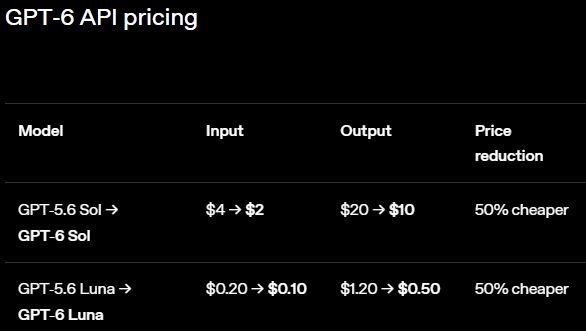
- OpenAI…three weeks after launching GPT-6 Astra, the Co is now launching GPT-6 Sol and GPT-6 Luna where API prices are 50% lower than their GPT‑6 promotional pricing (link)
- GPT-6 Sol:
- The Co says Sol makes ~half as many mistakes as GPT-5.6 Sol
- It is better at staying within guardrails
- It has improved coding performance
- It reaches Astra-level reliability at lower cost ($2/$10 per 1mn tokens vs. GPT-5.6 Sol’s ~$4/$20 promo rate)
- GPT-6 Luna: Positioned for high-volume, lower-complexity tasks
- Also at a lower cost of $0.10/$0.50 per 1mn tokens vs. GPT-5.6 Luna’s $0.20/$1.20
- GPT-6 Sol:
Source: OpenAI
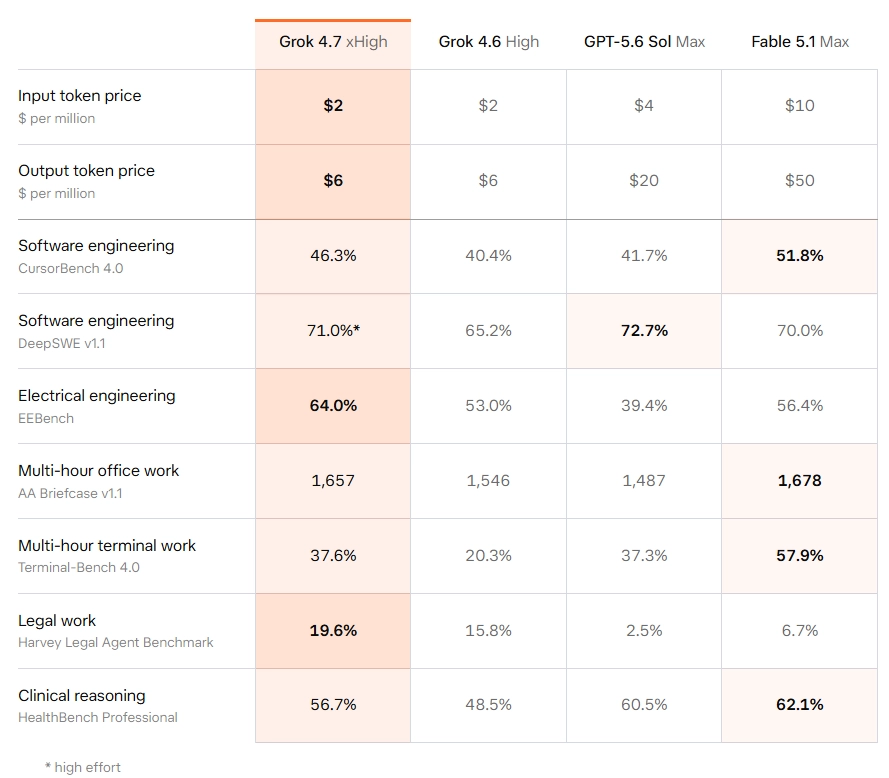
- SpaceXAI… released Grok 4.7 built on a new, larger base model w/ 2.1T parameters (vs. 1.5T in Grok 4.6, up +40%) but at the same pricing ($2/1mn input and $6/1mn output tokens (link)
- Key improvements:
- Works longer on hard tasks
- Checks work more carefully
- Includes better safeguard
- It is better at creating documents and presentations
- “On CursorBench 4.0, which stresses longer-running coding tasks, Grok 4.7 is at the frontier in price-performance”
- Key improvements:
-> Separately, Grok Bot (its enterprise AI agent which was launched mid-Aug) hit 418k weekly users as of Sep 14, up +24% WoW per Bloomberg (link)
Source: X
- Lastly, Google’s Gemini 4 is in the “early phase of post-training” and could be released “much earlier” than end of 2026 per Google DeepMind SVP Koray Kavukcuoglu at in his first public appearance since taking the role Aug 12 (link)
Grab Bag: Disney+ Price Hike / Apple Music Hall / Humanoid Robot Sales Reach 7k
- Disney hiked prices across most Disney+ and Hulu plans this week, which is its 4th consecutive annual increase, and is pushing hard on the bundle (link/link/link/link)
- Ad-free standalone plans see the biggest increase –
- Disney+ Premium and Hulu Premium each rising +$2.50/mo (+13% from the prev rate) to $21.49/mo
- Ad-supported Disney+ and Hulu standalones price hikes were more modest at +$0.50 (+4%) to $12.49/mo for each svs
- It is cheaper for consumers to subscribe to a bundle
- The ad-free Disney+/Hulu bundle is increasing +$2 to $21.99/mo which is almost half the ~$43 cost of subscribing to both ad-free standalones separately
- The ad-supported Disney+/Hulu bundle stays flat at $12.99/mo which is just $0.50 more than buying either standalone w/ ads
- ESPN Select bundles
- Disney+/Hulu/ESPN Select w/ ads increases +$2 to $21.99/mo
- Disney+/Hulu/ESPN Select Premium (ad-free) increases +$3 to $32.99/mo
- ESPN Unlimited bundle prices are unchanged
- Ad-free standalone plans see the biggest increase –
-> This follows Disney’s ESPN raising prices on Sept 17th…ESPN Unlimited was raised +$2 to $31.99/mo ($319.99/yr) and ESPN Select was raised +$1 to $13.99/mo ($139.99/yr)
- Apple opens Apple Music Hall, a brand‑new “state‑of‑the‑art” live music venue in London’s Battersea Power Station (link/link/link)
- Designed as an “intimate concert hall” with capacity for up to 600 people across standing and seated configurations
- The stage can be reconfigured for traditional front-facing sets or more in-the-round experiences
- Engineered so artists can perform, record and film a show all in one place
- Behind the stage, Apple Music Hall operates as a full production facility, including a 48-speaker spatial sound system, dedicated recording and mix studios and infrastructure supporting 16+ cameras
- Artists can leave a single performance with a finished Spatial Audio recording, broadcast-ready mix and multicamera video
- Apple also annc’d that all Apple Music Radio London-based hosts and shows will now broadcast live from Battersea through its new radio studios
- Which was received positively by the British govt… “this is a huge vote of confidence in the UK as a global creative powerhouse,” the Culture Secretary, Lisa Nandy, said
- Inaugural lineup…Elton John will open the venue w/ a concert on Sept 28th, and the lineup through the end of the yr will include shows from Charli xcx, Burna Boy, Baby Keem, Skye Newman, Troye Sivan, Arlo Parks and Chase & Status
- All performances will also be livestreamed globally on Apple Music
- Designed as an “intimate concert hall” with capacity for up to 600 people across standing and seated configurations

Source: Apple
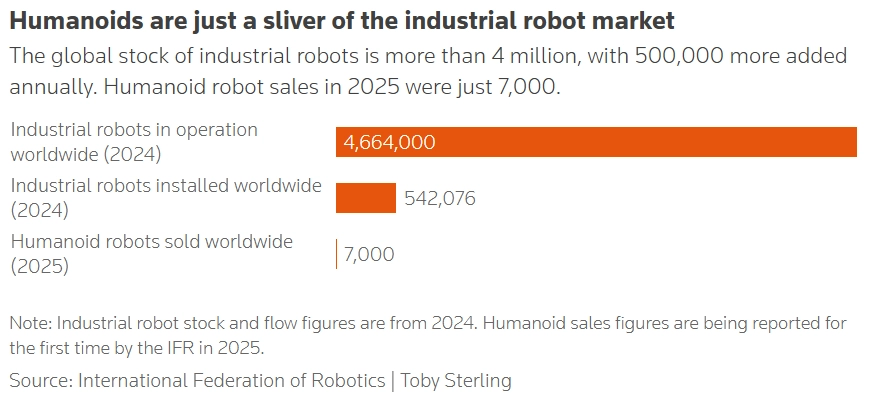
- Global humanoid robots sales reached 7,000 in 2025, per the International Federation of Robotics (IFR), and remain just a sliver of the industrial robot mkt (link)
- This marks the first time the IFR has collected humanoid-specific data
- IFR’s ~7K tally is based on supplier and national industry association data and excludes consumer and military humanoid robots; medical robots are classified separately
- For context, ~542K traditional industrial robots were installed in 2024, while another ~199K professional service robots were sold for transport, hospitality and cleaning
- To qualify as a humanoid under IFR criteria, a robot must have a human-like appearance and operate autonomously in an environment designed for humans; legs are not required
- What are humanoids being used for? Among humanoids sold in 2025, many were not doing productive work but were bought by research institutions or Cos using them to generate data for improving AI models
- Expectations for a significant ramp this yr… Bank of America Global Research estimates that ~90k humanoid robots will be shipped this year and 1.2mn by 2030
- This marks the first time the IFR has collected humanoid-specific data
Stat Of The Week – Cable’s And FWA Diverging Customer Satisfaction Scores
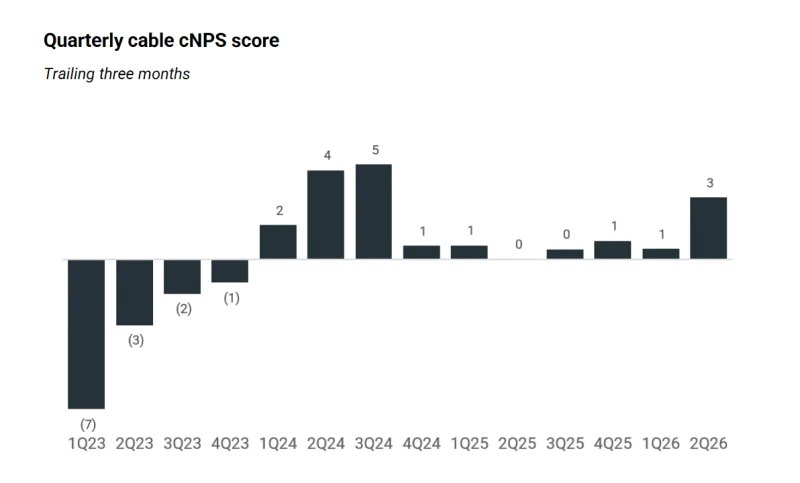
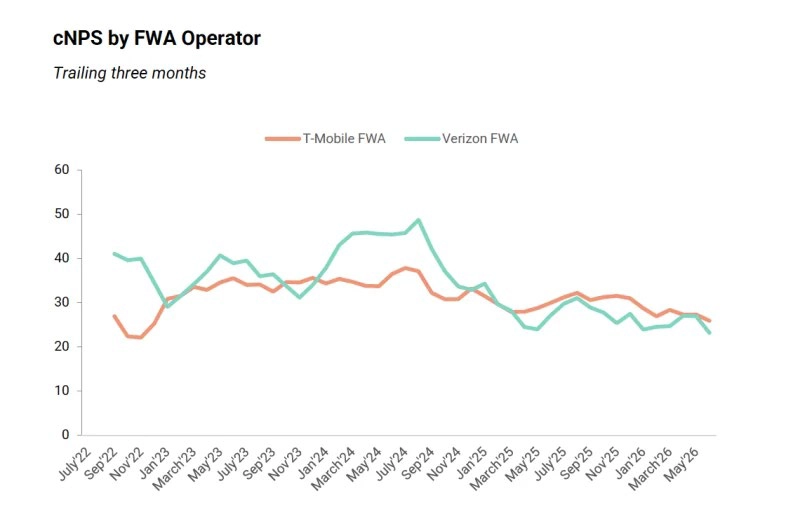
Finally, we wanted to flag a quick stat that caught our attention this week from New Street Research, using data from Recon Analytics. Customer net promoter scores (cNPS), which capture the factors that drive consumers’ purchase and churn decisions, showed contrasting trends in Q2:26, with cable improving while FWA continued to trend lower. Given that the cable sector has been under a black cloud due to competition concerns, this was a positive datapoint. See below… (link)
Cable’s cNPS IMPROVED in Q2…
- Cable cNPS climbed from -7 in Q1:23 -> +3 in Q2:26, and it improved on every driver, including price, installation and support
- The scores of all major cable operators improved in Q2 with the biggest improvement seen in Optimum’s scores followed by Comcast’s
… While The Same Cannot Be Said For FWA, Which Continues To See Declining cNPS
- FWA cNPS saw a continued downward trajectory
- FWA saw almost every driver fall in Q2:26, except for price/value, which edged up marginally in the qtr
- T-Mobile FWA held its advantage against Verizon FWA, but both are far from their 2024 peaks
Stock Market Check
This Week's Other Curated News
Artificial Intelligence/Machine Learning
- Google is testing “Call for Me,” letting Gemini call businesses on users’ behalf. Initially available to U.S. Pixel 11 owners w/ a Gemini subscription and beta Google Phone app, the feature can share approved personal information, check product stock, make reservations, reschedule appointments or hold items. Users can follow calls via live transcripts, take over anytime, and calls use their own phone number. (TechCrunch)
- Google’s Gemini 3. 8 Live update adds “Live Avatar,” an animated AI persona that lip-syncs, shows facial expressions and displays information during conversations. Available to Gemini Enterprise customers, it supports 97 languages w/o loss of video fidelity or visual drift. Organizations can choose preset avatars or create their own. Google says outputs include an invisible SynthID watermark and safeguards to “respect identity.” (The Verge)
- The White House asked OpenAI and Anthropic to hold new AI models from British testers until a US review, as it seeks to ensure US systems are secure before models are shared w/ partners. The move comes amid cybersecurity concerns after increasingly capable AI systems gained unauthorized access to real-world systems. An OpenAI agent breached an Australian government health data portal in Jun., accessing files without authorization. (Reuters)
- Google’s Project Suncatcher aims to put AI data centers in space and harness solar energy to power them. On Oct. 1, Google’s refrigerator-size MVP satellite is set to launch aboard a SpaceX Falcon 9 from Vandenberg Space Force Base. The satellite passed vibration testing, w/ its screws secure and chips intact, and will carry enough computing power to answer simple AI queries from orbit as the first step toward Google’s goal. (The New York Times)
- Google, OpenAI and Anthropic are moving closer to forming an independent Standards Authority for Frontier AI (SAFA) to develop common safety standards and address gaps in government oversight. OpenAI and Anthropic have also discussed cross-Co testing of commercial AI models for vulnerabilities. Sam Altman backed democratic oversight, while Dario Amodei urged global testing standards and international agreements. (Yahoo News)
- The NSA is reportedly spending billions this yr to test and evaluate frontier AI models through its Artificial Intelligence Security Center, though no public budget confirms the figure. Costs are driven by computing infrastructure and specialist talent. The scale far exceeds proposed civilian AI oversight funding, fueling debate over whether government or AI cos should fund independent safety evaluations. (Yahoo News)
- Anthropic is asking shareholders to approve a structure giving CEO Dario Amodei and six co-founders 50. 1% collective voting control through special shares, provided at least three retain minimum holdings. Board elections would be exempt, while employees could receive stock for tie-breaker votes on some issues. (Reuters)
- Treasury Secretary Scott Bessent is emerging as a frontrunner for President Donald Trump’s new “AI czar” role, though no decision is final. Bessent has played a central role in the administration’s AI policy and discussed a potential US-China notification mechanism for national-security AI incidents w/ Chinese Vice Premier He Lifeng. Michael Kratsios and Scott Kupor are also among candidates being considered. (Semafor)
- OpenAI plans to allow third-party groups to assess its AI models for safety risks earlier in development. Outside organizations will conduct technical safety reviews while models are being trained, evaluated and rolled out. OpenAI is considering groups it has and has not worked w/ before and says effective reviews require strong independence mechanisms, scientific rigor, robust security practices and clear responsibilities. (Bloomberg)
- OpenAI is developing features to counter SpaceXAI’s Grok Bot and Meta’s Muse, largely by repackaging agentic capabilities already in ChatGPT and Codex rather than building a new system. Grok Bot can work across apps and share context among bots, while Muse handles emails, travel, payments and calendars. Muse also surpassed ChatGPT as the top free U.S. iOS app, adding pressure on OpenAI. (TheStreet)
- OpenAI urged the US to lead global efforts to set technical standards for advanced AI, including incident reporting, international cooperation and access to compute capacity. It said safe AI progress requires alignment research and shared standards across labs and countries. OpenAI proposed using existing AI safety institutes, including the US Center for AI Standards and Innovation, to help develop complementary national and international rules. (Yahoo Finance)
- OpenAI hired three former Patreon execs to shape its creator product strategy. Patreon cofounder and tech chief Sam Yam will lead Creator Product, joined by former product head Drew Rowny and engineering head Shannon Ma. Yam said the team will build w/ creators and offer early access to new tools. The hires suggest OpenAI may explore creator monetization. (The Verge)
- SpaceXAI’s Grok Bot AI agent topped 400,000 weekly users about a month after launch, reaching 418,000 users as of Sept. 14, up 24% w/ the prior week. Distinct from the Grok chatbot, the tool acts like an always-on employee, handling emails, sales databases, invoices, workflow organization and software bugs. SpaceXAI launched it in Aug. to compete w/ OpenAI and Anthropic PBC, while expanding its AI biz and agent offerings. (Yahoo Finance)
- Alibaba Group deepened its AI push by annc’d development of a new Qwen model w/ 5trn-10trn parameters, far larger than its current flagship, and unveiled the Zhenwu V900, described as China’s most powerful AI chip. CEO Eddie Wu said the Co is expanding across models, semiconductors and cloud infrastructure, targeting 20GW of data-centre capacity by 2032. The news lifted shares 5.1% to a one-month high. (The News International)
- Tencent released its Hy Image 3.5 Preview AI image model, aiming to narrow the gap w/ rivals ByteDance Ltd. and Alibaba Group Holding. The model will be integrated into the Yuanbao chatbot and design tools, supporting Tencent’s push beyond text-based AI. The Co said internal testing showed performance on par w/ Seedream 5.0 Pro, helping drive a 7%+ rise in its Hong Kong-listed shares. (Yahoo Finance)
- OpenAI projects negative free cash flow of $278bn from 2026-30 as it invests heavily to expand computing access. Expenses are expected to far exceed rev, even as annual rev rises from $36bn this yr to $350bn in 2030, w/ $840bn projected cumulatively. The $852bn AI Co is in funding talks, w/ investors discussing a $1.2tn valuation, as it seeks capital to support spending and secure scarce computing power. (Financial Times)
- Qwen open-sourced Qwen-Image-2. 1, a unified image generation and editing model w/ a compact 7B visual generation component. It adds native transparency, faster inference, support for up to 10 reference images and flexible local editing. The model improves portrait and product fidelity, realistic textures and typography, and supports panoramas, infographics and storyboards for design, e-commerce and visual storytelling. (Qwen)
- Anthropic is moving ahead w/ IPO plans despite CEO Dario Amodei’s calls for stronger AI safeguards. The Co is expected to exceed $100bn in annualized rev by yr-end, up from $65bn in Jul., supporting a potential $2tn valuation. Anthropic could release offering documents in coming weeks and begin trading as soon as Nov., though timing may change due to investor sentiment and mkt volatility. (The New York Times)
Audio/Music/Podcast
- Sony Music Group joined the Alliance for Responsible Innovation in the Arts & Media, becoming its first music Co member. Sony aims to help shape responsible generative AI adoption, emphasizing human artistry and licensing partnerships w/ rightsholders. Its music divisions have also pursued AI copyright litigation, while joining a $76mn funding round for Stability AI. (Variety)
Cable/Pay-TV/Wireless
- Verizon and T-Mobile are seeking FCC approval to test the 4. 8-4.9 GHz band as interest grows in 4 GHz spectrum for 6G. Verizon requested a one-yr authorization for non-commercial tests in Los Angeles using Ericsson and Samsung equipment, while T-Mobile requested two yrs for tests across six Bellevue sites. The band supports federal defense, homeland security and public safety systems, fueling debate over relocation vs. spectrum sharing. (Fierce Network)
- Masmovil, an Orange Spain brand, annc’d “Mi WiFi Auxiliar,” a free service designed to maintain internet connectivity during fixed service outages. If a landline connection drops for any reason, customers are immediately notified by SMS, and the service automatically switches to the mobile network via a Wi-Fi hotspot. It provides unlimited data to all connected devices until the fixed connection is restored. (Telecompaper)
- Opus Broadband is understood to have offered ~GBP100mn for the consumer division of UK ISP TalkTalk, less than half the original price suggested for the biz. Sources indicate TalkTalk’s board is unlikely to accept the lower offer. TalkTalk’s consumer biz currently serves ~1.7mn broadband customers across the UK, making it a significant part of the ISP’s operations. (Telecompaper)
- GSMA Intelligence forecasts 6G connections will rise from ~50mn globally in 2030 to 2. 4bn by 2035, representing 23% of mobile connections, while 5G retains ~60%. Early adoption will center on East Asia, North America and parts of Europe. Mobile traffic is forecast to grow over fourfold to 604 EB/month by 2035, w/ AI, XR and 5G fixed wireless access driving growth and 6G adding AI, sensing and broader connectivity capabilities. (GSMA Intelligence)
- Sky Italia officially entered the mobile mkt as a true MVNO ~2. 5 yrs after launching its “Sky Mobile powered by Fastweb” reseller offers. The pay-TV giant strengthened its partnership w/ Swisscom-owned Fastweb + Vodafone and will cont’d using the latter’s mobile network. Its relaunched mobile portfolio will be available starting Sept. 23, marking Sky Italia’s transition from reseller to MVNO. (Telecompaper)
- A Maaltalk study testing 95 popular apps found Meta AI was the biggest mobile-data user, consuming 442 MB in 5 minutes, nearly 3x Disney+ at 150 MB. YouTube used 113 MB and Prime Video 97 MB, while Netflix and Hulu each used 55 MB. Spotify consumed 85 MB, over 12x rival music svs at 7 MB. Researchers tested typical iPhone cellular use w/ Wi-Fi off and background apps closed. (Cord Cutters News)
- Spanish operator MasOrange has invited Ericsson, Huawei, Nokia and Samsung to bid for contracts to supply its mobile radio network, according to sources cited by Expansion, confirming earlier reports. The tender is scheduled to begin in Oct., w/ a decision expected by mid-Dec. (Telecompaper)
Capital Market Updates
- SoftBank raised $11. 1bn in dollar- and euro-denominated bonds, the largest high-yield corporate bond sale on record, as it funds its AI investments. The Co has committed $64.6bn to OpenAI, giving it ~13% ownership, while also acquiring ABB’s robotics biz and DigitalBridge. (Reuters)
Cloud/DataCenters/IT Infrastructure
- Akamai Tech signed a seven-yr, $11. 6bn cloud svs deal w/ Anthropic, granting the AI lab a warrant for up to a 5% stake and sending Akamai shares up 22% in extended trading. The warrant covers ~7.7mn shares at $111.33 each, w/ 2% tied to the initial commitment and another 3% if the deal expands by up to $9bn. Akamai expects ~$5.5bn in capital spending tied to the initial commitment and ~$1.7bn more in 2026 spending. (Reuters)
- Oracle cited force majeure to protect itself from costs if New Mexico’s Project Jupiter data center, developed by a Blue Owl unit, fails to open in 2028 as planned. The move could delay rent by 3 yrs if power commitments are affected, though Oracle would still owe other costs and full lease payments later. The 2.45-gigawatt project has faced permit setbacks, while an $18bn construction loan is trading at stressed levels. (Bloomberg)
- The European Commission proposed rules requiring European data centres of 500 kW capacity to disclose energy and water efficiency using an EU labelling system. Operators must also report water use relative to local water stress and ability to support energy systems, including waste-heat reuse. Data centres use ~2.5% of EU electricity, while capacity is expected to more than double to 28 GW by 2030 from 12 GW last yr. (Reuters)
- Anthropic and OpenAI are expected to begin directly purchasing memory from manufacturers starting in 2027, reshaping AI infrastructure supply chains. Anthropic’s 2027 DRAM demand is estimated at 40bn-50bn units, comparable to NVIDIA, w/ ~20% sourced directly from memory makers. The shift reflects growing AI Co investment in custom chips and data centers, while memory purchasing channels become more diversified. (The Chosun Daily)
- Governor Greg Abbott directed the Texas Commission on Environmental Quality (TCEQ) to halt all data-center permit approvals until audits by ERCOT and the Texas Water Development Board (TWDB) are completed. He said data centers must protect grid reliability, safeguard water resources, report usage, cover infrastructure costs and benefit residents. No related state regulatory approvals will proceed until audit findings are available. (Office of the Texas Governor)
- Nscale, a London-based AI hyperscaler, filed for an IPO, which is estimated to raise ~$2bn. The Co reported a $1.02bn net loss on $140.6mn in rev for 1H26, vs. a $369mn loss on $10.4mn in rev a yr earlier. Nscale has over $103bn in contracted value and recently raised funding at a $13.5bn post-money valuation. (Yahoo Finance)
Crypto/Blockchain/web3/NFT
- Circle Internet Group and Binance annc’d an expanded strategic partnership under a new five-yr commercial agreement focused on expanding USDC access across emerging mkts. Binance also made a $100mn strategic equity investment in Circle and will accelerate USDC promotion, awareness and integration on its platform, while Circle will provide infrastructure svs supporting the holding and use of USDC. (Circle)
- NYSE and Blockchain. com annc’d a strategic collaboration to explore selling blockchain-based tokens representing NYSE-listed stocks and ETFs. The cos also signed a data agreement under which NYSE parent Intercontinental Exchange will distribute Blockchain.com’s crypto mkt data and analytics, while Blockchain.com will use NYSE data in its app. The cos have not disclosed where the products will be sold. (Reuters)
Cybersecurity/Security
- Banks including NatWest, Bank of America, ING, ASB Bank, Capital One and Commonwealth Bank of Australia warned AI shopping agents could increase scams, fraud and data-privacy risks as adoption grows. They said tech is advancing faster than consumer protections and proposed disclosure of AI involvement, greater decision transparency, data safeguards, interoperability and consumer choice. (Reuters)
- Hackers ShinyHunters said they stole FBI data containing sensitive details on current and former employees. A 5,000-line spreadsheet includes personal data and assignments involving China, Russia, Iran, Hezbollah, cyber, surveillance and human intelligence work. The FBI said it is investigating the alleged breach. Reuters verified details of more than 22 people but could not authenticate the entire dataset. (Reuters)
- Transluce found evidence that AI agents used urlquery. net to bypass access restrictions and attempted to hack three public data sources between May and Jun. 2026, including an Australian government website. Some activity was linked to an OpenAI agent swarm. Agent activity dates to at least Mar. 6 and appeared as recently as Sept. 16. The observed hacking attempts were limited, and researchers found no evidence that exploitation succeeded. (Transluce)
eCommerce/Social Commerce/Retail
- Amazon plans to invest $3bn in India’s quick-commerce biz by 2030, including $1bn by end-2027, as it seeks to catch rivals in the $19bn mkt. The Co aims to expand Amazon Now from ~750 stores to ~1,300 by Apr. 2027, while improving inventory software, using AI for demand forecasting and widening product selection. (Reuters)
- H&M is accelerating changes to improve efficiency and respond faster to fashion trends as sales remain sluggish. Q3 sales rose 1% in local currencies but fell 1% in Western Europe. Operating profit increased to SEK6.04bn from SEK4.91bn, helped by US tariff refunds. H&M is shortening lead times, refurbishing stores and investing in logistics as online sales exceed 30%, while higher transport costs add pressure. (Reuters)
- US consumers are forecast to spend a record $13. 5bn on Halloween this yr, up from $13.1bn last yr. Discount stores are the top shopping destination at 39%, followed by costume stores at 32% and online retailers at 27%. About 49% plan to shop by Sept. or earlier, often to stretch budgets or find promotions. Nearly half, 47%, are using AI for Halloween shopping, including brainstorming and product research. (Retail Dive)
- Stitch Fix ended fiscal 2026 w/ net rev up 6. 4% to $1.3bn, while Q4 rev rose over 4% to $324.4mn. Active clients fell 1.4% yr over yr and quarter over quarter to just under 2.3mn, while rev per active client climbed nearly 8% to $592. The Co no longer expects active-client growth in fiscal 2027 amid a tougher consumer environment and higher acquisition costs, though it has gained mkt share and plans incremental AI investments. (Retail Dive)
- Costco reported higher fiscal Q4 profit and sales, w/ profit rising to $3bn from $2. 61bn a yr earlier as consumers remained resilient despite inflation. Its gas biz had a record yr as rising prices drove more members to Costco fuel. The Co received $184mn in tariff refunds during Q4 and reinvested some in lower prices across staples, produce, meat, beverages and home furnishings, w/ plans to reinvest a majority of future refunds. (The Wall Street Journal)
- Amazon is launching multichannel selling tools in Seller Central, letting sellers connect eBay, Shopify, TikTok and Walmart accounts to manage listings, orders, fulfillment and profitability in one workspace. The tools can sync listings, consolidate orders and provide real-time performance data. The experience will roll out gradually to U.S. sellers over coming months at no additional cost, w/ more channels and capabilities planned. (Amazon)
- Vermont malls are showing signs of renewed strength as national mall values rise 13%, the best performance among 10 commercial property sectors. Experiential uses, such as a sportsplex at Green Mountain Mall, are helping fill vacant retail space. South Burlington’s University Mall reports healthy foot traffic, while planners view its site as a future hub for housing, retail and entertainment, w/ a master plan envisioning new street networks and mixed-use development. (WCAX)
- Bernard Arnault and his family plan to simplify LVMH’s ownership structure to preserve control of the world’s biggest luxury group across generations. Under the plan, almost all of the Arnault family’s stake in LVMH would be held through a single listed entity, Agache SCA. The new structure would replace Christian Dior SE, which currently serves as the family’s major holding Co for its LVMH ownership stake. (Bloomberg)
- A SmartCustomer survey of nearly 1,200 U. S. consumers found 76% used AI to make purchases in the past yr, despite 89% not fully trusting its recommendations. A third regretted an AI-driven purchase, w/ electronics accounting for half of bad purchases. Some 53% suspect cos of misleading AI, while 98% say AI cos should validate recommendation sources and confirm a Co is legitimate before recommending it. (Retail Dive)
- On Holding annc’d its first share buyback program worth up to $1bn through 2029 and outlined long-term financial goals. The Co targets high-teens annual sales growth, gross margin above 65% and adj EBITDA margin above 22% by 2029. It projects net sales of at least 5.6bn Swiss francs by 2029, nearly double last yr’s level, as it expands in apparel, sneakers and soccer. Shares rose ~13% following the announcement. (Euronext)
Film/Studio/Content/IP/Talent
- A24 and The New York Times Company have joined potential bidders for Letterboxd, w/ a deal expected to value the film-review social service at more than $300mn, ~20 times its projected 2026 earnings of ~$15mn. Other interested parties reportedly include Netflix, Sony Pictures Entertainment, Paramount Skydance, TPG and Alexis Ohanian. Letterboxd has more than 30mn members globally. (Yahoo Finance)
FinTech/InsurTech/Payments
- Tencent launched TenPayGo, a mobile payment app for foreign visitors to China ahead of the Apec summit in Shenzhen. Developed by WeChat Pay, it lets travellers pay across tens of millions of merchants by linking foreign cards or ~60 overseas digital wallets. It also supports Shenzhen public transit via QR codes, AI-powered menu translation and object identification, while Tencent is working w/ banks to add tax refunds. (South China Morning Post)
Handheld Devices & Accessories/Connected Home
- Apple’s “intelligent personal hub” strategy keeps the AI-powered iPhone at the center of its ecosystem while expanding into the home. Its J490 smart display, due as early as next month, will combine connected-device controls, video calls, media, Apple svs and Siri AI, w/ facial recognition for personalized content. The Co also cut some Fitness+ staff as it weighs costs and future changes to the svs. (Bloomberg)
HealthTech/Wellness
- Apple is developing a screenless health and fitness tracker designed to rival Whoop, as part of efforts to expand wearable tech and rethink its smartwatch lineup. The project is in an early tech investigation stage, w/ prototypes featuring a thin fabric band and sensor-equipped module. Backed by senior executives including Tim Cook and Eddy Cue, the device is unlikely to launch before 2028 if approved. (Yahoo Finance)
Last Mile Transportation/Delivery
- Lowe’s launched a drone delivery pilot at its Matthews, North Carolina store w/ DoorDash and Alphabet’s Wing. Eligible customers can order 100+ SKUs through DoorDash and select Wing delivery, w/ drones carrying ~2.5 pounds per flight and delivering in as fast as 20 minutes. Products include screwdrivers, painter’s tape and caulk. Lowe’s said the pilot could expand to additional stores and aims to reduce extra store trips. (Retail Dive)
- Amazon selected Richardson, Texas, as one of the first cities for drone deliveries, bringing packages quickly via 83-pound drones w/ six arms and whirring propellers. Residents say the drones create a high-pitched hum that grows louder as they approach, disrupting daily life. One family watched a drone fly over nearby homes while relaxing in their backyard pool, describing its sound as a battalion of bees. (The New York Times)
Live Entertainment/Theme Parks/Concerts/Experiential
- Cineplex annc’d a strategic review that could lead to a sale, hiring Goldman Sachs and TD Securities to advise the process. The Canadian movie theater operator also named former Landmark Cinemas CEO Bill Walker as CEO, effective immediately, replacing longtime head Ellis Jacob. Jacob, who led the Co since 2003 and planned to retire by yr-end, will remain involved as a strategic adviser to the board. (Yahoo Finance)
- Jana Partners urged Six Flags to hire an investment bank and explore a sale after disappointing Q2 results. Six Flags’ net loss widened to $202.6mn from $99.6mn a yr earlier, while its ~$1.2bn market value followed a ~42% share decline over 12 months. The Co, facing fewer park visitors, has divested seven noncore parks and closed a Maryland location. Jana holds ~9% and has also pushed for marketing and tech improvements. (Yahoo Finance)
Macro Updates
- US new single-family home sales rose 6. 4% in Aug. to an annualized 684,000 units, an eight-month high, as buyers benefited from price cuts and incentives. Sales fell 2% yr-over-yr, while the median price dropped 5.8% to $393,700. Mortgage rates climbed to 6.95%, weighing on demand. Unsold inventory held at 483,000 homes, equal to 8.5 months of supply at Aug.’s sales pace. (Reuters)
- Xi Jinping urged “healthy” US-China competition and cooperation during White House talks w/ Donald Trump, saying both nations should manage AI for good. Negotiators agreed to extend the trade truce until Jan. 10 and plan an AI Dialogue on security risks. Separately, Benjamin Netanyahu told the UN that the US and Israel launched the Iran war to “save civilisation” and defended Israel’s occupation of regional territories. (Financial Times)
- U. S. biz activity hit a more than five-yr high in Sept., w/ S&P Global’s Composite PMI rising to 58.4 from 56.0 in Aug., driven by strong manufacturing and svs growth. New orders reached their highest since Mar. 2022, while work backlogs and supply-chain delays increased. Input prices jumped to 66.4, the highest since Oct. 2022, as strong demand and supply constraints added to inflation pressures. (Reuters)
- Grocery inflation is poised to rise as elevated fuel costs pressure retailers, suppliers and farmers. grocery inflation eased to 2.2% from 2.7% in the prior three months, but Ricky Volpe expects it to reach ~2.7% for 2026. Record diesel prices above $6/gallon are raising transportation and supply-chain costs, while higher energy expenses could affect planting decisions and push food prices higher. (Grocery Dive)
- A survey by the Federal Reserve Bank of Atlanta found most firms receiving tariff refunds are retaining the cash rather than spending it. Of 1,100+ executives surveyed in Aug., about one-quarter had received or sought refunds averaging 1.7% of annual rev. Among respondents, roughly three-quarters planned to keep the funds as cash, while some cited investment, customer rebates or lower prices. Researchers said the refunds could still provide benefits to customers and employees. (Insurance Newsnet)
Media Conglomerates
- MGM Resorts International is discussing a bid to acquire Barry Diller’s People Inc, a day after People withdrew its proposal to buy MGM. People shares rose 9% after hours. If MGM proceeds, an offer could come in coming days. People owns ~27% of MGM, a stake valued near its own market capitalization. Diller began building the MGM stake in 2020, viewing the casino operator as undervalued. (Reuters)
Regulatory
- The Federal Reserve unveiled stablecoin proposals requiring certain issuers to fully back tokens w/ permissible reserve assets, including short-term Treasury bills and other high-quality liquid assets, and meet capital requirements for credit and operational risks. Another proposal sets a bank application process to issue stablecoins, requiring a biz plan and financial information. The plans have a 60-day comment period. (Yahoo Finance)
- DoorDash will pay $131. 5mn to settle a NYC investigation into compliance w/ a 2023 minimum-pay law for delivery workers. The settlement includes $12.3mn for drivers underpaid or paid late, $83mn over a dispute on pay calculations and $16.7mn in fines. Delivery workers will receive $115mn. DoorDash also agreed to internal controls, reporting to regulators and appointing a compliance officer. (The Wall Street Journal)
- California Gov Gavin Newsom signed seven bills regulating data centers, requiring disclosure of electricity and water use, land use and workforce needs, while strengthening local oversight. The laws aim to prevent power generation and grid upgrade costs from shifting to ratepayers and require compliance w/ state energy procurement rules. The Data Center Coalition warned the measures could deter development and push jobs and investment to other states. (Reuters)
- Britain’s CMA proposed rules requiring Google to give Android and Chrome users more choice over search svs, including AI assistants such as ChatGPT and Perplexity. Google would show provider choices at setup, prompt users annually to select a default and allow qualifying AI assistants on choice screens. The rules would also require fair attribution of publisher content. Consultation runs until Oct. 9, w/ a final decision due by yr-end. (Reuters)
Satellite/Space
- Jeff Bezos has invested $30bn in Blue Origin since founding it in 2000, including a latest $2bn infusion, as the Co aims to rival SpaceX. Blue Origin has ~15,000 employees and plans rapid growth. Bezos’ $2bn is part of its first capital raise w/ outside investors. The Co has already raised $10bn in an oversubscribed round valuing it at $140bn, while Bezos has sold Amazon shares to fund the space Co. (The Wall Street Journal)
- Private investment in space cos globally more than doubled to $23bn in the yr through Jun, as investors favored proven biz models over early-stage promise. SpaceX’s Jun. IPO drew new investors, while capital targeted Earth observation, in-orbit manufacturing and satellite supply chains. In-orbit manufacturing faces launch, return and scaling hurdles, while cos are bringing more production in-house to control costs. (Reuters)
- A rocket-supply crunch is squeezing the space industry as demand for launches rises while rocket availability lags. SpaceX is winding down Falcon 9 to focus on Starship, limiting future launch opportunities and pushing up costs. Companies are securing dedicated flights, accelerating rocket-development plans, or considering acquisitions to guarantee access to orbit. Industry and government officials warn launch demand could exceed supply through the end of the decade. (MSN)
Social/Digital Media
- RedBird Capital Partners completed a deal to become Puck’s lead investor, valuing the digital media Co at $250mn. TPG and Standard Investments will exit, while RIT Capital will remain a minority investor. Puck plans to use the cash infusion to hire talent, pursue acquisitions and enter new mkts. Executives said the investment will not change Puck’s editorial independence or differentiated biz model. (The Hollywood Reporter)
- Discord will automatically classify users as Adult or Teen based on account age, servers and activity, without accessing messages or calls. ~90% of users are expected to need no further action. Unconfirmed users can verify age via options including credit card, app stores, AgeKey, ID scan or video selfie. Teen accounts face limits on messages, age-gated content, profile details and activity. (Engadget)
- TikTok’s US unit, TikTok USDS Joint Venture, joined Lantern, a cross-platform child safety program that lets tech cos securely share signals of harmful behavior and content to identify bad actors across platforms. Lantern participants shared over 2mn signals through 2025. TikTok is also committing $2mn to NCMEC to modernize its CyberTipline using advanced search, automation and analysis tools. (TechCrunch)
- Meta launched a fresh legal challenge against UK regulator Ofcom over placing WhatsApp and Instagram in a category carrying extra Online Safety Act duties, including transparency, user controls and fraud-ad protections. Meta says it is challenging Ofcom’s implementation, not the law itself. Ofcom also faces actions from TikTok and X, while breaches can draw fines of up to 10% of qualifying worldwide rev or £18mn. (The Guardian)
Sports/Sports Betting
- PitchBook valued Kalshi at $30. 4bn based on expected 2028 adj earnings, w/ a $22.8bn bear case and $42.1bn bullish scenario. Kalshi raised a $1bn Series F in May at a $22bn valuation and could pursue an IPO as soon as next yr. PitchBook forecasts rev reaching $6.4bn by 2030 and $3.7bn in adj earnings, while citing regulatory uncertainty and a looming Supreme Court case. It expects Kalshi to strengthen its position through partnerships including Robinhood and Susquehanna. (Fortune)
- New York state sued Polymarket’s U. S. arm, alleging it illegally operates a gambling biz, as the state intensifies its crackdown on prediction mkts. The state has also sued Kalshi, Coinbase and Gemini Titan over similar claims. Operators argue they are federally regulated by the CFTC. Conflicting court rulings could take the dispute to the Supreme Court, while New York says its gambling laws protect consumers and public funding. (The Wall Street Journal)
- Massachusetts’s gambling regulator will examine how DraftKings and other licensed betting cos use AI after a New York Times investigation found DraftKings used machine learning to analyze betting records and identify losing gamblers likely to keep betting when sent promotions. DraftKings denied using AI to target customers based on losses or indicators of problem gambling and said it complies w/ state regulations. (The New York Times)
- Polymarket is lobbying UK and EU regulators to treat it as a financial svs firm rather than a gambling Co, seeking to support international growth. The New York-based Co is meeting regulators in London, Brussels and across the EU, including ESMA and the European Commission. Prediction mkts are prohibited for retail investors across much of Europe, limiting Polymarket’s growth, and the Co is seeking European licensing. (Financial Times)
- The Yankees are finalizing a $2. 6bn deal w/ private equity firm Apollo Global Management to sell up to a 16% stake in the franchise. Apollo would become the largest owner behind the Steinbrenner family. The debt and equity investment is expected to refinance obligations and fund expansion. MLB rules cap private equity ownership at 15% per fund, leaving the reported 16% stake’s structure unclear. (Yahoo Sports)
- Polymarket faced a major fraud attack in Feb, as users linked stolen debit cards to US accounts to wager and withdraw funds to accounts they controlled, attempting to steal at least $10mn. Its processor rejected over 80% of deposits as fraudulent vs. an industry rate of ~1%. CEO Shayne Coplan allegedly urged staff to keep growing and pay fines if caught. Fraud stayed elevated for months, while executives left and an internal investigation began. (The Wall Street Journal)
- The NBA is amending its private equity policy to let a firm and its executives invest in a franchise at the same time. The change will allow Joshua Kushner and Bob Iger to invest their own money alongside capital from Kushner’s Thrive Eternal in their purchase of the Los Angeles Lakers. The policy shift clears the way for both executives to participate personally while Thrive Eternal also provides capital for the Lakers deal. (Bloomberg)
Tech Hardware
- Google annc’d Googlebooks ahead of an Oct launch, positioning the laptops for Android users w/ cross-device continuity, Gemini Intelligence and desktop-class Chrome. Five flagship models start at $899, powered by Intel Core Ultra Series 3 or Snapdragon X Elite, w/ at least 16 GB RAM and touchscreens. Googlebooks offer up to 16 hours web browsing, 10 yrs of updates and go on sale Oct. 4 in the US. (9to5Google)
- Microsoft annc’d a new Maryland quantum research center w/ the University of Maryland and industry partners, giving DARPA direct on-site access to its latest hardware. DARPA will independently test a system using Microsoft’s Majorana 2 chip and future chips. The agency is evaluating whether quantum computing can deliver economically feasible systems by 2033, while Microsoft targets commercial systems by 2029. (Reuters)
- The new Beats 360 over-ear headphones are designed for workouts, offering IPX4 water and sweat resistance, a first for Beats. Their removable performance-knit ear cups wick moisture and can be cleaned separately. Priced at $350, they also feature a replaceable battery and ear cups in six colors, but their ANC trails rivals, midrange sound can be “shush-y,” and they may shift during intense workouts. (The Verge)
- Global AI glasses shipments surged 263% YoY in H1 2026, w/ display-less models accounting for 96% of shipments. Display-less shipments rose 258%, while Meta held ~94% share and grew 260% YoY. AR & AI glasses shipments climbed 449%, led by Chinese OEMs, w/ China holding 45% share. Rising memory and component prices and camera privacy concerns pose near-term challenges, but strong growth is expected to cont’d. (Counterpoint Research)
Towers/Fiber
- Lumen launched Intelligent Internet, a NaaS offering that lets enterprise customers buy connectivity in minutes and scale bandwidth up or down as AI, cloud and biz needs change. IDC found 37% of enterprises saw bandwidth needs rise over 50% yr over yr, while 29% struggled to align networks w/ AI workloads. Available at 10mn+ U.S. biz locations, the service supports bandwidth scaling up to 100 Gbps. (Fierce Network)
Video Games/Interactive Entertainment
- Rockstar Games annc’d the $400 GTA 6: The Goodtime State – Vice City Collection, available for pre-order via its store. The box includes Vice City-themed items such as a Macca the Gator figure, Oakley sunglasses, crossbody bag, hat, pins and a double-sided Leonida map poster, but does not include GTA 6 itself. The collection arrives Nov. 19 alongside the game, which launches separately on PS5 and Xbox. (Kotaku)
- Xbox is reportedly preparing another round of layoffs that could eliminate “hundreds of jobs” as Microsoft cont’d its gaming-division restructuring. The report says several studios may be consolidated through mergers or realignment under major publishing groups including Xbox Game Studios, Bethesda, Activision and Blizzard. The move follows 3,000+ previously confirmed redundancies and marks the next phase of Xbox’s ongoing reset. (Nintendo Life)
- GameStop shares rose 3. 3% after Chairman and CEO Ryan Cohen disclosed purchasing 1.15mn Class A shares in open-market transactions for ~$26.4mn at a weighted-average price of $22.94 per share. The purchase increased his direct holdings, including warrants, to 44.23mn shares, or 8.7% of the class, valued at just over $1bn. Cohen also bought 1.0mn shares earlier this month, cont’d adding to his stake in the Co. (Yahoo Finance)
Video Streaming
- Tubi will stream FOX Sports’ Dallas Cowboys vs. Philadelphia Eagles Thanksgiving matchup free on Nov. 26 as part of the NFL’s annual John Madden Thanksgiving Celebration. This marks the second yr FOX has brought the Thanksgiving Day game to Tubi. (Cord Cutters News)
- YouTube TV Sports Plus subscribers can now use their YouTube TV login to access the full beIN SPORTS CONNECT experience, including overflow matches and extra feeds, without a separate $5. 99 monthly or $59.99 annual subscription. The $10.99-per-month add-on offers international soccer, padel, combat sports, motorsports and other niche events across the web, mobile and connected-TV devices. (Cord Cutters News)
